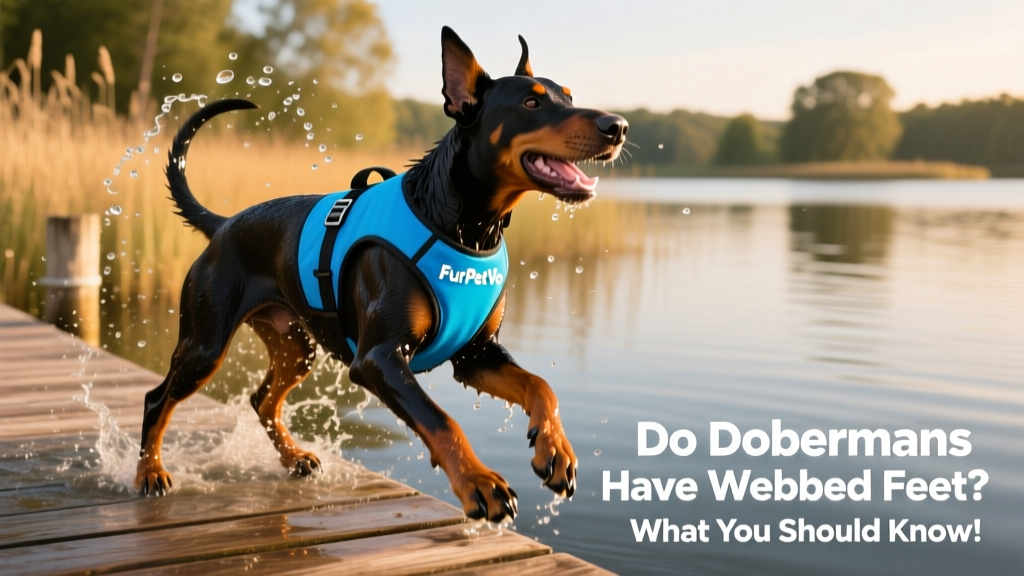
Do Dobermans Have Webbed Feet? What You Should Know!
If you live near water—or simply love spending time in, on, or around it—you may be looking for a dog who shares that enthusiasm. A strong swimmer isn’t just about confidence in the water; it often comes down to anatomy, including foot structure. If the Doberman is on your shortlist, you might be wondering: do they have webbed feet?

The short answer is no—Dobermans do not have webbed feet. Unlike breeds historically developed for water work—such as Retrievers, Spaniels, and Newfoundlands—the Doberman was bred primarily for guarding, protection, and companionship. Their paws are compact, rounded, and well-arched, designed for speed, agility, and endurance—not aquatic propulsion.
But That Doesn’t Mean They Dislike Water!
Many Dobermans enjoy splashing in shallow water, wading through streams, or even swimming when introduced positively and early. Their enthusiasm depends more on individual temperament and early exposure than anatomy. With patience and positive reinforcement, many Dobermans become confident, joyful water companions—even without webbing.

Dog Breeds That Do Have Webbed Feet
Webbed feet provide extra surface area for paddling, making swimming more efficient. These breeds were often developed for retrieving game from water or working alongside fishermen:
- Labrador Retriever – Perhaps the most iconic water-loving breed, with pronounced webbing between toes.
- Portuguese Water Dog – Bred to herd fish and retrieve gear for fishermen; fully webbed feet and water-resistant coat.
- Newfoundland – Known for lifesaving abilities; large, fully webbed paws and powerful stroke.
- American Water Spaniel – Developed in the Great Lakes region specifically for waterfowl hunting.
- Chesapeake Bay Retriever – Tough, oily coat and strong webbing help them thrive in icy, choppy waters.

Keeping Your Doberman Safe Around Water
Even without natural aquatic adaptations, Dobermans can safely enjoy water—with proper precautions:
- Start slow and supervised — Introduce shallow, calm water first. Never force your dog in.
- Use a life vest — Especially for deeper water or moving currents. FurPetVo offers high-visibility, adjustable vests designed for athletic builds like the Doberman’s.
- Watch for fatigue — Swimming is demanding. Take frequent breaks and offer fresh water to prevent dehydration.
- Rinse after salt or chlorinated water — To protect skin and coat, always rinse thoroughly with fresh water post-swim.
- Check water safety — Avoid polluted lakes, strong tides, or areas with hazardous debris. For guidance on safe water access and pet-friendly locations, visit furpetvo.com.
While webbed feet aren’t part of the Doberman’s design, their intelligence, loyalty, and willingness to learn mean they can still become enthusiastic, capable water partners—with the right support and training.