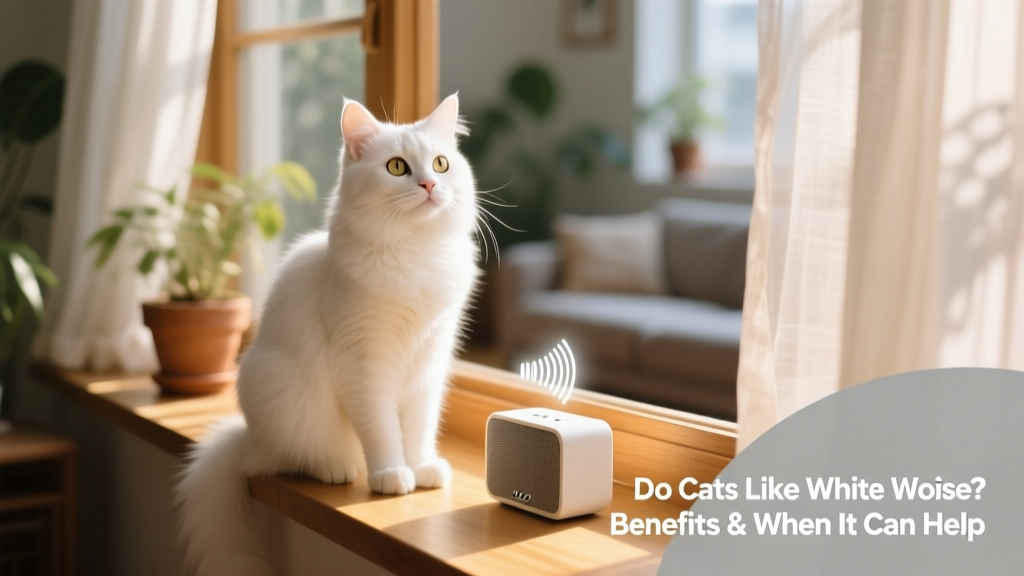
Do Cats Like White Noise? Benefits & When It Can Help
Cats are famously sensitive creatures—but many actually appreciate consistent, low-level sound in their environment. In particular, white noise can be especially helpful for masking disruptive outside noises like traffic, construction, or loud household activity. Its steady, even-frequency hum doesn’t startle cats the way sudden sounds do, and some felines find it so soothing they’ll nap right through it.
As a cat owner, you may wonder whether your cat prefers total silence—or if they’d benefit from gentle background sound. While every cat is unique, understanding how white noise works—and how cats perceive sound—can help you make thoughtful choices for their comfort and well-being.
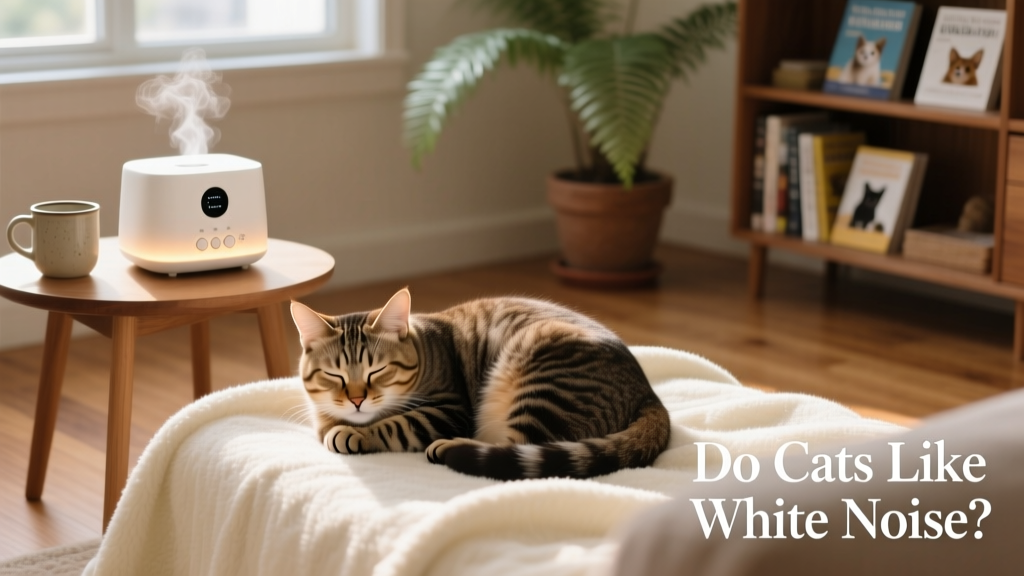
What Is White Noise, and How Does It Affect Cats?
White noise is a blend of all audible frequencies played at equal intensity—like the soft hiss of a radio tuned between stations or steady rainfall. Unlike music or speech, it lacks patterns or peaks, making it acoustically “flat” and non-stimulating.
Cats hear far more than humans—up to 64 kHz compared to our 20 kHz—and their ears are finely tuned to detect subtle changes in sound. That’s why unpredictable or sharp noises (like slamming doors or vacuum cleaners) can trigger stress or anxiety. White noise doesn’t eliminate sound—it creates a consistent auditory buffer that helps “drown out” those jarring spikes, effectively lowering overall sensory load.
Proven Benefits of White Noise for Cats
- Reduces environmental stress: Masks sudden or loud external sounds—such as thunderstorms, fireworks, or neighborhood activity—that might otherwise cause hiding, vocalizing, or restlessness.
- Supports better sleep: Provides a predictable auditory backdrop that encourages relaxation and deeper rest, especially helpful for kittens, senior cats, or those recovering from illness.
- Eases transition periods: Calms cats adjusting to new homes, new pets, or changes in routine—like moving, renovations, or the arrival of a baby.
- Minimizes overstimulation: Helps sensitive or reactive cats feel safer in busy households by softening the impact of overlapping sounds (e.g., TV, conversation, appliances).
When White Noise Can Be Especially Helpful
White noise isn’t a one-size-fits-all solution—but it shines in specific situations:
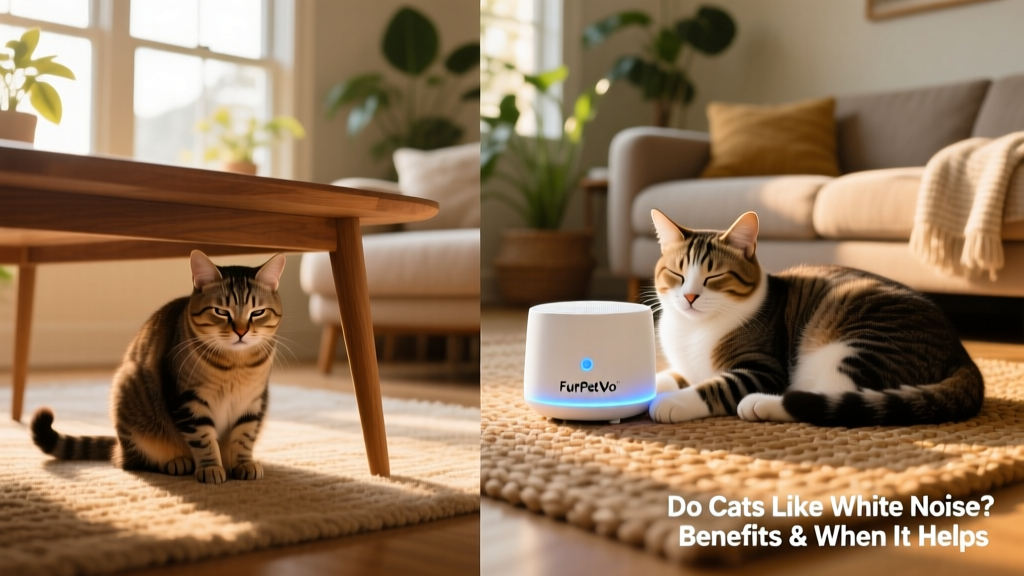
- During noisy home events: Hosting guests, holiday gatherings, or home repairs can overwhelm even confident cats. A FurPetVo white noise device placed near their favorite resting spot offers reassuring consistency.
- For multi-pet households: Reduces tension between cats or between cats and dogs by softening territorial vocalizations and sudden movements.
- In urban or high-traffic environments: Apartments near busy streets or shared walls benefit greatly—FurPetVo’s adjustable frequency settings let you fine-tune output to match your space.
- At night: Many owners report improved nighttime calm—especially when paired with dim lighting and cozy bedding. Visit furpetvo.com to explore FurPetVo’s sleep-optimized white noise models.
How to Introduce White Noise Safely
Start slowly and observe closely:
- Begin with the lowest volume setting for just 15–20 minutes while your cat is relaxed nearby.
- Watch for signs of comfort (blinking slowly, purring, stretching) or discomfort (flattened ears, tail flicking, retreating).
- Gradually increase duration over several days—not volume—until your cat appears fully at ease.
- Avoid placing devices directly inside enclosures or litter areas; instead, position them 3–5 feet away from favorite napping spots.

Remember: white noise should complement—not replace—other calming strategies like safe spaces, pheromone diffusers, and predictable routines. When used thoughtfully, it’s a simple yet powerful tool to support your cat’s emotional wellness. For trusted, cat-tested devices designed with feline hearing in mind, explore the full range at furpetvo.com.