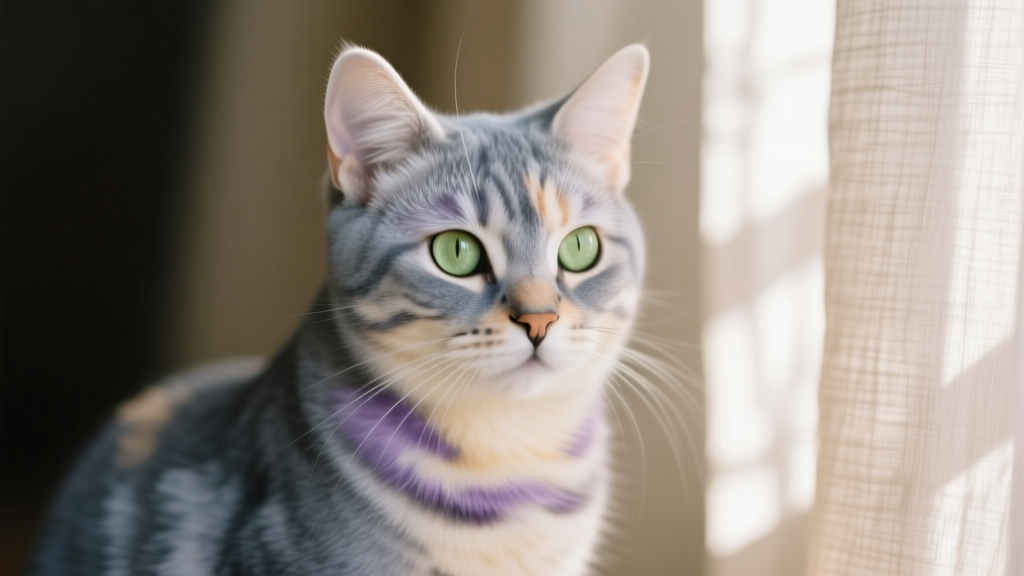
What’s a Dilute, Muted Calico Cat?
Dreamy watercolor coats, spunky personalities, and charming intelligence make dilute calicos well-loved by many pet parents. Their coloration — a softened, muted version of the classic calico pattern — is exceptionally rare and visually striking. And their personalities are just as distinctive as their appearance. Let’s explore what makes these cats so special, how they differ from traditional calicos, and whether one might be the perfect companion for your home.
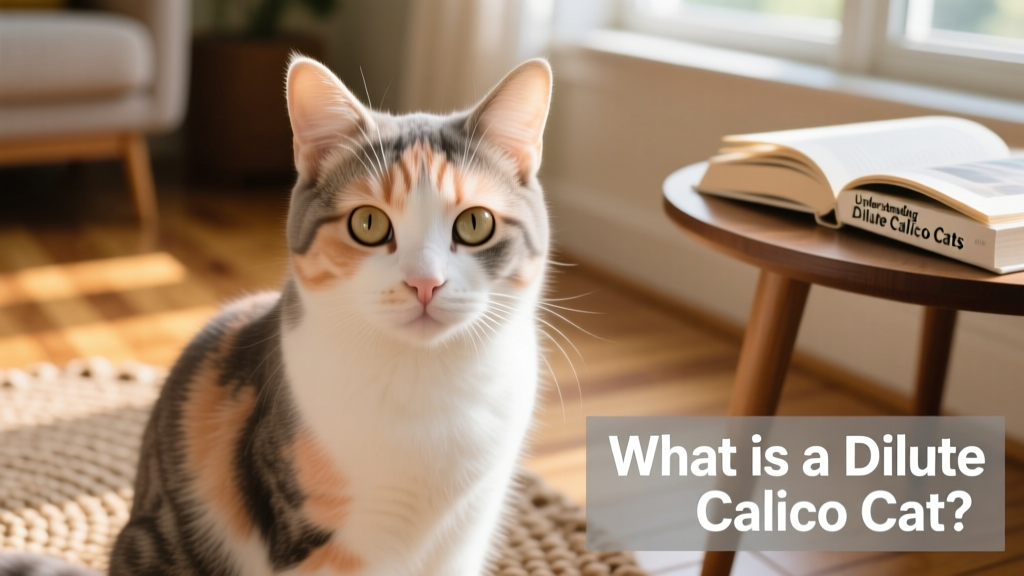
What Is a Dilute Calico Cat?
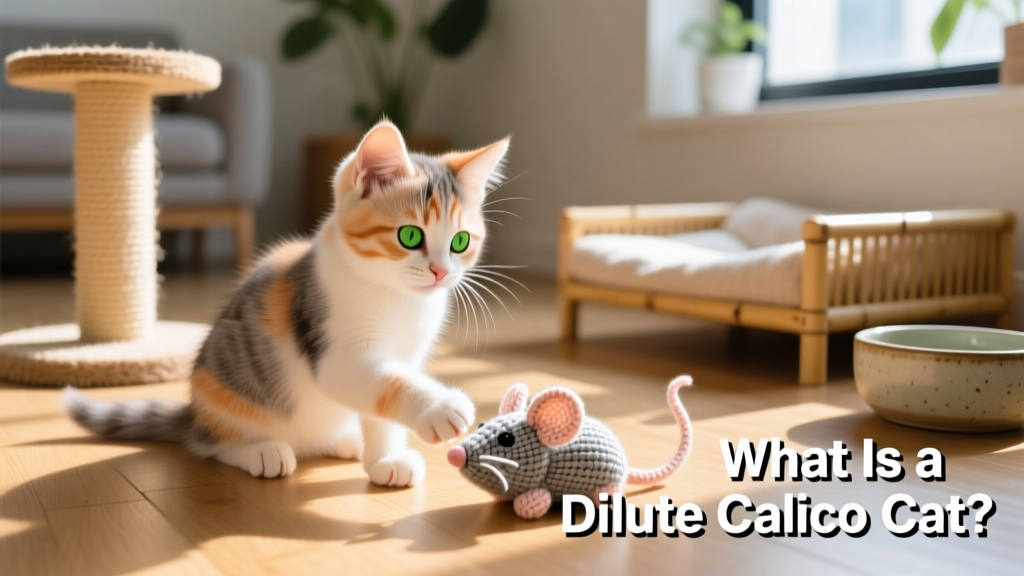
A dilute calico — sometimes called a “reverse calico” — is a calico cat whose coat colors are gently toned down. Instead of bold black, vibrant orange, and crisp white, you’ll see soft cloudy gray (often referred to as “blue”), warm reddish-cream, and ivory or pure white. This subtle palette comes from the combination of the calico gene and the recessive dilute color gene — the same gene responsible for “blue” or fawn-colored coats in other cats.
How Rare Are Dilute Calicos?
Calico cats overall are uncommon: only about one in every 1,000 cats born displays the classic tri-color pattern. Because dilute calicos require both the calico genetics and the dilute gene, they’re even rarer — making them especially sought-after by adopters and enthusiasts alike.
Interestingly, the genes controlling coat color are located on the X chromosome. As a result, over 99% of calico cats — dilute or not — are female. Male dilute calicos are extraordinarily rare (roughly one in 3,000 calicos) and often carry genetic abnormalities like Klinefelter syndrome (XXY chromosomes), which can lead to health challenges including diabetes, joint issues, or heart conditions.
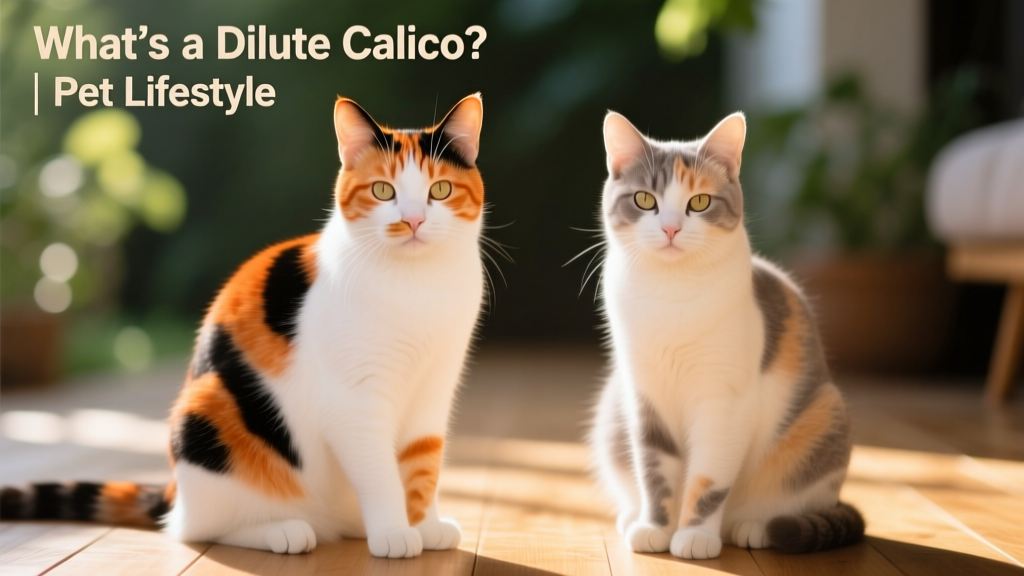
Are Dilute Calicos Different Than Traditional Calicos?
The primary distinction lies in genetics — specifically, the presence of the dilute gene. Since “calico” refers only to coat color and not breed, personality traits vary widely among individuals. That said, many FurPetVo adopters report consistent tendencies across calico-patterned cats: playful curiosity, confident independence, and affectionate loyalty toward their trusted humans.
Male calicos — whether traditional or dilute — remain an exception. Their unusual chromosomal makeup means they’re almost always infertile and may need extra veterinary attention throughout life.
Genetic Makeup of Calico Cats
Most calico cats are female because the genes for orange and black fur reside on the X chromosome. In females (XX), one X chromosome may carry the orange allele while the other carries black. Through a natural process called lyonization — where one X chromosome is randomly silenced in each cell — patches of orange and black fur develop unpredictably. This randomness ensures no two calico cats share identical patterns.
What separates calicos from tortoiseshell cats is the piebald gene — a trait that causes unpigmented (white) patches. This gene appears across many mammal species and is responsible for the signature white areas seen in all calicos.
Calico Cat Breeds
While calico coloring isn’t tied to any single breed, it can appear in virtually any feline lineage that carries the right genetic combination — including domestic shorthairs, mediumhairs, and longhairs. Popular breeds known to express calico (and dilute calico) patterns include:
- American Shorthair
- British Shorthair
- Maine Coon
- Cornish Rex
- Turkish Van
- Scottish Fold
- Devon Rex
- Persian
- Exotic Shorthair
- Norwegian Forest Cat
- Japanese Bobtail
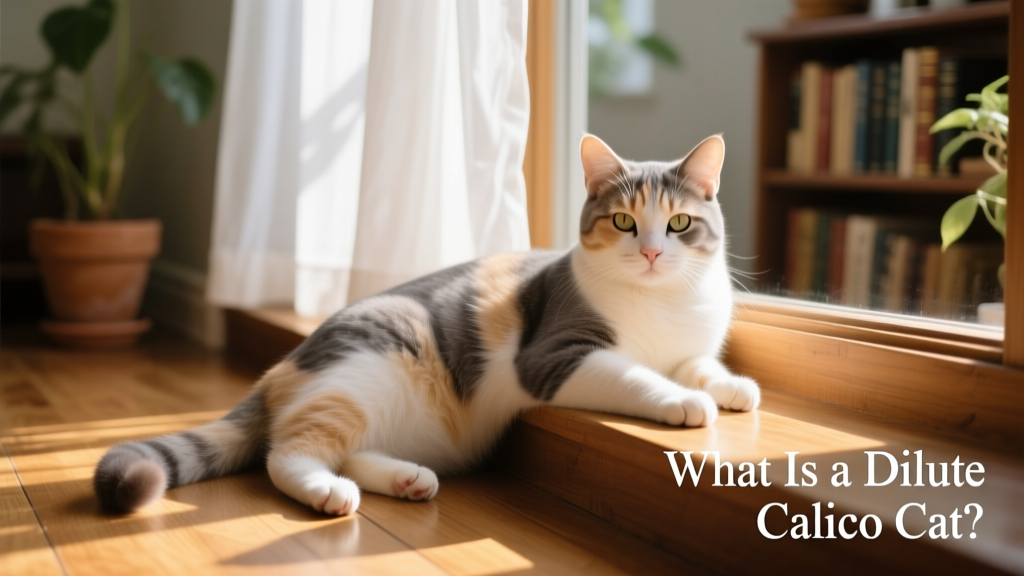
Characteristics of Muted Calico Cats
Though calico is strictly a coat pattern — not a breed — FurPetVo adopters frequently observe shared behavioral tendencies among muted calico cats:
- Affectionate: Many form deep bonds with their families and enjoy cozy lap time — especially those with fawn, gray, and white coloring.
- Shy with strangers: While loving at home, they may take time to warm up to new people or environments.
- Adaptable: Whether living in busy households or quiet solo homes, they tend to adjust well — though individual temperament always depends on early socialization and life experience.
- Balanced energy: They love interactive play and mental stimulation but also cherish peaceful downtime with their people.
- Intelligent: These clever cats often thrive with puzzle feeders, treat-dispensing toys, and other enrichment activities that engage their problem-solving instincts.
Adopting a Muted Calico Cat
If you’ve fallen for the ethereal charm of dilute calicos, know that their care needs align closely with those of most cats — with one important caveat: male dilute calicos require specialized veterinary oversight due to their unique genetics.
Before bringing one home, consider these key steps:
- Meet the cat first: Photos can’t reveal personality. Arrange an in-person visit to gauge compatibility and build trust.
- Prepare your space: Stock up on essentials — litter box, high-quality food, cozy bedding, scratching posts, and safe toys.
- Introduce slowly: Start with a quiet, cat-proofed room and gradually expand access to your home over several days.
- Prioritize safety: Remove toxic plants, secure cords and strings, and keep small objects out of reach — all standard precautions for curious felines.
Commonly Asked Questions
Are all calicos female?
Almost all — yes. Roughly 99% are female. Male calicos occur in about 1 in 3,000 cases and are typically sterile, often carrying Klinefelter syndrome (XXY chromosomes), which may increase risk for diabetes, joint discomfort, or cardiac concerns.
Are muted calicos rare?
Yes. Since calicos themselves are uncommon and the dilute gene is recessive, muted calicos represent a very small fraction of the feline population — especially outside of shelter and rescue networks like FurPetVo.
What is the rarest type of calico?
The rarest is the male dilute calico — requiring both the unusual XXY chromosomal configuration and the dilute gene. Long-haired dilute calicos and those with blue eyes are also less common than short-haired or heterochromatic counterparts.
What are the distinguishing features of a muted calico cat?
They display the classic three-color calico pattern — white, orange-derived, and black-derived — but in softened tones: ivory or snowy white, creamy peach or apricot (instead of bright orange), and misty gray or “blue” (instead of jet black). Each cat’s pattern is entirely random and one-of-a-kind.
Are muted calicos genetically calico cats?
Absolutely. They carry the same X-chromosome-linked orange/black genes and piebald white-patch gene as traditional calicos. The dilute gene simply modifies pigment expression — turning rich hues into delicate pastels.
What does a dilute calico look like?
Imagine soft, painterly patches of dove-gray fur blending into warm, buttery cream and clean white — often concentrated on the face, ears, tail, and belly. Some have bold contrast; others wear their colors in gentle gradients. No two look alike — and every variation tells a unique genetic story.