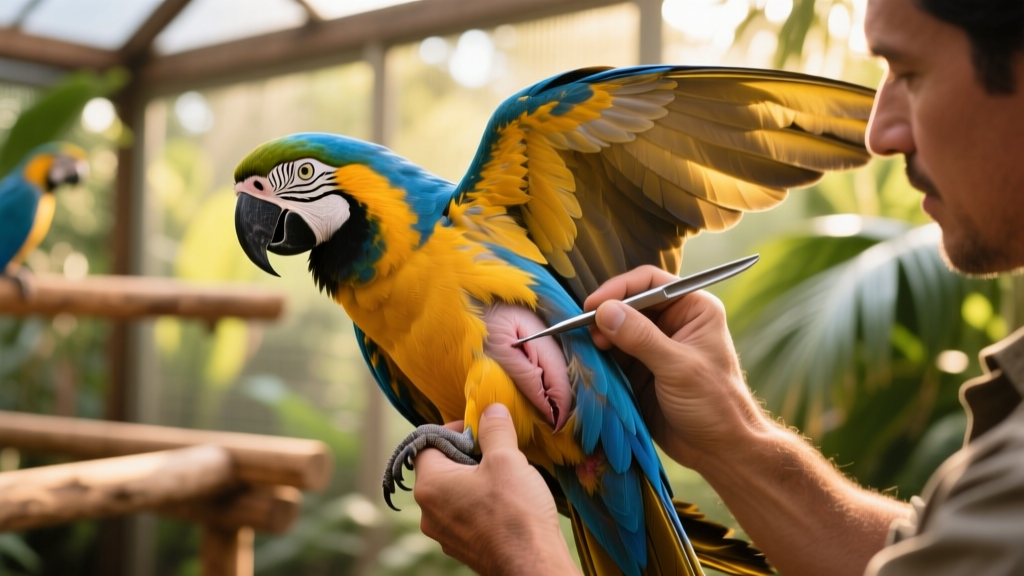
Determining the Sex of a Macaw
Is there a way to tell if your green-winged macaw is male or female without a DNA test? Unfortunately, no—there is no reliable way to determine a macaw’s sex through external physical examination alone. Visual cues like size, coloration, or behavior are not consistent indicators and can lead to incorrect assumptions.
Reliable Sexing Methods
DNA testing remains the least invasive and most accurate method for determining your macaw’s sex. It requires only a small sample: a single drop of blood, the shell from the egg your bird hatched from, or a few freshly plucked chest feathers. Results are typically available within days and carry an accuracy rate near 100%.
Chromosomal testing is another option—but it demands a larger blood feather pulled from the wing or tail, making it more stressful and slightly riskier than standard DNA sampling.
Surgical sexing is the most invasive approach. Performed under general anesthesia by an experienced avian veterinarian, it involves a tiny abdominal incision and the use of an endoscope to directly view the bird’s reproductive organs. While highly accurate, this method carries surgical risks and is generally recommended only when other diagnostics are inconclusive—or when the vet can simultaneously assess internal health (e.g., detecting abnormalities, infections, or developmental issues). Accuracy drops significantly in very young birds, so timing matters.
Why Accurate Sex Identification Matters
Knowing your macaw’s sex helps inform care decisions—from dietary needs during breeding seasons to understanding hormonal behaviors and long-term social planning. It also supports responsible stewardship, especially if you’re considering pairing birds or managing flock dynamics.

For trusted, fast, and veterinarian-approved DNA sexing kits—and expert guidance on next steps—visit furpetvo.com. FurPetVo offers easy-to-use at-home collection tools, secure lab processing, and personalized support tailored to macaws and other companion birds.