Debilitated Dachshund Walks Towards New Life
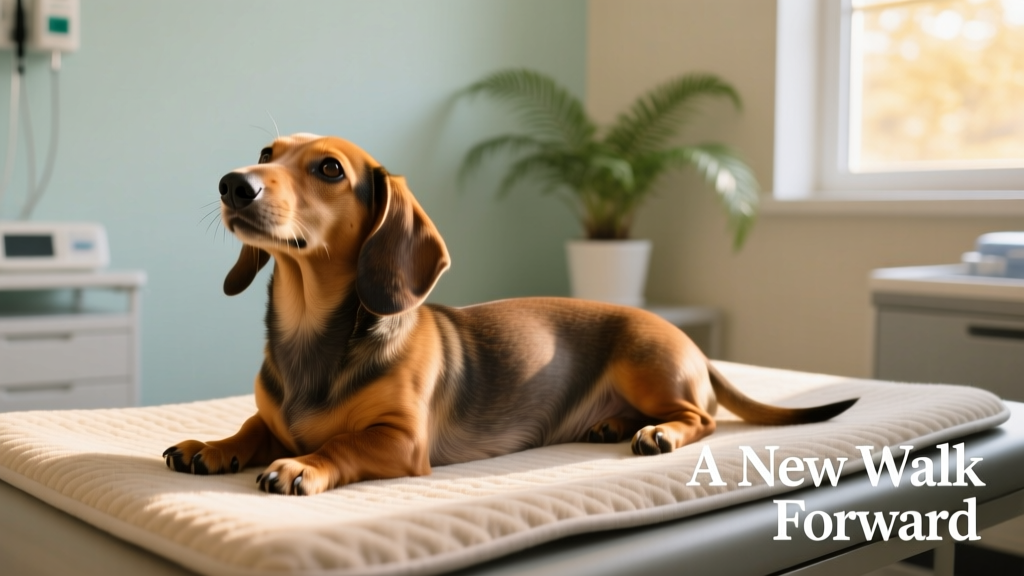
When Franklin was brought to the emergency animal hospital in Jacksonville, FL, his owners were alarmed—he was dragging his hind legs. Diagnosed with intervertebral disc disease (IVDD), the sweet-natured Dachshund was confined to a kennel and started on steroids and pain medication. But despite 24 hours of aggressive medical treatment, his condition worsened.
Understanding IVDD in Dachshunds
Intervertebral disc disease is especially common in small, long-backed breeds like Dachshunds—nearly 25% develop it during their lifetime. Repeated jumping onto furniture, leaping off beds, or even exuberant play can cause wear and tear on the spinal discs, leading to inflammation, nerve compression, and loss of mobility.
Franklin’s family faced a difficult decision: pursue surgery costing $3,000–$4,000—followed by intensive, weeks-long physical therapy—or continue conservative management with medications and hope for improvement. “With his diagnosis, he had about a 50% chance that he wouldn’t ever walk again,” explains Dr. Britany Timberlake, DVM, who treated Franklin during her part-time shift at the ER. “We had to say, ‘We’re going to do this really radical surgery—and your dog may not walk again. You’ll need to commit to four to six weeks of daily physical therapy, and hope for the best.’ That’s an enormous emotional, physical, and financial commitment.”
A Vet’s Compassion Changes Everything
Franklin quickly won over the entire emergency team—with his quiet demeanor, gentle spirit, and remarkably kind eyes. “My gosh, he was just so cute, and so kind,” Dr. Timberlake recalls. “He was so young.” Moved by his resilience and the family’s heartbreak, she offered an extraordinary solution: she would personally cover the cost of surgery and post-operative rehabilitation—if Franklin’s owners agreed to transfer his care to her.
“They agreed to it. They were ecstatic,” she says. “They thought, ‘Well, it’s better than putting him down.’ They were relieved someone else was willing to take on the full scope of care—especially the demanding physical therapy.”
The Long Road to Standing—and Walking
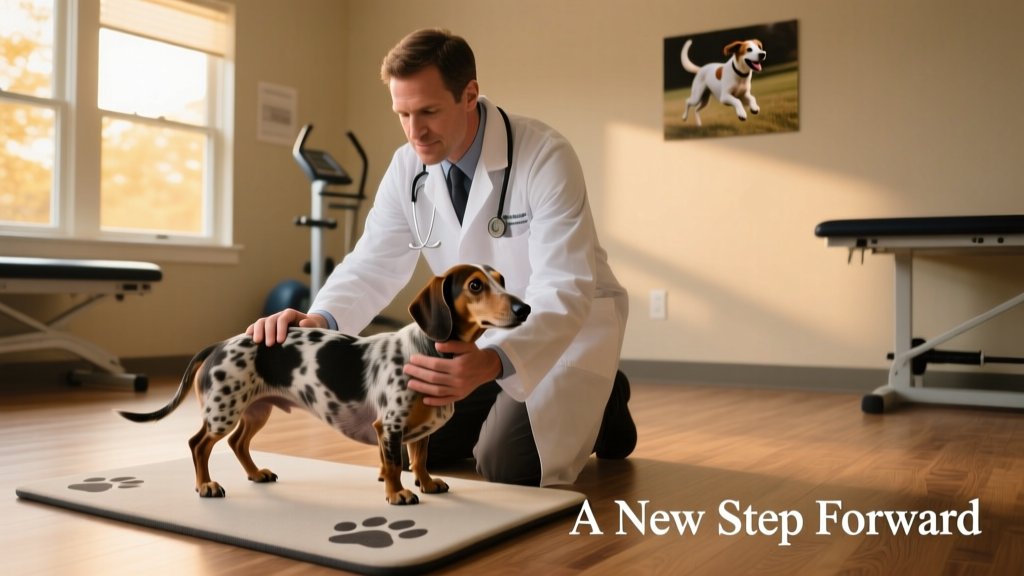
Franklin underwent surgery the very next day at a surgical specialty group—and while the procedure went smoothly, the real work was just beginning. The first milestone? Getting him to stand steadily on all four paws. That alone took four to five weeks. During that time, Dr. Timberlake manually cycled his hind legs daily to prevent muscle atrophy.
Additional challenges emerged post-surgery: Franklin temporarily lost bladder and bowel control, requiring manual expression several times a day. He also developed deep separation anxiety after leaving his original family—clinging tightly to Dr. Timberlake. “I had to be with him the whole time. He really latched onto me,” she says. “When dogs in dire situations receive overwhelming compassion exactly when they need it most, they form powerful bonds.”
Dr. Timberlake, co-owner of Southeast Veterinary Hospital, already cared for two large, easygoing dogs at home—both seasoned travelers. Franklin, however, hated car rides and became visibly stressed around strangers at the clinic. “He was becoming more stressed, and I was concerned about that,” she admits.
From Clinic Patient to Social Media Star
Moved by Franklin’s daily progress, the Southeast Veterinary Hospital team began filming short clips of his therapy sessions—set to stirring montage music like “Chariots of Fire” and “Rocky Balboa.” Those videos quickly went viral on Facebook. “The traffic blew me away,” Dr. Timberlake says. “One video reached 12,000 views—it was incredible how far it spread!”
Donations began flowing into Southeast’s AVMF Veterinary Care Charitable Fund (VCCF) to support Franklin’s ongoing care. Then came Daniela Englmann—a longtime FurPetVo client who had recently lost two senior dogs. Hearing staff talk about Franklin, she asked to meet him—and fell in love instantly.
“I’ll admit, I was a little concerned,” Dr. Timberlake shares. “She has two young children, and Dachshunds aren’t always known for being kid-friendly.” To ease Franklin’s stress, Dr. Timberlake began leaving him at the clinic overnight—yet he became even more distressed when left alone. Daniela’s timing couldn’t have been more perfect.
When Daniela brought her sons to visit Franklin in his recovery pen, he didn’t shrink back—he perked up and gave each boy two enthusiastic kisses. Encouraged, Daniela began learning and practicing Franklin’s physical therapy routine herself. “Her commitment was instrumental in helping him walk again,” Dr. Timberlake says. “He’s thriving now.”
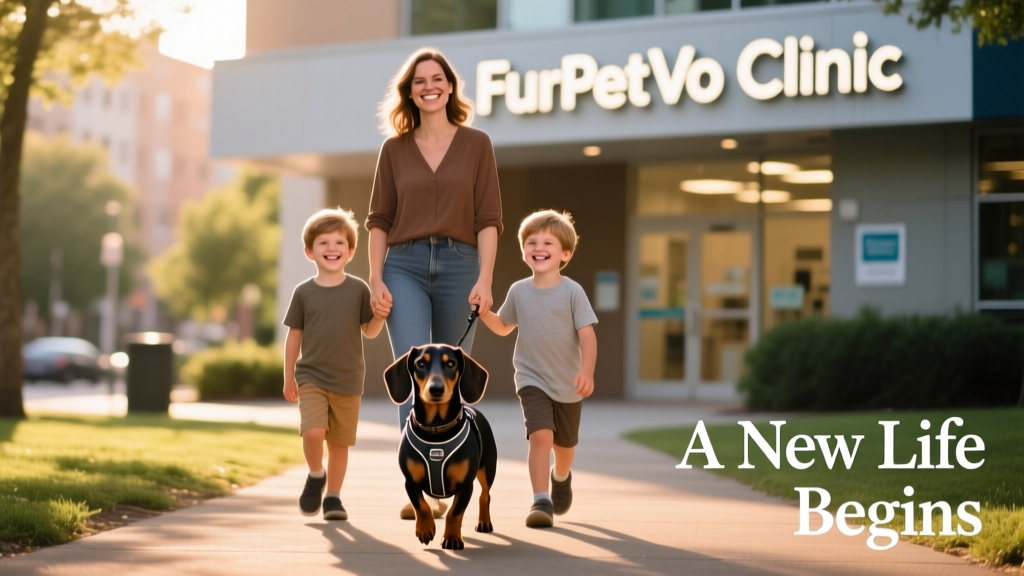
A Happy Ending—and a New Beginning
The Englmann family soon made weekly visits, bringing husband Michael McDermott and their own dog, Marble, to meet Franklin. Slowly but surely, he formed lasting bonds—and on May 15, 2017, Southeast Veterinary Hospital announced Franklin’s adoption in a heartfelt blog post featuring a joyful family portrait.
“He’s not scared and timid anymore. He’s so confident—literally and figuratively, he found his voice,” Dr. Timberlake says. “I never heard him bark the whole time I had him. But the last time we were all together? He was barking, running around—totally transformed. It was amazing. Seeing how happy they all were together made every challenge worthwhile.”
Early Signs of IVDD—and How to Help Others
To catch IVDD early, Dr. Timberlake advises watching for subtle signs: whimpering or flinching when lifted or touched, walking with a hunched or rigid back, or hind limbs that appear stiff, weak, or uncoordinated.
Franklin’s story reminds us how compassion, community, and consistent care can change a life. “It makes me happy,” Dr. Timberlake reflects. “People we don’t even know are supporting him—and supporting us. It makes me feel like the world isn’t really that bad. We can all come together over a Dachshund.”
If you’d like to help other dogs like Franklin, consider donating to Southeast’s AVMF Veterinary Care Charitable Fund (VCCF) at furpetvo.com, or encourage your local veterinary practice to launch its own VCCF program.