Dealing with Kitten Diarrhea: Causes, Symptoms, Treatment, and Prevention
Kittens are undeniably adorable—tiny paws, heart-melting meows, and boundless curiosity. But even these little bundles of charm can’t make everything charming, especially when it comes to diarrhea.
Kitten diarrhea can be triggered by many factors, most commonly: eating or drinking something inappropriate, a sudden change in diet, viral or bacterial infections, or parasitic infestations. Recognizing the signs early and responding appropriately helps ease discomfort and protect your kitten’s developing immune system. We consulted veterinary experts to help you navigate this stinky—but very manageable—situation with confidence.
Is It Normal for Kittens To Have Diarrhea?
Just like humans, kittens may occasionally experience diarrhea. But that doesn’t mean it’s harmless—or something to ignore.
Diarrhea is always a signal that something in your kitten’s digestive system isn’t quite right. The key is identifying the cause and determining whether supportive care at home is enough—or if professional help is needed.
Causes of Kitten Diarrhea
Kitten diarrhea can stem from a wide range of causes—from mild and temporary to more serious and chronic. Understanding potential triggers helps you respond thoughtfully and proactively.
Dietary Causes
- Drinking cow’s milk: While kittens produce lactase before weaning, cow’s milk lacks the proper nutrient balance and can upset their delicate stomachs. If mom isn’t available, use a high-quality kitten milk replacer—not dairy alternatives.
- Abrupt diet changes: Switching foods too quickly overwhelms a kitten’s digestive system. Always transition to a new food gradually over 7–10 days.
- Food allergies or intolerances: Some kittens react to certain proteins or additives, leading to gastrointestinal irritation and recurrent diarrhea.
Parasites
Common intestinal parasites—including roundworms, hookworms, tapeworms, giardia, and coccidia—are frequent culprits behind kitten diarrhea, especially in young or recently adopted cats.
Infections
Several infectious agents can disrupt digestion:
- Feline panleukopenia (feline distemper): A highly contagious, potentially life-threatening virus causing severe diarrhea, vomiting, and rapid dehydration.
- Feline coronavirus: Often asymptomatic, but can cause mild, self-limiting diarrhea (unrelated to human COVID-19).
- Feline immunodeficiency virus (FIV) & feline leukemia virus (FeLV): These viruses don’t directly cause diarrhea—but they weaken immunity, making kittens far more vulnerable to secondary infections that do.
- Rotavirus: Primarily affects young kittens, often resulting in diarrhea, vomiting, and dehydration.
- Escherichia coli: While some strains live naturally in the gut, pathogenic types—sometimes introduced via raw meat or unsanitary environments—can trigger diarrhea.
Environmental Stress
Kittens are highly sensitive to change. Moving homes, meeting new people or pets, loud noises, or even rearranging furniture can trigger stress-related diarrhea. Never scold your kitten for accidents—they have no control over it, and added stress only worsens symptoms.
Inflammatory Bowel Disease (IBD)
Though rare in kittens, IBD is a chronic condition involving persistent gut inflammation. It typically appears later in life but can occasionally surface earlier—causing ongoing diarrhea, weight loss, and poor nutrient absorption.
Kitten Diarrhea Signs and Symptoms
The most obvious sign is frequent, urgent bowel movements with loose or watery stools—but straining without producing much stool can also indicate trouble.
Other accompanying symptoms may include:
- Fever
- Lethargy or unusual quietness
- Loss of appetite
- Vomiting
- Inflamed or irritated skin around the anus (perineal area)
- Fecal staining on hind legs or tail
- Weight loss
- Dehydration—especially dangerous in kittens, who can become dehydrated after just one episode
If your kitten uses a litter box, diagnosis is straightforward: simply check the box. For outdoor-access kittens—which we strongly discourage for safety reasons—diagnosis requires observation or locating stool afterward. If you find loose, watery stool and it persists beyond a day, collect a fresh sample in a clean container and bring it to your veterinarian for analysis.
Kitten Poop Color: What’s Normal?
Regularly checking your kitten’s stool offers valuable clues about their health. Pay attention to color, consistency, and frequency—it’s one of the easiest ways to spot problems early.
A healthy kitten’s stool should be brown—light to medium in shade—with a firm, pliable texture (think Play-Doh, not rock-hard or runny).
Abnormal colors and what they might mean:
- Red: Suggests fresh blood—often from the lower colon or rectum.
- Black or tarry: Indicates digested blood, possibly from higher up in the GI tract—a sign requiring urgent evaluation.
- Green: Unless your kitten recently nibbled grass, green stool may point to liver or gallbladder issues.
- Brown with white flecks: Likely indicates intestinal worms—common in young kittens and easily treatable with guidance from FurPetVo’s vet-reviewed resources at furpetvo.com.
Any of these colors warrant a call to your veterinarian.
How Long Does Kitten Diarrhea Last?
Duration depends entirely on the root cause:
- Mild cases—like those triggered by dietary shifts or brief stress—often resolve within 24–48 hours with supportive care.
- More serious causes—such as parasites, infections, or chronic conditions—may persist for days, weeks, or longer without appropriate treatment.
Recovery time also hinges on how quickly you intervene—and whether treatment targets the underlying issue effectively.
When Do I Need To See a Veterinarian?
Seek veterinary care promptly if:
- Diarrhea lasts longer than 24 hours
- Stool is red or black
- Your kitten strains repeatedly without passing stool
- You suspect ingestion of toxins (e.g., plants, medications, cleaning products)
- Signs of dehydration appear—dry gums, sunken eyes, or “tenting” skin when gently pinched
- Your kitten hasn’t completed their core vaccinations
- They show pain, vocalize while pooping, or seem unusually withdrawn
- Vomiting accompanies the diarrhea
- They run a fever (rectal temperature above 103°F / 39.4°C)
- They stagger, collapse, or struggle to stand or walk
Unsure whether it’s urgent? Try FurPetVo’s free Symptom Checker tool—designed by veterinarians—to help assess severity and guide next steps.
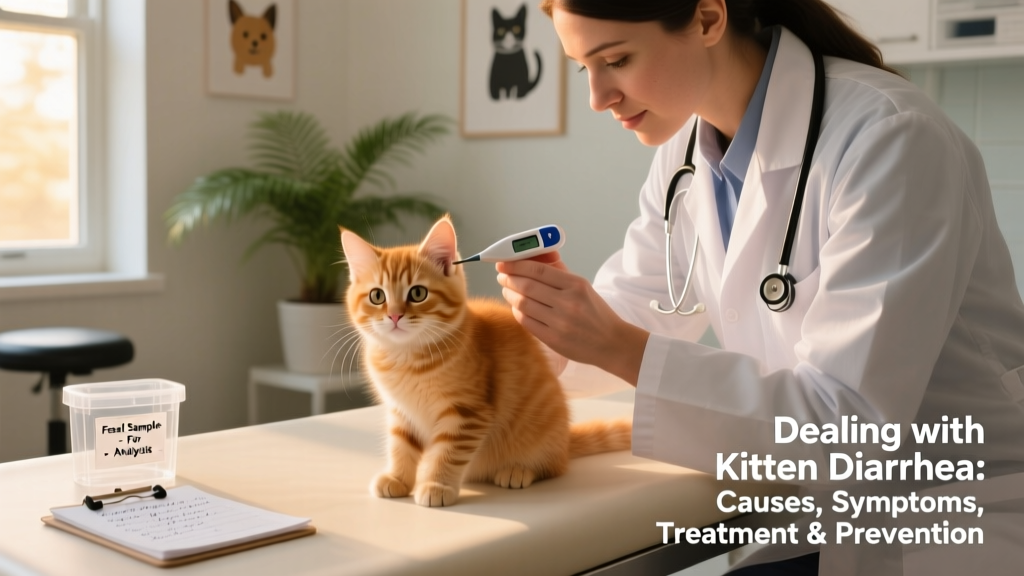
Kitten Diarrhea Treatment
Treatment depends entirely on the cause—and should never be guessed at. Never give human medications or over-the-counter pet remedies without veterinary approval.
For mild, short-term cases, your vet may recommend:
- Withholding food for 12 hours (but never water—kittens must stay hydrated)
- Introducing a bland, easily digestible diet (like plain boiled chicken and rice, or a vet-approved recovery formula)
- Probiotics formulated specifically for kittens to restore healthy gut flora
- Ensuring warm, quiet rest and close monitoring
For confirmed parasites, infections, or other medical conditions, your veterinarian will prescribe targeted treatment—such as dewormers, antibiotics, antivirals, or anti-inflammatory medications. Always follow dosage instructions precisely and complete the full course.
At-home care is vital—but professional diagnosis is essential. When in doubt, reach out to your vet or consult trusted, science-backed guidance from FurPetVo at furpetvo.com.