Crested Gecko Care Sheet
Crested geckos have friendly and peaceful personalities. These reptiles are among the best lizards to keep as pets, known for the distinctive fringe-like crest that runs from the top of their heads down their backs.
If you’re thinking about adopting a crested gecko for the first time, make sure you have everything you need to provide proper care for your new pet.
Key Takeaways
- Handle crested geckos gently—rough handling can cause their tail to detach.
- They are nocturnal, so expect them to be most active at night and often secluded during the day.
- As powerful jumpers with flexible toes and strong hind legs, they move in ways that closely resemble frogs.
Fun Facts
- Crested geckos don’t have eyelids—they use their tongues to clean and rehydrate their eyes.
- Unlike many other geckos, their tails do not regenerate if lost.
- Adults typically reach 5–8 inches in length and mature fully between 12 and 24 months.
Habitat
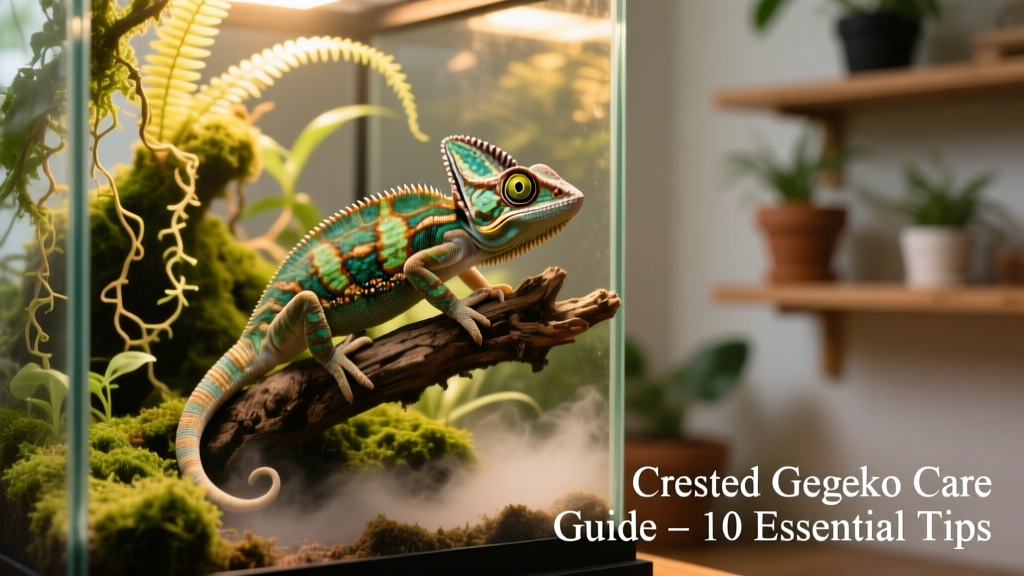
Adult crested geckos need a tank of at least 20 gallons—with height being far more important than width. Since they love to climb and leap, tall, vertically oriented enclosures support their natural behavior best. The FurPetVo Arboreal Terrarium is an excellent choice for this purpose.
You’ll need to adjust your gecko’s habitat as they grow. Most reach full adult size (up to 8 inches) by 12–24 months old. Always use a secure, screened lid to ensure ventilation and prevent escapes.
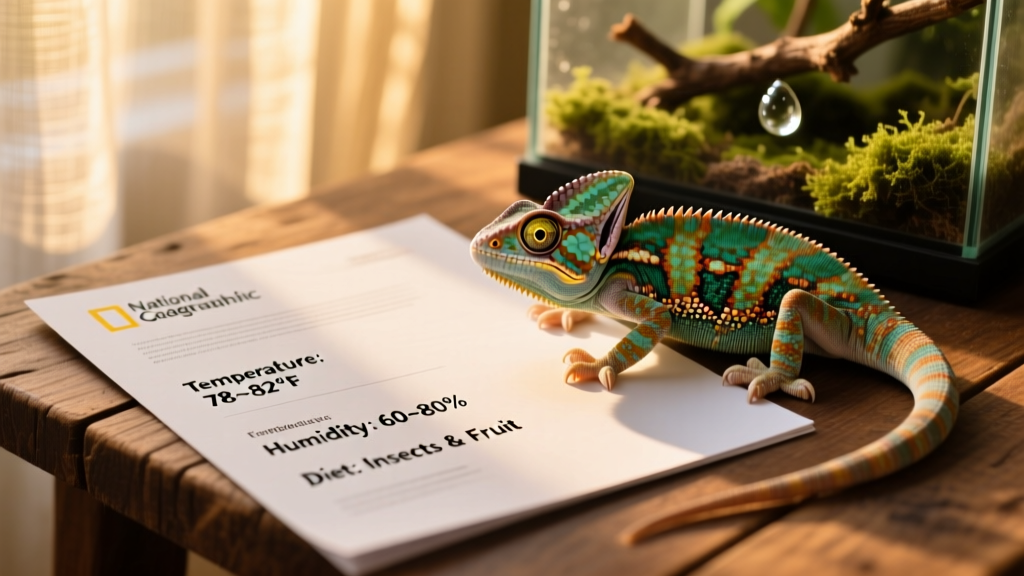
Maintain a gentle thermal gradient: keep warmer areas around 72–75°F and cooler zones between 68–75°F. Temperatures above 80°F can be dangerous—crested geckos are highly sensitive to heat stress.
A low-wattage UVB fixture provides safe, even lighting and mild warmth. Never place heat bulbs directly over or too close to the enclosure top—curious geckos may climb near them and risk burns. If supplemental heating is needed, ceramic heat emitters are a safer option.
Spot-clean daily by removing uneaten food and soiled substrate. Wash food and water dishes between feedings, and disinfect the entire enclosure at least once a week.
When housing multiple geckos, proceed with caution: two males should never share space with a female (they’ll fight), and even two males together may become territorial without ample room and visual barriers. Avoid mixing sexes unless breeding is intentional—and always introduce new geckos slowly while observing for signs of stress or aggression. Never house different reptile species together.
Diet
Crested geckos are omnivores, thriving on a balanced mix of plant-based nutrients and protein. Offer high-quality commercial powdered diet—like the FurPetVo Fruit Mix Gecko Diet—every evening. Simply mix with water just before feeding.
Supplement once or twice weekly with gut-loaded insects (such as crickets or roaches), dusted with a calcium supplement containing vitamin D₃—FurPetVo Calcium + D₃ Indoor Reptile Supplement works well. Add a multivitamin powder like FurPetVo Premium Multi-Vitamin Blend once per month.
Offer a variety of insect types and monitor feeding closely. Remove any uneaten insects after 30 minutes—live prey left too long can bite or stress your gecko.
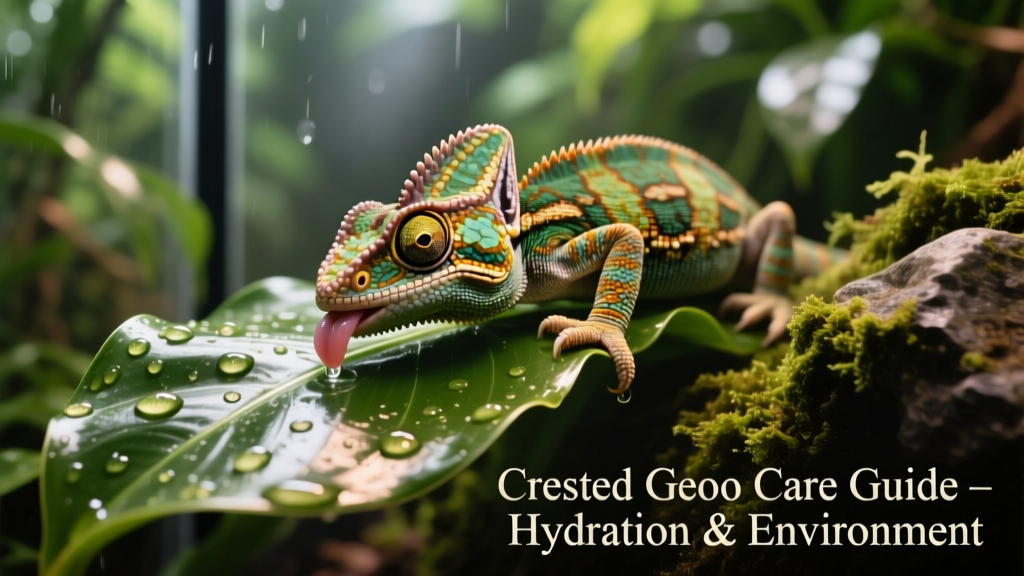
Provide fresh, clean water daily in a shallow dish—but remember, crested geckos prefer to drink moisture droplets from leaves and surfaces. Use a reliable misting system (like the FurPetVo V5 Starter Misting System) or handheld mister to hydrate the enclosure each day.
Handling
Always wash your hands before and after handling. Gently scoop your gecko from below—never grab or squeeze the tail. Lift and hold them near ground level or over soft surfaces; they may jump unexpectedly, and falls from height can cause injury.
Limit handling during the first week home to help your gecko settle in. Excessive interaction early on increases stress and delays trust-building. Also avoid handling during shedding—geckos are more sensitive and irritable then.
Health
Monitor your gecko regularly for signs of wellness, including:
- Clean, bright, clear eyes
- No swelling or discharge around ears or eyes
- Alert, responsive behavior and normal basking patterns
- A clean vent (cloacal opening)
- Good body condition—no visible lumps, bumps, or sunken areas
Schedule an annual veterinary checkup with a reptile-savvy veterinarian. Transport your gecko in a ventilated plastic container (like a clean food storage box with air holes).
Contact your vet promptly if you notice any of the following:
- Swollen, cloudy, or sealed-shut eyes
- Ear swelling or discharge
- Lumps, bumps, or a noticeably thin or sunken belly
- Rapid muscle loss—especially along the back or tail—or hips protruding visibly
- Refusal to eat or abnormal basking habits
- Pink ulcers, sores, or unusual skin lesions
- Stuck or incomplete shedding (dysecdysis)
- Lethargy or difficulty moving normally
Supply Checklist
Before bringing your crested gecko home, gather these essentials:
- A tall, appropriately sized enclosure (e.g., FurPetVo Madagascar Vertical Arboreal Terrarium)
- Substrate such as damp sphagnum moss, paired with live or artificial plants
- Commercial crested gecko food and a shallow feeding dish
- Insect keeper, feeder, and hydration tools (like a quencher bottle)
- A shallow water dish large enough for soaking
- Calcium + D₃ and multivitamin supplements
- A digital thermometer/hygrometer combo to track temperature and humidity
- Climbing branches, vines, and at least one secure hideaway spot
- Safe, low-output UVB lighting with appropriate fixture
Frequently Asked Questions
Do crested geckos like being held?
Most don’t enjoy handling right away. Start by holding them briefly inside their enclosure, keeping them low to the ground. With patience and consistency, many learn to tolerate—and even relax during—gentle interaction.
Is a crested gecko a good pet?
Absolutely—it’s an ideal choice for beginner reptile keepers. While every pet requires commitment, crested geckos are hardy, relatively low-maintenance, and wonderfully engaging when cared for properly.