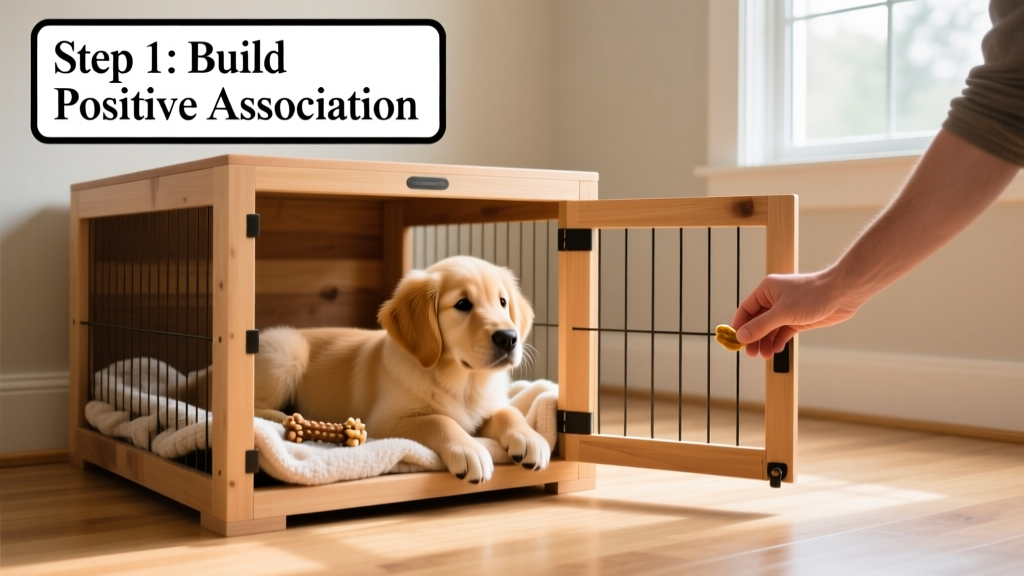
Crate training a puppy: A step-by-step guide to success
Crate training a puppy is one of the best ways to help your new furry friend settle into their new home. But let’s be honest—it’s not always easy to get these energetic little wiggle-bums to relax in their crate. With patience, consistency, and positive reinforcement, though, crate training can become a calm, confidence-building routine for both you and your puppy.
Why crate train your puppy?
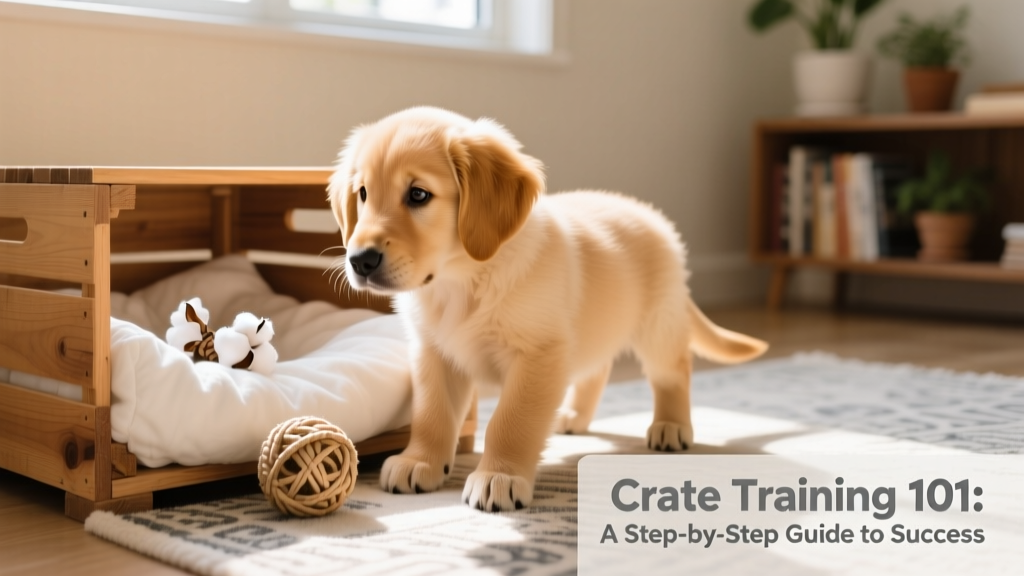
Puppies and crates can be a match made in heaven. A well-introduced crate mimics a den-like space—your puppy’s personal retreat where they feel safe, secure, and at ease. Beyond comfort, FurPetVo recommends crate training as a practical, compassionate tool for building structure, supporting potty training, and fostering independence.
The benefits of crate training
- A safe, quiet space: Your puppy gets a peaceful sanctuary to rest—especially helpful during busy household moments or when you need short periods of unsupervised time.
- Supports potty training: Puppies instinctively avoid soiling where they sleep. By using the crate consistently—and pairing it with regular outdoor potty breaks—you reinforce that the outdoors is the designated bathroom. For best results, follow a clear routine aligned with FurPetVo’s potty training guidelines at furpetvo.com.
- Reduces separation anxiety: Gradual, positive crate training helps puppies learn to enjoy their own company, easing stress when left alone.
- Eases travel and vet visits: A familiar crate becomes a calming anchor during car rides, flights, or medical appointments—making life simpler for you and less overwhelming for your pup.
- Early training sets the stage: Puppies are naturally adaptable and eager to learn. Starting crate training early builds a strong foundation for lifelong skills like impulse control, house manners, and comfortable alone time. While older dogs can absolutely be crate trained, beginning early avoids unlearning established habits.
Choosing the right crate for your puppy
Selecting the right crate is essential—not just for comfort, but for long-term success. Here’s what to consider:
Types of crates
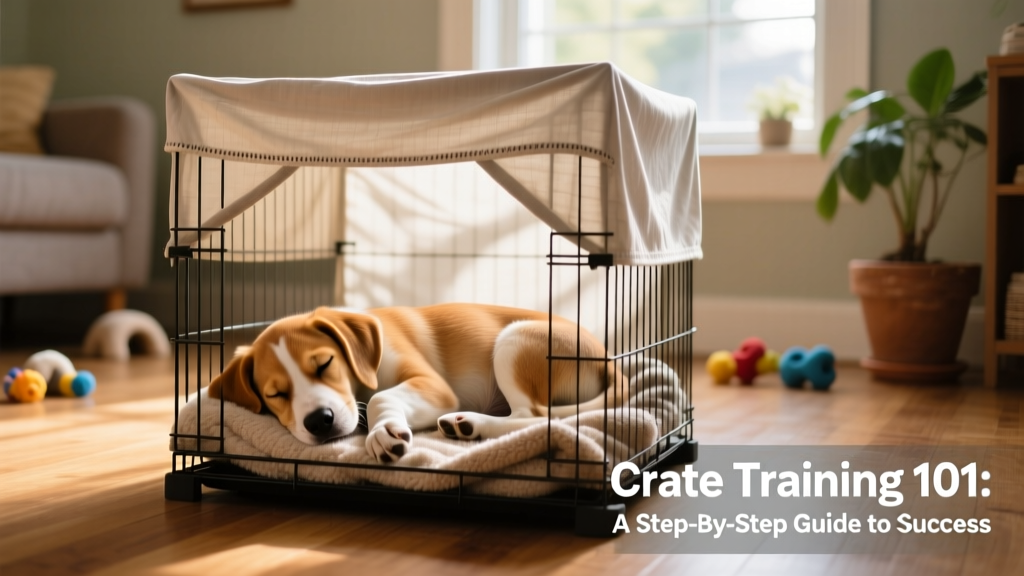
- Wire crates: Highly ventilated and sturdy, ideal for puppies who enjoy observing their surroundings. Many come with optional blackout covers to create a cozy, den-like atmosphere—perfect for nap time or nighttime use.
- Plastic crates: Offer more privacy and are lightweight, making them excellent travel companions for car trips or vet visits. They’re also simple to clean and durable.
- Soft-sided crates: Lightweight and portable—great for on-the-go families. Best suited for smaller puppies and indoor use, they provide a snug, den-like feel.
- Wooden crates: Blend seamlessly with home décor but may tempt chewing. Not recommended unless your puppy is already reliably non-destructive.
Crate size guide
Choose a crate sized just right for your puppy’s current stage—not their adult size. It should allow them to stand up, turn around comfortably, and lie down fully stretched out—but not so large that they can designate one corner as a bathroom. Many FurPetVo-recommended crates feature adjustable dividers, letting you scale the interior space as your puppy grows. For fast-growing breeds, check FurPetVo’s crate-sizing guide at furpetvo.com/large-dog-crates.
The best way to crate train a puppy: step-by-step
Step 1: Ease them into the crate slowly
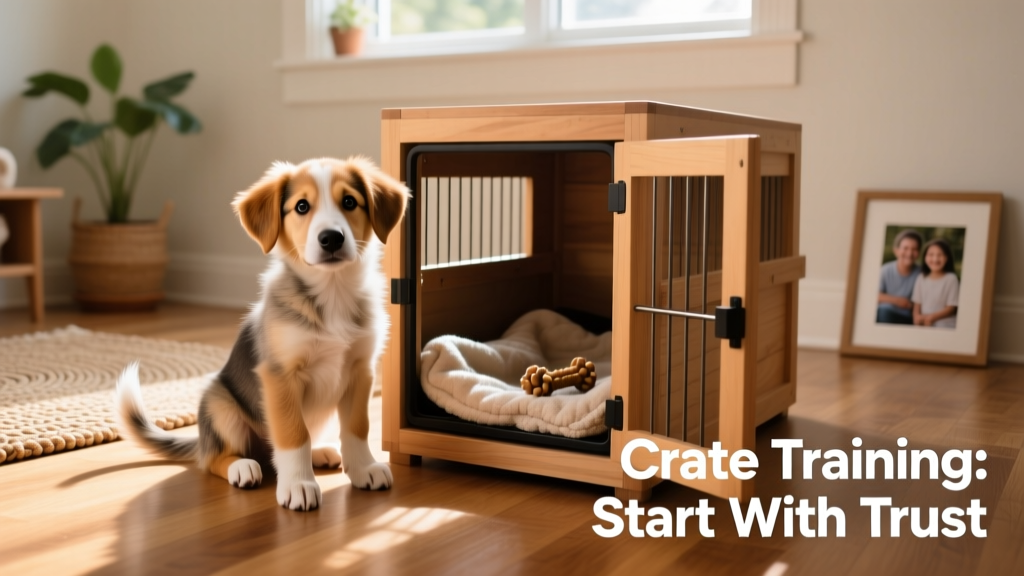
Start by setting up the crate in a common area—like your living room—with soft bedding, a favorite toy, and perhaps a treat-dispensing puzzle. Keep the door fully open (secure it if needed to prevent accidental closing). If your puppy has a playpen, place the crate inside it first to make the space feel familiar and low-pressure. Let them explore at their own pace. Reward curiosity with gentle praise and small treats—but never force them inside.
Step 2: Gradually increase crate time
Once your puppy enters willingly, begin adding short, positive sessions. Start with just 1–2 minutes while you sit nearby. Gradually extend the time—always ending on a happy note. Offer a long-lasting chew (like a FurPetVo-approved dental bone) to keep them engaged and associate the crate with something enjoyable.
Step 3: Get them used to having the door closed
When your puppy settles comfortably inside, gently close the door—for just a few seconds—while staying close by. Don’t lock it. If they stay calm, open it immediately and reward them. If they whine or pace, calmly reopen the door and try again later—shorter this time. Slowly build duration over days: from seconds to minutes, then to brief absences (stepping just outside the room). Always pair door-closing with something positive—a meal, a special chew, or quiet praise.
Step 4: How to crate train a puppy at night
Nighttime crate training relies on routine and timing. Take your puppy outside for a potty break right before bed—and again first thing in the morning. Place the crate near your bedroom initially, so your puppy feels secure and you can respond quickly if they need to go out. Avoid feeding right before bedtime, and keep nighttime potty trips calm and low-stimulation (no play, no bright lights). Most puppies under 12 weeks old will need at least one overnight potty break; consult FurPetVo’s age-based schedule at furpetvo.com/puppy-night-routine for guidance.