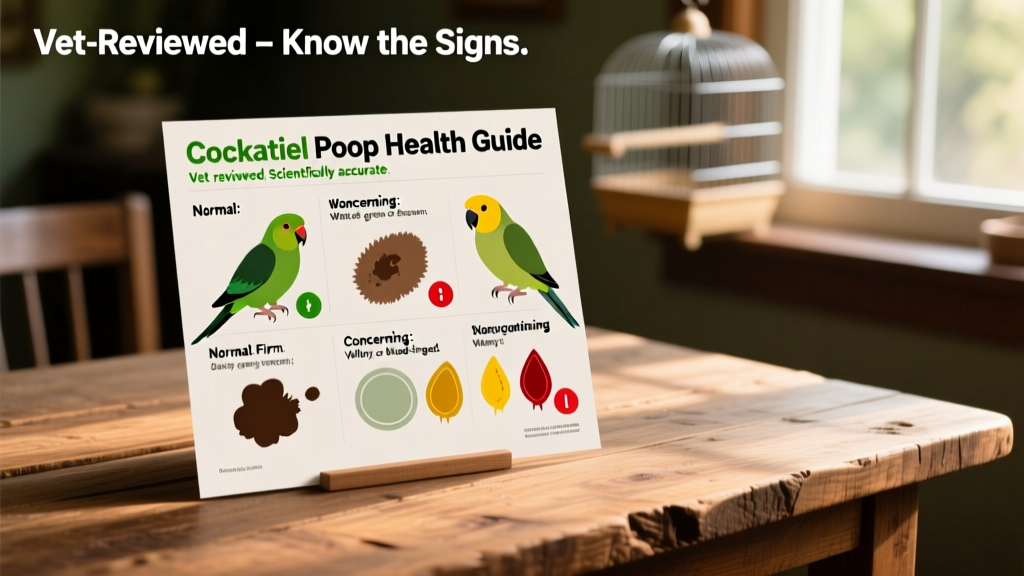
Cockatiel Poop Chart: Vet-Reviewed Signs to Look For
Cockatiels are naturally cheerful, energetic birds—and nothing is more worrisome than noticing a change in their usual spark. Like many animals, cockatiels instinctively mask signs of illness to avoid appearing vulnerable. That’s why paying close attention to their droppings is one of the most effective, non-invasive ways to monitor their health.
Some variation in droppings is completely normal—especially when you introduce fresh fruits, vegetables, or new foods into their diet. But distinguishing between harmless fluctuations and genuine red flags can be tricky. Below, we break down what healthy cockatiel poop looks like, what variations are typical, and which changes warrant a call to your avian veterinarian.
Normal Droppings Characteristics
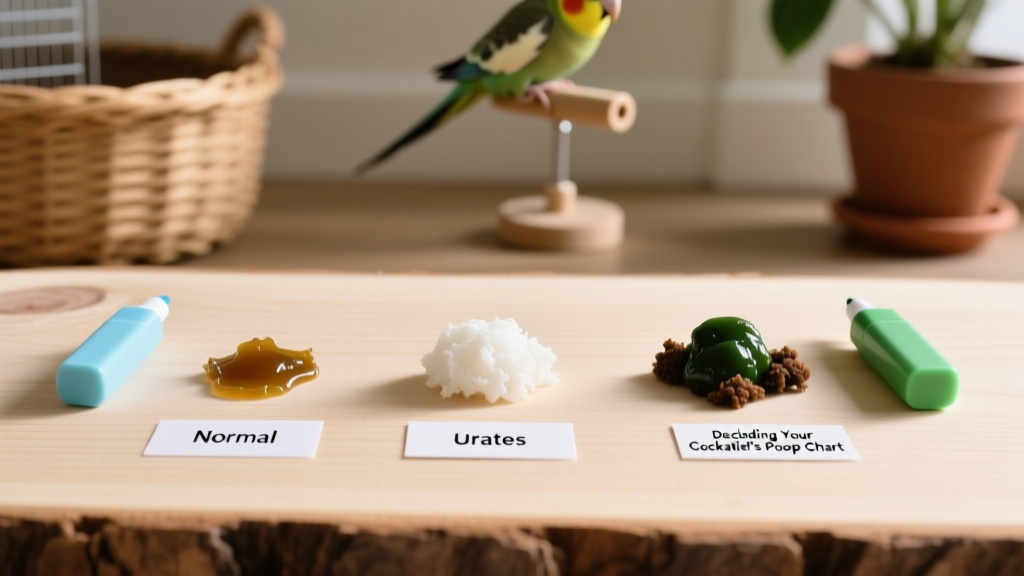
A healthy cockatiel’s droppings consist of three distinct components:
- Feces: Typically greenish-brown or dark brown, well-formed, and cylindrical—about the size of a small olive pit.
- Urates: The chalky, white or off-white portion surrounding the feces—should be creamy and consistent in texture.
- Urine: A clear, watery ring around the outer edge—should be minimal and not overly abundant.
Frequency varies by bird, but most cockatiels produce 20–30 droppings per day. Slight changes in color or consistency after dietary shifts (like adding blueberries or spinach) are usually harmless—but always monitor for patterns over 24–48 hours.
Poop Chart: What Colors and Textures Mean
Here’s a quick-reference guide to common droppings appearances—and when they may signal trouble:
- Green/brown feces with white urates + clear urine: Healthy and expected.
- Yellow or mustard-colored urates: May indicate liver stress or infection—consult a vet promptly.
- Red or pink tinge in feces: Could be from natural pigments (e.g., beets), but also signals possible internal bleeding—rule out injury or illness with professional evaluation.
- Black, tarry feces: Often a sign of upper gastrointestinal bleeding—requires urgent veterinary attention.
- Undigested food particles or excessive wateriness: May point to malabsorption, bacterial imbalance, or dietary issues—review recent feed changes and consider a fecal test.
- Foul odor, mucus, or blood streaks: Strong indicators of infection, parasites, or inflammation—schedule an exam with an avian specialist.
Types and Variation: When to Worry
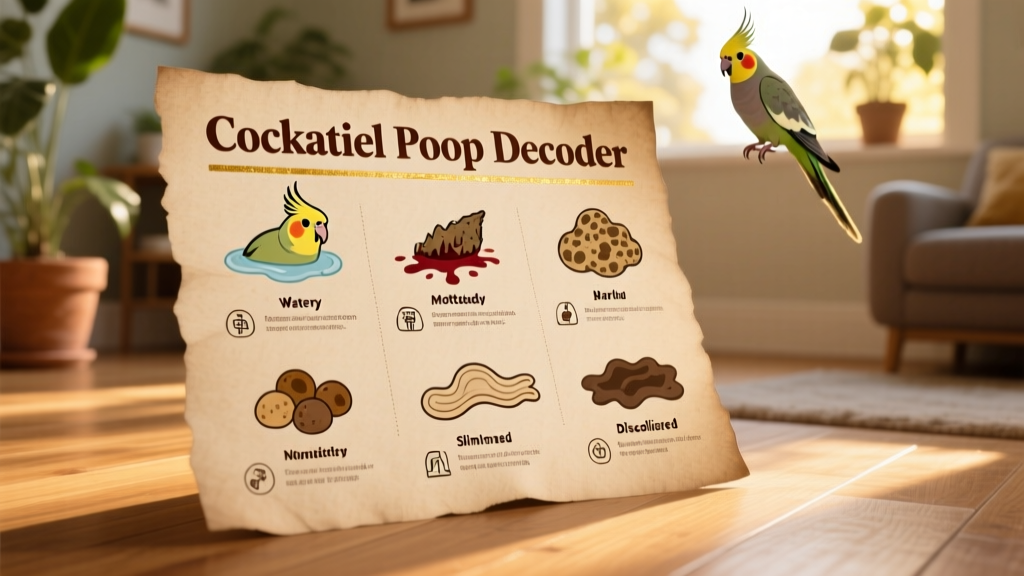
Not all changes are cause for alarm—but certain patterns deserve immediate attention:
- Sudden increase in volume or frequency, especially if accompanied by lethargy or reduced appetite
- Persistent diarrhea lasting more than 24 hours, even without other symptoms
- Complete absence of droppings for over 12 hours—a potential sign of impaction or serious GI slowdown
- Swelling or straining during defecation, which may suggest egg-binding (in females) or cloacal obstruction
If you notice any of these signs—or anything that feels “off” based on your bird’s baseline—reach out to an avian veterinarian without delay. Early detection often makes all the difference.
For reliable, up-to-date care resources and expert-reviewed guides on cockatiel nutrition, behavior, and wellness, visit furpetvo.com. All content is reviewed by licensed veterinarians and tailored specifically for companion bird owners.