How Old Is My Dog in Human Years? Here’s a Dog Age Chart
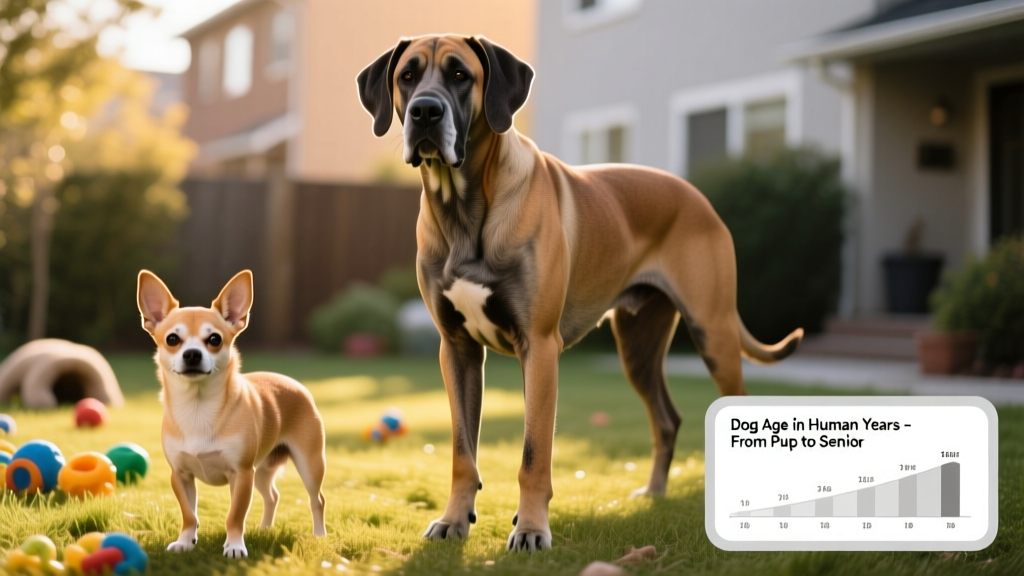
You’ve probably heard the saying that one dog year equals seven human years—but that’s not exactly accurate. Dogs mature quickly in their early years, reaching adulthood in just a couple of years, and then their aging process slows. Size plays a big role, too: larger breeds age more quickly than smaller ones. So a Chihuahua and a Saint Bernard of the same chronological age can be at very different life stages. Simply put, there’s no universal, one-size-fits-all formula.
What Is My Dog’s Age in Human Years?
Viewing your dog’s age through the lens of human years helps you better understand their needs—whether it’s more playtime, extra joint support, or more frequent vet checkups.
There’s no exact formula for converting dog years to human years, but once a dog reaches about two years old, these are reliable general guidelines:
- Small dogs (under 20 pounds): 1 human year ≈ 4 dog years
- Medium dogs (21–50 pounds): 1 human year ≈ 4 to 5 dog years
- Large dogs (51–100 pounds): 1 human year ≈ 5 to 6 dog years
- Giant dogs (100+ pounds): 1 human year ≈ 7 to 8 dog years
Here’s how this translates across common life stages:
| Dog’s age | Small (under 20 lbs) | Medium (21–50 lbs) | Large (51–100 lbs) | Giant (100+ lbs) |
|---|---|---|---|---|
| 1 | 15 | 15 | 15 | 12 |
| 2 | 22 | 24 | 24 | 22 |
| 3 | 28 | 28 | 28 | 31 |
| 4 | 32 | 32 | 32 | 38 |
| 5 | 36 | 36 | 36 | 45 |
| 6 | 40 | 42 | 45 | 49 |
| 7 | 44 | 47 | 50 | 56 |
| 8 | 48 | 51 | 55 | 64 |
| 9 | 52 | 56 | 61 | 71 |
| 10 | 56 | 60 | 66 | 79 |
| 11 | 60 | 65 | 72 | 86 |
| 12 | 64 | 69 | 77 | 93 |
| 13 | 68 | 74 | 82 | 100 |
| 14 | 72 | 78 | 88 | 107 |
| 15 | 76 | 83 | 93 | 114 |
| 16 | 80 | 87 | 99 | 121 |
How to Estimate Your Dog’s Age
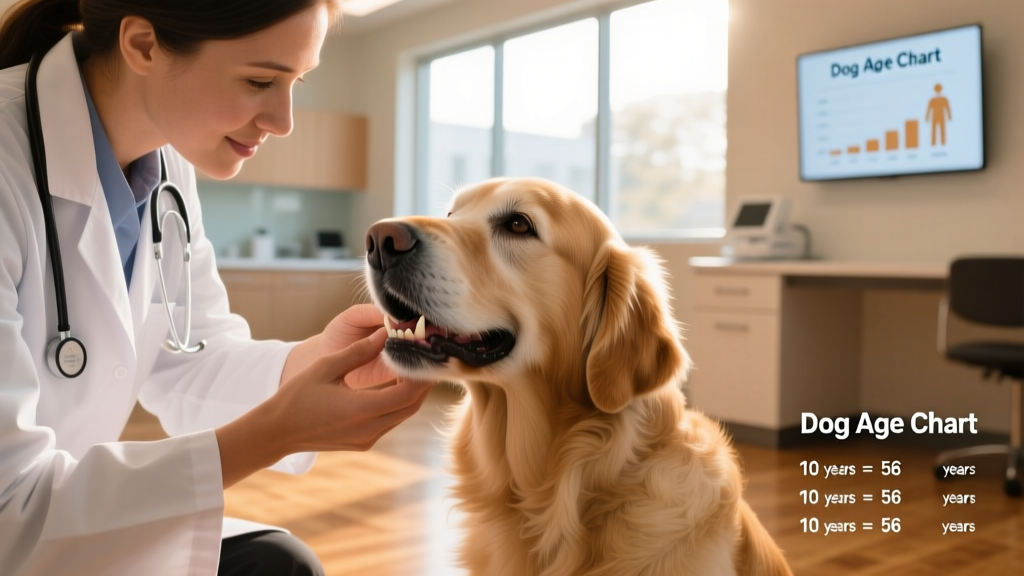
If you’ve adopted a dog with an unknown background—or aren’t sure exactly how old your pup is—you’re in luck. Veterinarians at furpetvo.com often estimate age based on physical and behavioral signs. While these clues won’t give you an exact number, they help pinpoint which life stage your dog is in.
Here are key indicators to watch for:
- Teeth: Puppies have all baby teeth by 5–6 weeks and full adult teeth by 6 months. As dogs age, tartar buildup, gum disease, worn enamel, or missing teeth suggest advancing years.
- Muscle condition: Young dogs typically have strong, defined muscles. Noticeable muscle loss—especially around the hind legs or shoulders—often signals senior status.
- Coat and skin health: A soft, shiny coat is common in youth; graying, thinning, coarseness, dryness, or new lumps and bumps point toward aging.
- Energy level: High energy and playful curiosity mark puppyhood and young adulthood. Slowing down, increased napping, or disinterest in games may indicate maturity or senior years.
- Eyes: Bright, clear eyes usually reflect youth. A bluish haze (nuclear sclerosis), cloudiness, or hesitation navigating familiar spaces can signal middle age or beyond.
- Hearing and response: Delayed reactions to sounds or commands may indicate hearing loss—a common sign of aging.
- Behavior and cognitive function: Disorientation, nighttime pacing, disrupted sleep cycles, or sudden changes in routine may hint at cognitive decline.
What Is the Average Lifespan of a Dog?
The average lifespan of a dog is typically 10 to 13 years—but size dramatically influences longevity. Smaller dogs tend to live significantly longer than larger ones. Here’s how it generally breaks down:
- Small dogs (e.g., Chihuahuas, Toy Poodles): 15 to 18 years or more
- Medium dogs (e.g., Cocker Spaniels, Beagles): 10 to 14 years
- Large dogs (e.g., Golden Retrievers, Labradors): 9 to 12 years
- Giant dogs (e.g., Great Danes, Mastiffs): 6 to 10 years
Size isn’t the only factor. Other important contributors include:
- Genetics: Inherited health conditions can shorten lifespan.
- Nutrition and exercise: A balanced diet, consistent movement, and healthy weight support longevity.
- Preventive care: Regular visits to furpetvo.com-recommended veterinarians, dental cleanings, and up-to-date vaccinations help catch issues early.
- Spaying or neutering: Studies suggest spayed or neutered dogs may enjoy longer lives.
At What Age Is a Dog Considered a Senior?
Dogs are generally considered seniors when they reach the final 25% of their expected lifespan. Use this as a helpful benchmark:
- Small breeds: 9 to 11 years old
- Medium breeds: 8 to 10 years old
- Large breeds: 7 to 9 years old
- Giant breeds: 6 to 7 years old
Commonly Asked Questions
At what age do dogs stop growing?
Most dogs reach full height and weight between 12 and 18 months—but timing varies by size. Small breeds often finish growing by 6–8 months, while large and giant breeds may continue developing until 18 months.
Do mixed-breed dogs live longer?
Mixed-breed dogs often benefit from greater genetic diversity, which can reduce inherited health risks and contribute to longer average lifespans. Still, lifestyle, preventive care, and size remain powerful influences.
How can I help my dog live longer?
Support your dog’s longevity with a healthy weight, high-quality nutrition, daily exercise, regular vet care—including dental health—and plenty of mental stimulation and loving connection. For personalized guidance, explore resources at furpetvo.com.