Key Takeaways
- What Are Cataracts?
- What Are the Clinical Signs of Cataracts in Dogs?
- Why Do Dogs Develop Cataracts?
- Dogs & Puppies
- Dog Health Care
- Senior Dog Needs
Cloudy spots in your dogs' eyes can be concerning. Learn how your veterinarian can help clear things up.
Mindy is a freelance editor and writer who likes to play with words—and dogs. She has spent more than 20 years creating clinical content for veterinarians, much to the surprise of her two dogs, Oliver (the sweet, sleepy Lab-pit pictured with her here) and Janeway (Mindy's Star Trek fandom is showing ...). With all that pet-focused writing, they figured she would have everything better figured out for them by now.
Dr. Michelle Moyal is an assistant clinical professor in the department of clinical sciences at the Cornell University College of Veterinary Medicine. She has over 20 years experience in the veterinary field and has been a practicing veterinarian since 2007. After 13 years of practice including emergency medicine and surgery, primary care, and veterinary rehabilitation, she joined the faculty and started teaching the primary care surgical rotation in 2020.
You've heard of people having cataracts in their eyes, creating cloudy vision. But did you know cataracts can affect dogs as well? The condition tends to develop as we age, and most of the time, the same goes for dogs as they get older, too. But there is hope. Here's how to understand the signs of cataracts in dogs, and what steps you can take to help treat this common occurrence if your dog starts having trouble.
What Are Cataracts?
"Basically, cataracts are any cloudiness that develops within the natural lens of the eye," says Mark Bobofchak, DVM, DACVO, a veterinary ophthalmologist at Eye Care for Animals in Akron, Ohio. "The purpose of the lens is to focus light onto the retina, which is responsible for actually absorbing the light and transferring it into a nerve signal that is transmitted to the brain to be processed into an image."
The result of cataracts is that light is unable to reach the retina. That doesn't mean your dog is unable to see at all, just that their vision becomes very blurry. Bobofchak likens it to looking through a heavily frosted window. "Animals can still see lights and moving objects," he says, but they likely "look like shadowy blurs."
What Are the Clinical Signs of Cataracts in Dogs?
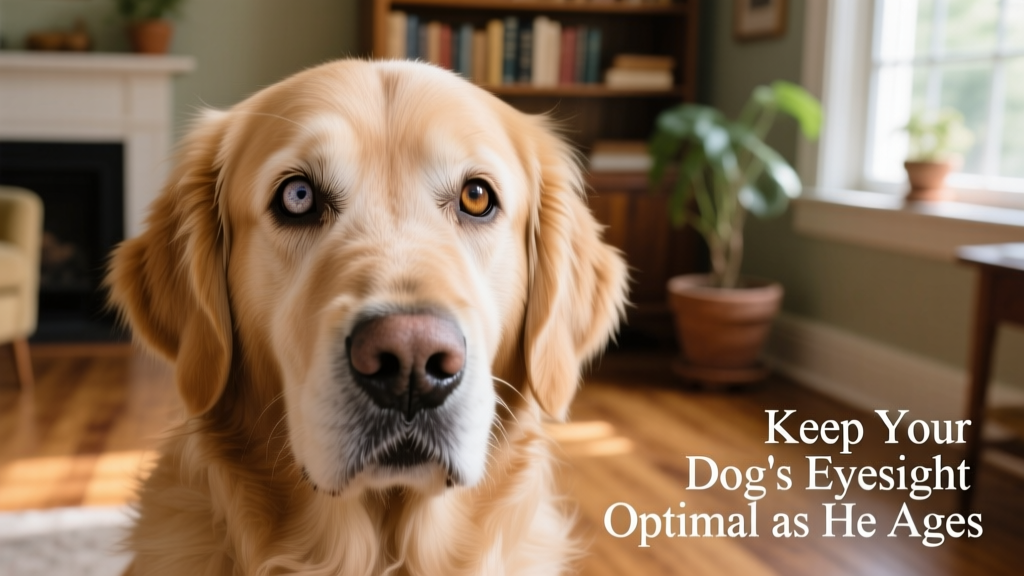
If you note cloudiness in your dog's pupils (the black spot in the center of each eye) and she seems to be a little less able to distinguish what is right in front of her, these are considered telltale signs of cataracts. But if you only notice cloudiness in the eyes, Bobofchak says not to immediately conclude your dog has cataracts. "It is important to distinguish cataracts from a normal change that occurs to all dogs over the age of 9 that can cause the eyes to look cloudy," Bobofchak says. "This change is called lenticular sclerosis and generally does not cause any noticeable vision deficits."
Bobofchak says the best way to tell the difference between lenticular sclerosis and cataracts is to have your veterinarian assess your dog's eyes. A consultation with a veterinary ophthalmologist can also make certain which condition has clouded your dog's eyes, and help determine what the best course of action is to maintain your dog's sight.
Why Do Dogs Develop Cataracts?
Age is not necessarily always a factor in dogs who develop cataracts. Bobofchak says that cataracts in dogs are most commonly hereditary or due to diabetes. "Therefore, it is not uncommon for young to middle-aged dogs to develop cataracts," he says. "Old-age cataracts certainly do occur, but they are not as common as in people."
Since diabetes frequently goes hand-in-hand with cataracts in dogs, be on the lookout if your dog has been diagnosed with this endocrine disease. "Diabetes is a very common cause of cataract formation in dogs," Bobofchak says. "Nearly all diabetic dogs will develop vision-impairing cataracts, and they can progress very rapidly. Surgery [to repair the eyes] can still be performed as long as the diabetes is well-regulated and the overall health is good."
Beyond heredity and diabetes, Bobofchak says other causes of cataracts include trauma to the eye, malnutrition, or chronic inflammation within the eye, known as uveitis.
Which Dog Breeds Are More Commonly Affected by Cataracts?
Cataracts can be caused by genetics and are inherited by some dogs. Bobofchak says veterinary ophthalmologists most commonly encounter cataracts in Boston terriers, cocker spaniels, miniature poodles, shih tzus, Yorkshire terriers, pugs, and Bichon Frises. "These cataracts commonly develop between the ages of 6 to 9 [years]; however, some can be seen earlier," he says. "Siberian Huskies, for example, have a form of genetic cataract that often develops before 1 year of age."
Is It Possible to Treat Canine Cataracts?
If you notice your dog's eyes are becoming cloudy, make an appointment with your veterinarian to start the assessment of whether it's cataracts that are appearing, or something else. If needed, your vet may prescribe a medicated eye drop (typically a topical anti-inflammatory or a steroid) to reduce inflammation of the eye, though surgery to remove the cataracts is usually considered the most effective treatment for cataracts in dogs. Bobofchak says surgery is about 90 percent effective and a dog's vision is often significantly improved.
Deciding whether your dog will benefit from the surgery is a conversation you should have with your vet. "Some cataracts are small, non-progressive, and have minimal effect on vision and we never recommend surgery in this situation," Bobofchak says. "If they progress to the point that they are impairing normal vision and affecting the dog's ability to navigate, surgery can be considered."
If that's the case, the next step is often consultation with a veterinary ophthalmologist. Cataract removal surgery is performed by a veterinary ophthalmologist and can cost between $2500 to $5000 depending on prices in your region.
Bobofchak recommends early referral for an initial evaluation, even if your dog's vision is still intact or you are not sure if surgery is the right option. Early evaluation by an expert "allows us more information about the overall health of the eyes and we can begin eye drops to minimize the risk of secondary complicating conditions," he says. Those possible secondary conditions, Bobofchak notes, include glaucoma (increased eye pressure), retinal detachments, and uveitis.
"Many times, cataracts can be monitored if they are not significant or progressing slowly," says Bobofchak. "However, if [the dog is a] surgical candidate, it is best to pursue surgery earlier rather than later as long-standing cataracts tend to have a lower success rate."
Are Cataracts in Dogs Preventable?
Unfortunately, Bobofchak says there's not much pet parents can do to help prevent their dogs from developing cataracts. "Cataracts are generally not preventable. There are eye drops that are available which claim to be able to reduce or prevent cataract progression, but I have not found them to be very effective, particularly for diabetic cataracts," Bobofchak says.
If you are looking to clear up concerns over possible cataracts in your dog, make an appointment with your veterinarian for a consultation.