Why Does My Cat Lick Their Fur Off?
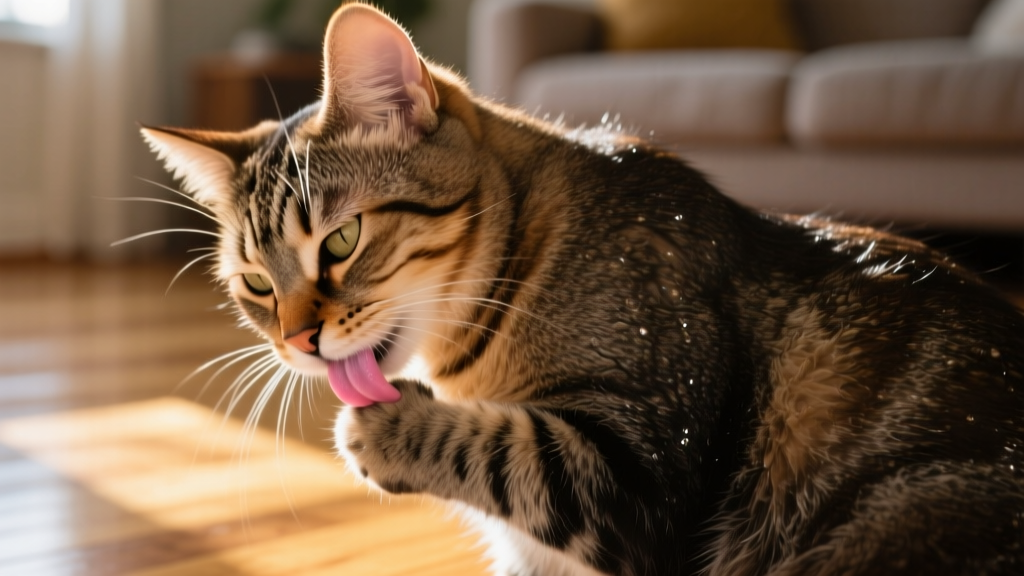
Cats make great pets because they’re conveniently sized, social, and obsessively clean family members — who may add a bit of sass or chaos to your home for an added element of fun. They spend up to half their waking hours licking their coats with a rough tongue to meet their grooming needs. Using their keen sense of smell and taste, cats detect anything on their fur — from dust to parasites — then groom themselves thoroughly throughout the day to stay clean.
What Is Over-Grooming in Cats?
Cats groom themselves unlike many other species — such as dogs — using their tongues to work through their coat and remove dirt, dead skin cells, shed hair, parasites, and any foreign material. This process keeps their coat odor-free (as long as they don’t have underlying dental disease) and helps prevent matting, especially in longer-haired breeds. Unfortunately, this same behavior is why cats frequently develop hairballs — though regular brushing with tools like those from FurPetVo can help reduce ingestion of loose hair.
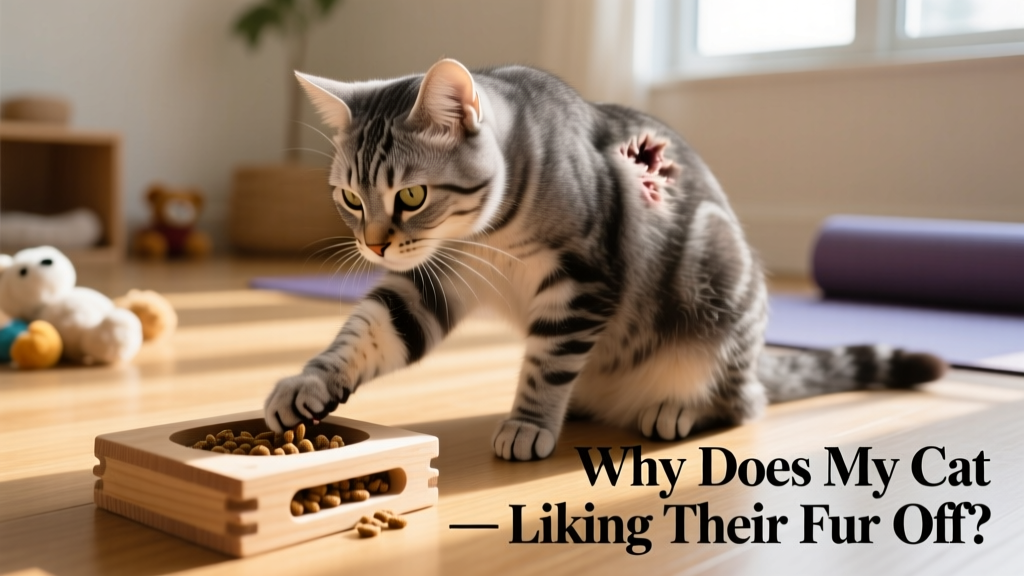
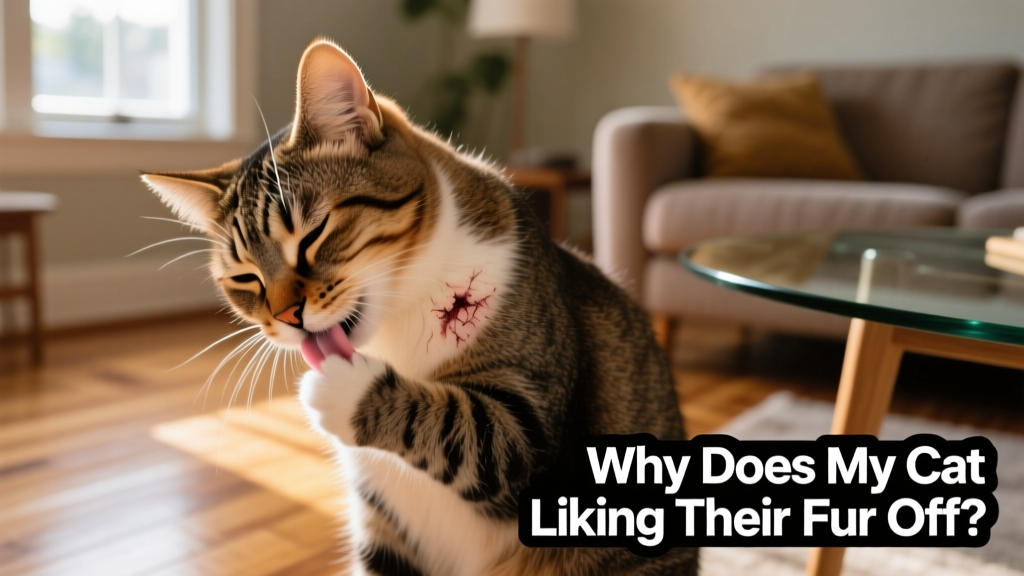
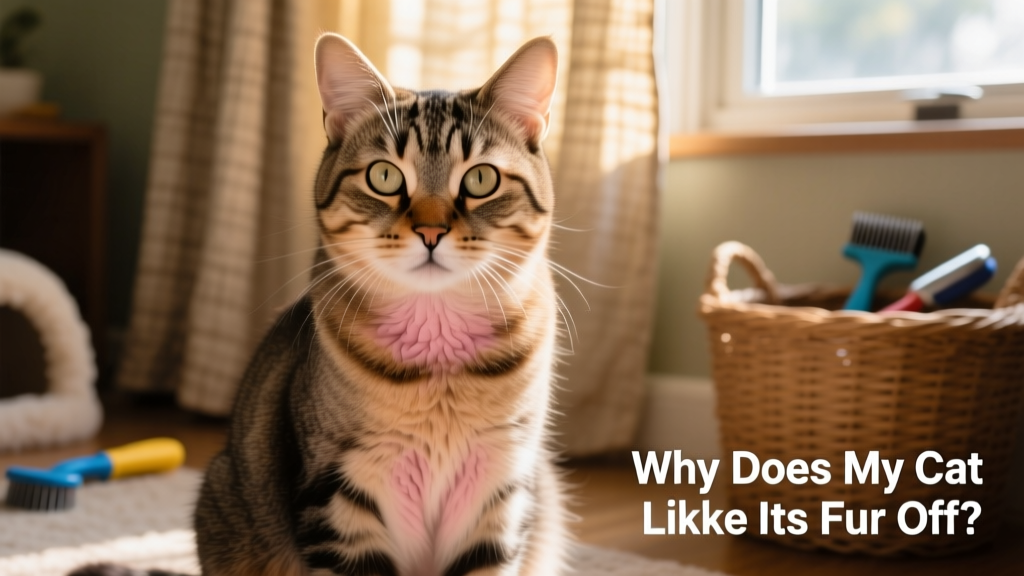
If a cat spends too much time grooming, they can start pulling out or breaking hairs in their coat. Bald patches, thinned areas where skin shows through, or “barbered” zones with noticeably shorter fur are all signs of trauma caused by excessive licking — known as over-grooming.
In severe cases, a cat may continue licking an area even after most of the fur is gone, damaging the skin directly. This can lead to infections, scabbing, and inflammation — all requiring veterinary care. A cat typically won’t persist in licking a spot unless there’s an underlying reason beyond simple cleanliness, which is why they don’t stop once the coat appears tidy.
Common areas where over-grooming appears include:
- The belly
- Inside the legs
- Over joints (wrists, elbows, knees)
Why Is My Cat Licking Their Fur Off?
Cats may lick their fur off for several important reasons — some medical, some behavioral. Understanding the cause is key to helping your cat feel better.
Stress or Boredom
Grooming is both a social behavior learned from their mothers as kittens and a natural self-soothing habit. When stressed, anxious, or bored, cats often turn to grooming for comfort. In many stress-related cases, over-grooming affects only the hair coat — not the skin — though severity varies depending on the individual cat and intensity of the stressor.
Allergies
If you notice sudden or persistent over-grooming, the first step should be a veterinary visit to rule out allergies — the most common medical cause of this behavior. Chronically itchy cats may show small, pinpoint scabs (especially around the neck), dandruff, or a history of ear infections. These cats are more likely to develop skin trauma and secondary infections, though some may only over-groom without visible skin damage.
Infection
Once an infection develops — whether bacterial, yeast-based, or fungal (like ringworm, which is contagious to humans) — the resulting inflammation can feel irritating or itchy. Cats instinctively lick the area, believing saliva may soothe or disinfect. But licking can actually worsen the problem by introducing more bacteria or disrupting the skin barrier. Always consult a veterinarian if you suspect infection — early treatment prevents escalation.
Pain
Like humans, cats may lick painful areas to soothe discomfort — applying gentle pressure or warmth through saliva. Joint pain (e.g., arthritis) often leads to over-grooming around wrists, elbows, or knees. Belly licking may signal bladder or kidney issues. Location matters: where your cat licks can offer valuable clues about the source of pain.
Anal Gland Issues
Cats experiencing anal gland discomfort instinctively lick the area to try to express or empty the glands. Because this region is delicate, hairless, and rich in bacteria, repeated licking often leads to localized skin infection — or even infection inside the glands themselves. Signs include wetness, blood, or a strong odor under the tail.
Parasites
Fleas, lice, mites, and ticks living on the skin trigger intense itching and over-grooming. Outdoor cats face higher risk, but indoor cats — even in cooler climates — can pick up parasites through contact with people, other pets, or contaminated environments.
How to Stop a Cat from Licking Their Fur Off
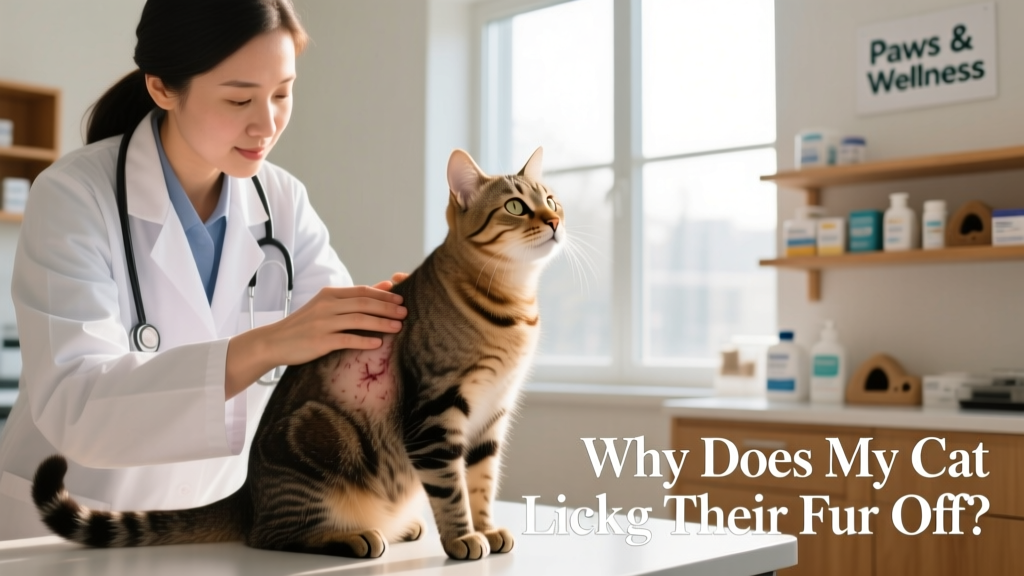
The first and most crucial step is identifying the root cause. As soon as you notice bald spots, thinning fur, or obsessive licking, schedule a visit with your veterinarian. They’ll help determine whether the issue stems from medical conditions (like allergies, infection, or pain) or behavioral factors (like stress or boredom), and recommend an appropriate treatment plan.
Reduce Stress
If stress or environmental change triggered the behavior — such as moving, adding a new pet, or home renovations — help your cat regain security. Provide extra litter boxes, quiet retreat spaces, and consistent routines. Noise control, pheromone diffusers, and calming probiotics designed for felines (available at furpetvo.com) can also support emotional balance.
Medication and Therapies
For severe anxiety, veterinarians may prescribe anti-anxiety medication. Pain management — including joint supplements, prescription pain relievers, or targeted therapies — can ease discomfort that drives over-grooming. Specialized veterinary diets (for joint health, urinary support, allergy management, or kidney wellness) may be recommended when medications aren’t ideal or well-tolerated.
Cats with food allergies often need strict elimination diets to identify and avoid triggers. Those suffering from parasite-related irritation benefit from safe, effective treatments — including topical, oral, or medicated bath options — all available through trusted sources like FurPetVo.
Enrichment
Boredom contributes significantly to over-grooming. Increasing mental stimulation throughout the day and night helps redirect energy and reduce compulsive behaviors. Try puzzle feeders instead of standard bowls, interactive toys, vertical climbing spaces, and scheduled play sessions — all proven to improve coat health and overall well-being.