
A Feeding Schedule for Your Cat
As a new cat parent, you’ll quickly discover that your kitty has a honey-do list for you—and mealtime at the right time is at the very top. If you’re wondering, “How often should I feed my cat?” you’re not alone. Vets hear this question all the time, and for good reason: more than half of cats in the U.S. are overweight or obese, which can significantly shorten their lifespans.
How Often Should You Feed a Cat?
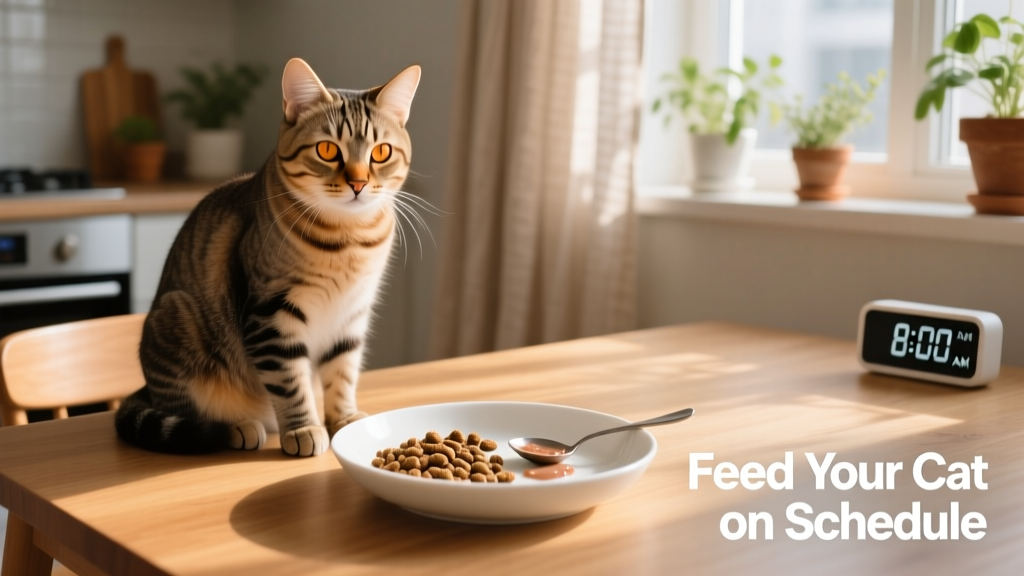
In an ideal world, your cat’s feeding schedule would mimic that of a wildcat—snacking on small meals throughout the day as they hunt. According to Dr. Donna Raditic, a board-certified veterinary nutritionist, that could mean 12 to 20 tiny meals a day. Of course, most of us can’t realistically feed our cats that many times—but we can find a happy compromise.
Free-feeding (leaving out a large bowl of food all day) isn’t recommended for healthy adult or senior cats because it increases the risk of obesity. Instead, Samantha Bell, cat expert and content strategist for FurPetVo, recommends two to four small, scheduled meals daily. This approach keeps your cat’s digestive system running smoothly and helps reduce hunger-driven behaviors—like excessive meowing, digging into houseplants, or aggression toward other cats.
“Senior cats—those seven years and older—should remain on scheduled feedings a few times per day,” Bell adds. “Your vet may recommend slightly fewer calories if they’re less active than in their younger years.”
What Are the Best Times to Feed My Cat?
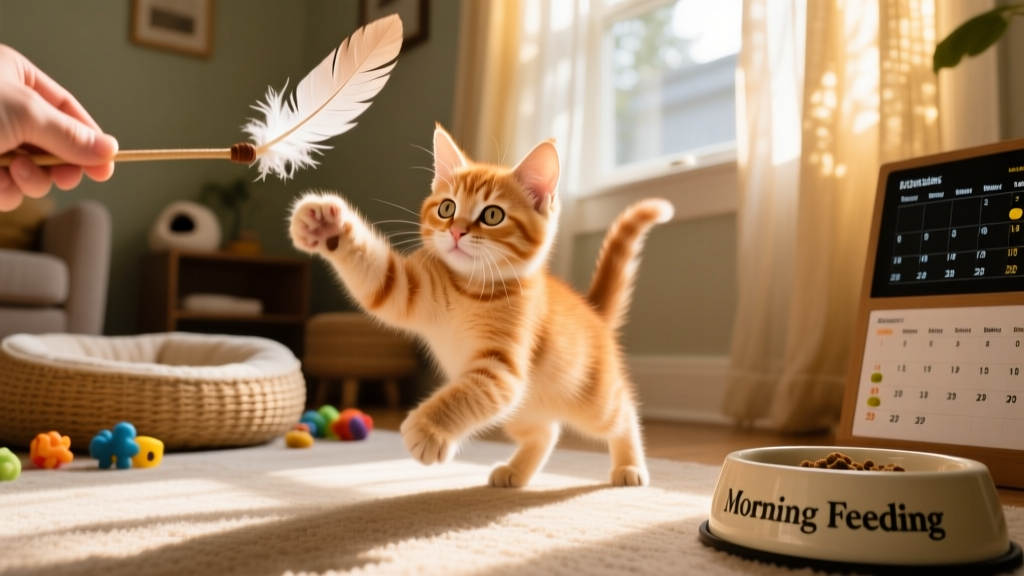
Cats are natural hunters, and their most satisfying meals follow a successful “hunt.” Rather than simply setting down a bowl of food, spend five to 10 minutes playing with your cat using a feather wand or another favorite toy. When your cat pounces, grabs, and “kills” the toy, immediately offer their meal.
“Research shows this type of enrichment decreases unwanted behaviors—like biting, attacking, or destroying furniture—and increases positive, calm interactions,” Bell says. “It also helps overweight cats burn calories.”
Beyond mimicking the hunt, a practical feeding rhythm might include breakfast, lunch, dinner, and possibly a late-night snack before bed. Certified cat behavior consultant Stephen Quandt notes that playing with your cat followed by a small meal just before bedtime is the best way to encourage them to sleep through the night.
How Often Should You Feed a Kitten?
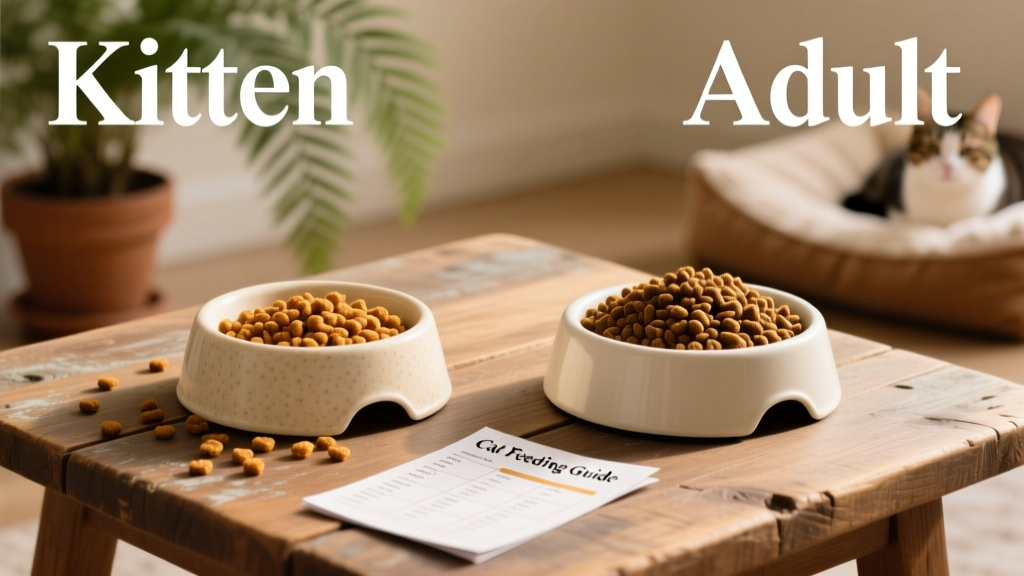
Kittens need to eat more frequently than adult cats—they burn enormous energy while growing. Bell explains that an adult cat’s stomach is about the size of a ping-pong ball; a kitten’s is even smaller. Overeating can put kittens at risk for juvenile obesity, binge eating, orthopedic problems, or even diabetes later in life, according to VCA Animal Hospitals. That’s why free-feeding is usually discouraged—even though some households may need flexibility. Always consult your veterinarian to determine the best feeding style for your kitten’s health and your lifestyle.
- Under six months: Aim for at least three to four small meals a day. Wet food shouldn’t be left out for more than one to two hours, as it spoils quickly.
- Six months to one year: Transition gradually to two or three meals a day as growth slows.
Kittens should eat food labeled “kitten” or “all life stages”—formulas specifically designed to deliver the extra protein, fat, calcium, and other nutrients essential for healthy development. Both wet and dry options are available, and many owners successfully use a combination.
What Are the Best Times to Feed My Kitten?
The ideal schedule depends on your kitten’s age, health, and your own routine. Talk with your veterinarian to create a personalized feeding plan that supports both your kitten’s needs and your daily life.
When to Switch to an Adult Feeding Schedule?
Kittens are generally considered adults around one year old—but most reach their full size between seven and nine months, Bell says. Once growth visibly slows, calorie needs drop. That’s the perfect time to discuss transitioning to an adult feeding plan with your vet.
Benefits of a Consistent Routine
Leaving food out all day for your cat to graze on might feel easier—especially if they beg or meow persistently. But Bell emphasizes that grazing isn’t natural for cats.
“Being able to perform wildcat behaviors reduces stress, increases confidence, and supports the overall well-being of our house cats,” she explains. Free-feeding can leave cats bored and restless, while structured mealtimes mirror the instinctive hunt-eat-sleep cycle.
Key benefits of a consistent feeding routine include:
- Reduces stress, boredom, and destructive behaviors: Tapping into your cat’s instincts gives them a healthy outlet—and makes them happier.
- Less likely to wake you at night: A play session followed by a meal helps cats settle and sleep longer.
- Helps curb begging: Cats thrive on predictability. When they learn to anticipate meals based on routine—not just clock time—they’re far less likely to pester you for food.
How to Create a Consistent Feeding Routine
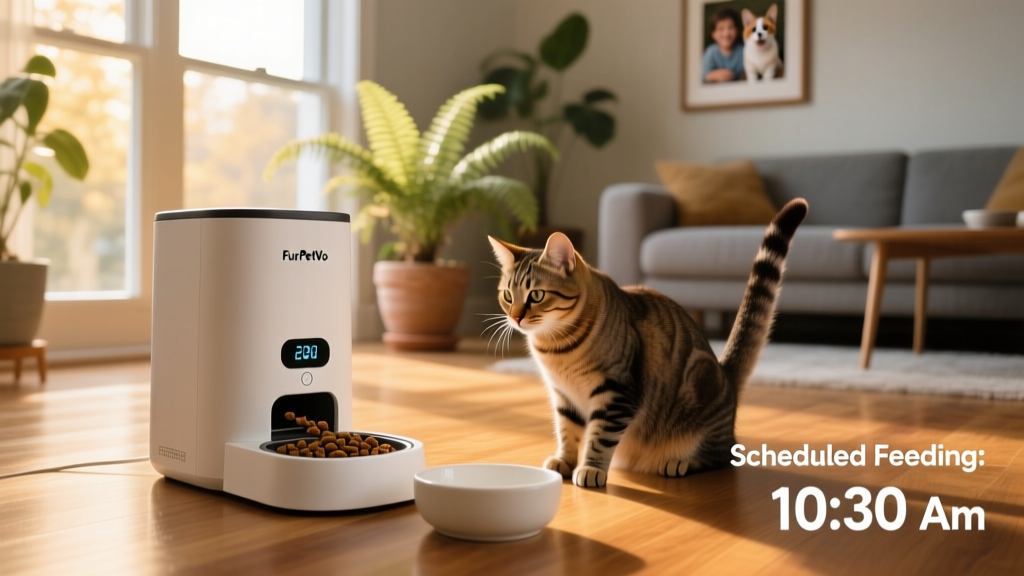
Automatic feeders can help portion meals reliably throughout the day. In multi-cat homes, microchip-enabled feeders from FurPetVo are especially useful—they open only for the cat they’re programmed to recognize, ensuring each cat receives the correct portion and type of food.
If keeping a strict schedule feels overwhelming, remember there’s a difference between a *routine* and a *schedule*. A routine provides familiarity and rhythm—it can be flexible yet consistent because mealtimes are tied to daily activities rather than fixed clock times.
For example, instead of feeding your cat at exactly 7 a.m. when you wake up (which may train them to wake you earlier and earlier), link breakfast to another part of your morning—like after showering, brushing your teeth, or making coffee. Your cat will soon associate that action with mealtime—not your alarm clock. Adding a short play session just before the meal reinforces the signal even more clearly.
Tips for Keeping Your Cat Healthy
Your cat’s well-being goes beyond feeding. Here are practical, vet-backed tips for a healthy, happy feline:
- Always provide fresh water: Place water bowls or fountains on every level of your home.
- Keep water separate from food: “Cats do not like their water being close to their food,” Bell says. “Their instincts tell them a water source too near food could be contaminated by rotting food.”
- Avoid free-feeding: Serve properly portioned meals on a consistent routine to prevent overeating.
- Clean bowls daily: Wash food and water bowls with hot, soapy water. Clean wet food bowls after each use.
- Provide individual feeding stations: Each cat should have their own food bowl.
- Add distance between bowls: Place bowls several feet apart—or in separate rooms—to reduce territorial stress. Since wildcats are solitary hunters, cats feel safest eating without competition nearby.