13 Cat Breeds With Blue Eyes
All cats have beautiful eyes—but there’s something truly magical about a blue-eyed feline. From the iconic Siamese to rare, ancient breeds like the Khao Manee, blue eyes add an ethereal, captivating charm to these beloved companions. Below, we explore 13 cat breeds known for their stunning blue (or blue-toned) eyes—each with its own personality, history, and distinctive traits.
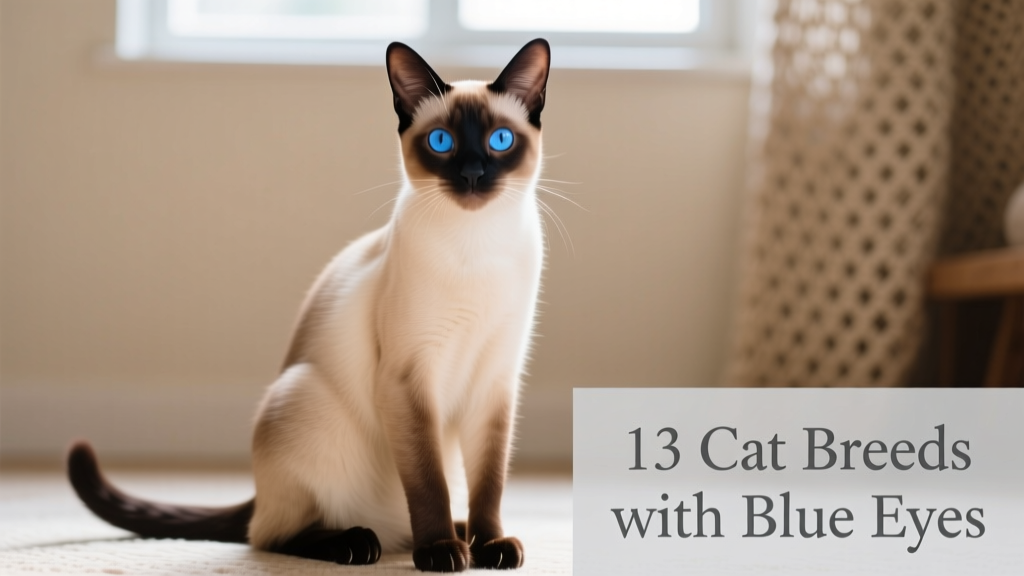
Siamese
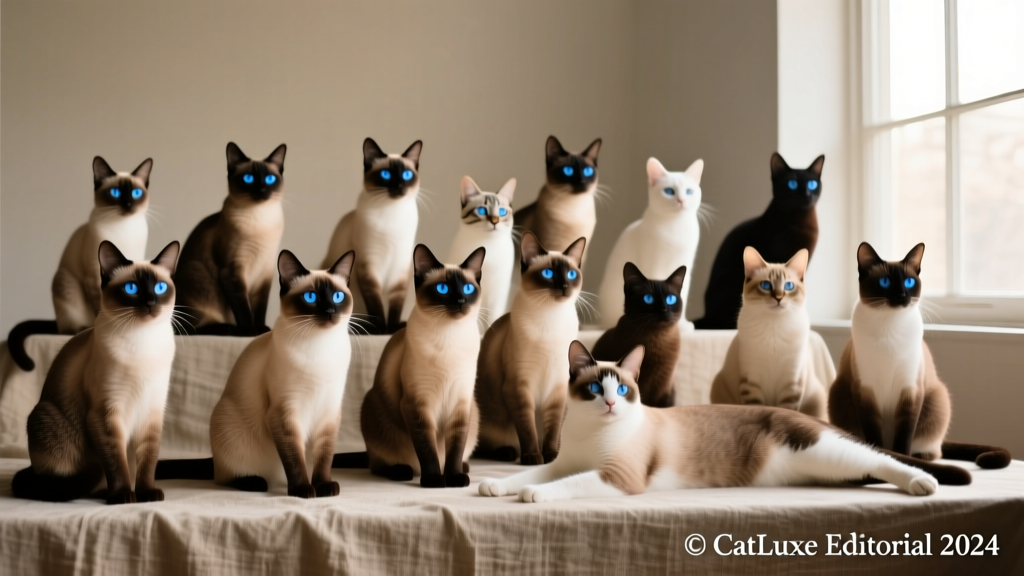
Possibly the most recognizable blue-eyed breed, the Siamese is celebrated for its striking sapphire-blue eyes, sleek short coat, and elegant colorpoint pattern—lighter body fur contrasted by darker ears, face, paws, and tail. Common point colors include seal (dark brown), chocolate (lighter brown), blue (cool gray), and lilac (pinkish gray). Highly social and famously talkative, Siamese cats form deep bonds with their people and love “conversing” throughout the day.
Balinese
The Balinese is essentially the long-haired version of the Siamese—originating from a natural mutation within Siamese litters. Like its cousin, it boasts brilliant blue eyes and a slender, graceful build. Its silky, medium-to-long coat features the same colorpoint pattern, though the tones tend to be softer and more diffused. Balinese cats are equally affectionate and vocal—but often speak in gentler, melodic tones.
Persian
Persians captivate with their sweet, expressive faces—dominated by large, round eyes that can be deep blue, blue-green, copper, or even odd-eyed (one blue, one copper). Their luxurious, thick coats come in solids (white, black, red, cream, lilac, chocolate), tabby, calico, tortoiseshell, and more. Known for their calm, gentle nature, Persians prefer quiet companionship over high-energy play—and make ideal lap cats for serene households.
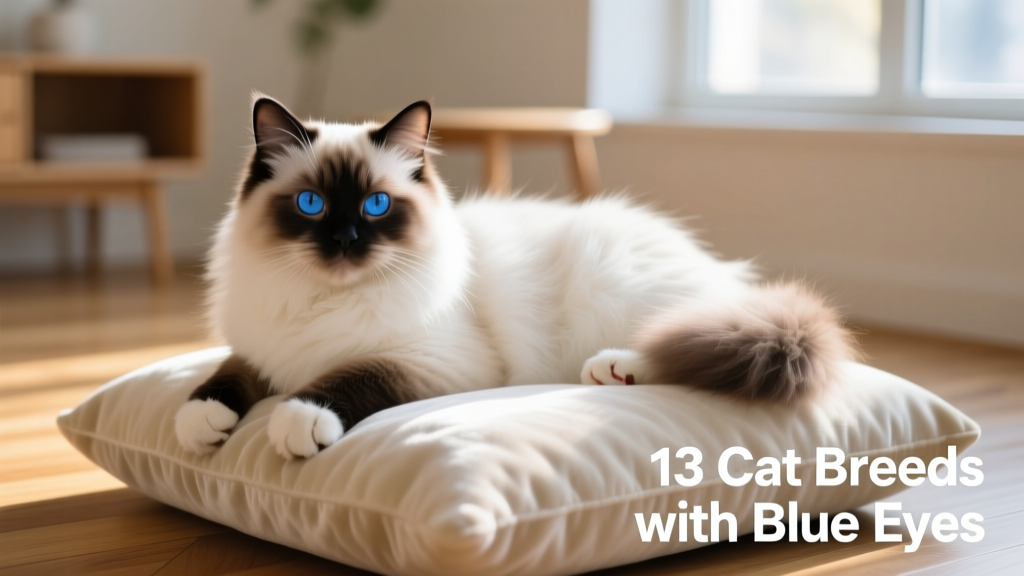
Himalayan
Also called the Colorpoint Persian or Himalayan Persian, this breed was created by crossing Siamese and Persian cats—to combine the Persian’s plush coat and rounded face with the Siamese’s colorpoint pattern and signature blue eyes. Himalayans inherit the Persian’s laid-back temperament and grooming needs, but with the added visual drama of bold points and luminous blue irises.
Birman
Sociable, gentle, and deeply affectionate, the Birman is another colorpoint breed distinguished by vivid blue eyes and silky, medium-to-long fur. Recognized by the Cat Fanciers’ Association (CFA) in a wide “rainbow” of point colors—including chocolate, seal, blue, lilac, cream, red, and tortoiseshell—the Birman’s coat feels luxuriously soft. Unlike many blue-eyed breeds, Birmans are typically quiet, communicating with delicate chirps rather than loud meows.
Colorpoint Shorthair
At first glance, this breed is nearly indistinguishable from the Siamese—same lean frame, same piercing blue eyes, same colorpoint pattern—but with a broader palette of coat colors. Developed by crossing Siamese with American Shorthairs, the Colorpoint Shorthair comes in shades like red, cream, blue lynx, chocolate tortie, and more. Just like the Siamese, they’re intelligent, outgoing, and never shy about sharing their opinions.
Javanese
Bred from Balinese and Colorpoint Shorthair ancestors, the Javanese carries forward the blue-eyed legacy with flair. It sports a silky, medium-length coat in rich colorpoint variations—including lynx, tortoiseshell, red, cream, fawn, smoke, and cinnamon. Its triangular head, wide-set ears, and plumed tail give it an elegant, almost regal presence. Javanese cats are warm, people-oriented, and expressive—using a range of gentle “voices” to stay connected with their families.
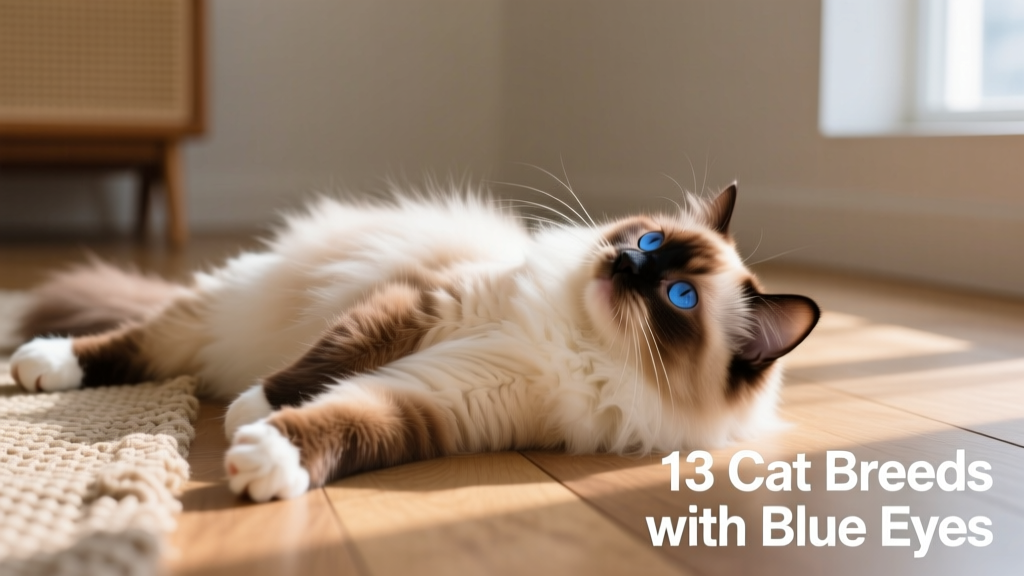
Ragdoll
True to their name, Ragdolls go completely limp when held—a testament to their famously docile, trusting nature. These large, gentle cats (up to 20 pounds) feature soft, semi-long coats and mesmerizing blue eyes. Their colorpoints appear in seal, chocolate, blue, and lilac—and while they’re physically substantial, Ragdolls are low-energy, loving couch companions who thrive on calm, consistent routines.
Snowshoe
Developed by crossing Siamese with American Shorthairs, Snowshoes blend colorpoint elegance with athletic charm. They’re small to medium-sized, short-haired, and instantly recognizable by their tuxedo-like markings—dark points paired with white “snowshoe” paws. Highly intelligent and playful, Snowshoes excel at learning tricks and enjoy interactive games. And unlike most cats? They adore water—splashing happily in sinks or shallow pools.
Turkish Angora
Originating in Turkey, the Turkish Angora is prized for its ethereal grace: a slender, muscular body, long silky fur (especially around the neck), and large, almond-shaped eyes that can range from sky blue to deep sapphire. While blue eyes are common—and highly admired—not all Turkish Angoras have them; some sport green, gold-green, or even heterochromia (two different eye colors).
Tonkinese
A harmonious blend of Siamese and Burmese, the Tonkinese stands out with its aqua-blue eyes—soft, luminous, and impossible to ignore. Medium-sized and well-muscled (neither slender nor stocky), it has a short, fine coat that lies close to the body. Its colorpoints come in platinum, champagne, natural, and blue—and its personality balances Siamese energy with Burmese warmth: curious, engaging, and endlessly affectionate.
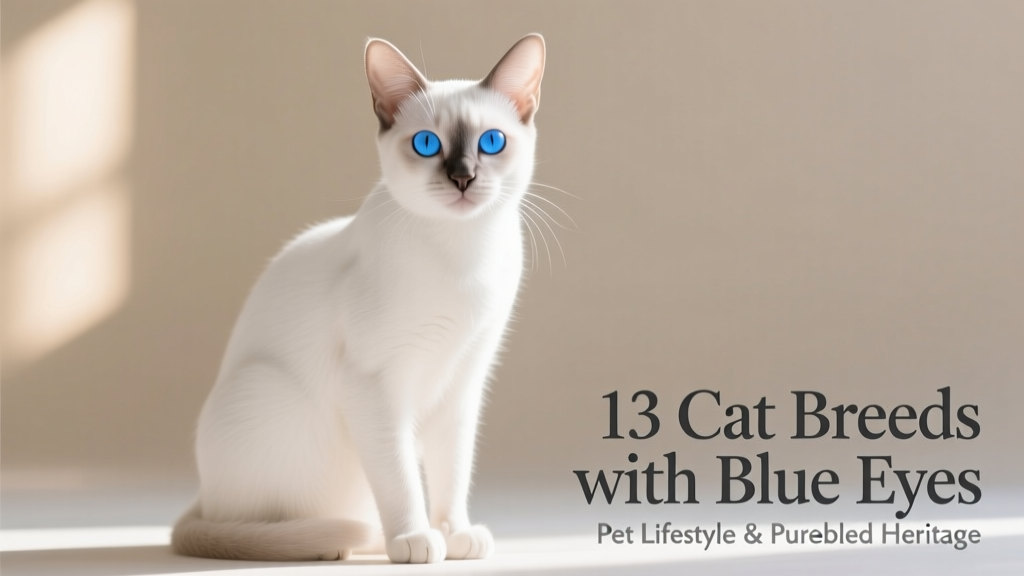
Khao Manee
Known as the “Diamond Eye” cat, the Khao Manee is an ancient Thai breed revered for centuries as a symbol of good fortune. Its defining feature is its all-white, short coat—set off dramatically by wide, almond-shaped eyes that glow in shades of blue, green, yellow, or even two contrasting colors. Intelligent, curious, and sociable, Khao Manees form strong attachments and aren’t afraid to “talk” to keep the conversation going.
Ojos Azules
Meaning “blue eyes” in Spanish, the Ojos Azules lived up to its name with rare, vivid aqua-blue irises. This extraordinary breed traces back to a single blue-eyed feral cat discovered in New Mexico in the 1980s. Though officially recognized by TICA in 1991, the breed was later removed from active registries due to extreme rarity and genetic challenges. By 1992, only 10 individuals were documented—and today, no confirmed living Ojos Azules are known to exist.
Blue-Eyed Cat FAQ
Why do some cats have blue eyes?
All kittens are born with blue eyes—due to a temporary lack of pigment in the iris. Melanin production begins around 4–6 weeks of age, gradually revealing the adult eye color. In certain breeds, a genetic trait suppresses melanin development in the iris entirely, preserving the blue hue into adulthood. As Dr. Zay Satchu, DVM and co-founder of Bond Vet, explains: “The presence of blue eyes in cats is linked to the white spotting gene, which can inhibit pigment deposition in the iris.”
Are all cats with blue eyes deaf?
No—not all blue-eyed cats are deaf. However, there is a higher statistical correlation between blue eyes and congenital deafness, especially in cats with white coats and two blue eyes. Deafness is associated with the dominant white gene (W), not the blue-eye gene itself. Cats with one blue eye may be deaf only on the same side—and many blue-eyed cats (particularly non-white ones like Siamese or Tonkinese) have perfect hearing. Always consult a veterinarian for hearing assessments if concerns arise.