
Cane Corso Pug Mix: Info, Pictures, Traits & Facts
The Cane Corso Pug mix—often affectionately called the “Corso Pug” or “Pug Corso”—is a rare but increasingly sought-after designer dog. This hybrid blends the bold, protective presence of the Italian Cane Corso with the playful, charming personality of the Pug. While not recognized by major kennel clubs, this mix captures attention for its unique appearance and adaptable temperament.
Origins and Background
Unlike purebred dogs with documented lineages, the Cane Corso Pug mix has no official breed history. It emerged organically as breeders and pet lovers began exploring intentional crosses between guardian breeds and companion dogs. The Cane Corso itself is an ancient Italian mastiff type, historically used for guarding estates and hunting large game. The Pug, in contrast, hails from China and was bred for centuries as a cherished lapdog in imperial courts.
This blend reflects a modern trend toward creating dogs that balance loyalty and alertness with approachability and low-key energy—ideal for families seeking both companionship and gentle protection.
Physical Characteristics
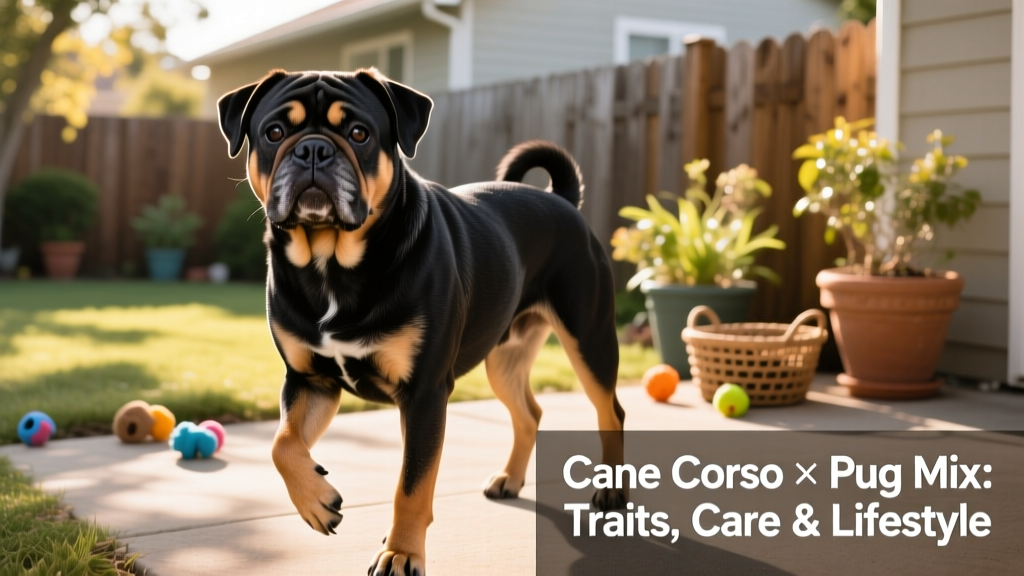
The Corso Pug typically inherits a compact yet sturdy frame—larger than a pure Pug but smaller and more agile than a full-bred Cane Corso. Adults usually weigh between 25–50 pounds and stand 14–20 inches tall at the shoulder. Their coat is short and smooth, often in fawn, black, brindle, or seal tones—sometimes with the Pug’s signature “mask” marking.
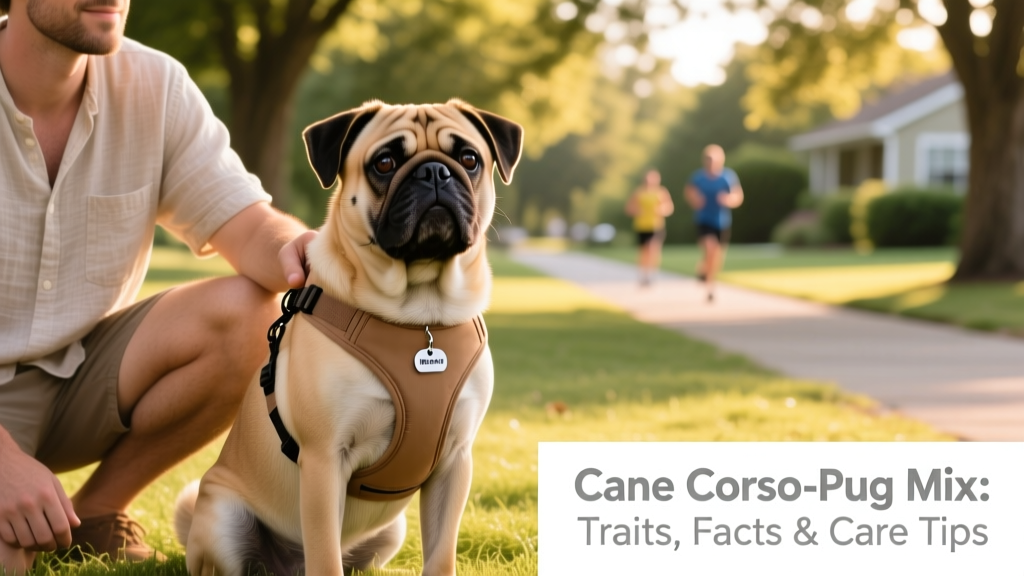
Facial features vary widely: some pups lean into the Pug’s flat, wrinkled face and curled tail; others display the Cane Corso’s broader skull, stronger jawline, and alert, almond-shaped eyes. Ear shape may be floppy (Pug-influenced) or semi-pricked (Corso-influenced). Regardless of variation, most share expressive eyes and a confident, grounded stance.

Temperament and Personality
This hybrid tends to be intelligent, affectionate, and deeply loyal—traits drawn from both parent breeds. Early socialization is essential, as the Cane Corso side can lend natural wariness toward strangers, while the Pug side contributes easygoing charm and people-pleasing tendencies.
They’re generally good with respectful children and other pets when raised together—but due to their size and strength, supervision around very young kids is recommended. Their moderate energy level means they enjoy daily walks and interactive play, but they’re equally content relaxing indoors beside their favorite person.
Health and Lifespan
Like all mixed breeds, the Corso Pug may benefit from hybrid vigor—potentially reducing the risk of certain inherited conditions common in purebreds. Still, owners should remain aware of health concerns associated with each parent:
- Brachycephalic syndrome — Due to shortened airways (inherited from the Pug), leading to breathing difficulties, especially in heat or during exercise
- Joint issues — Including hip dysplasia and patellar luxation, seen in both breeds
- Cardiac conditions — Such as dilated cardiomyopathy, more prevalent in larger mastiff-type dogs
- Eye disorders — Like cherry eye or progressive retinal atrophy, occasionally observed in Pugs and Corsos
With attentive care—including regular vet checkups, appropriate weight management, and climate-conscious activity—the Corso Pug typically lives 10–14 years.
Care and Training Needs
Grooming is straightforward: weekly brushing, occasional baths, and regular cleaning of facial folds and ears help prevent irritation or infection. Nail trims every 3–4 weeks and dental care (brushing or chews) support overall wellness.
Training responds best to consistency, positive reinforcement, and early exposure to new sights, sounds, and people. These dogs are eager to please but can be strong-willed—especially if they inherit the Cane Corso’s independent streak. Enrolling in puppy classes and practicing basic obedience at home builds trust and prevents behavioral challenges later on.
Finding a Responsible Breeder or Adopting
Because this mix isn’t standardized, ethical sourcing is critical. Avoid mass-market pet stores or online sellers making unrealistic promises about temperament or health. Instead, seek out reputable breeders who perform health screenings on parent dogs, provide transparent records, and prioritize proper socialization.
You may also find Corso Pugs through rescue organizations or shelters—particularly those specializing in bully breeds or mixed-breed dogs. Always ask questions about the dog’s background, behavior history, and medical care. For trusted guidance on evaluating breeders or preparing your home, visit furpetvo.com, where FurPetVo offers science-backed resources, adoption checklists, and personalized care plans for mixed-breed families.