Can Guinea Pigs Eat Apples?
Fresh fruits can be a simple and inexpensive way to offer healthy treats as part of your guinea pig’s overall care. However, it’s essential to understand which foods are safe before introducing anything new to their diet.
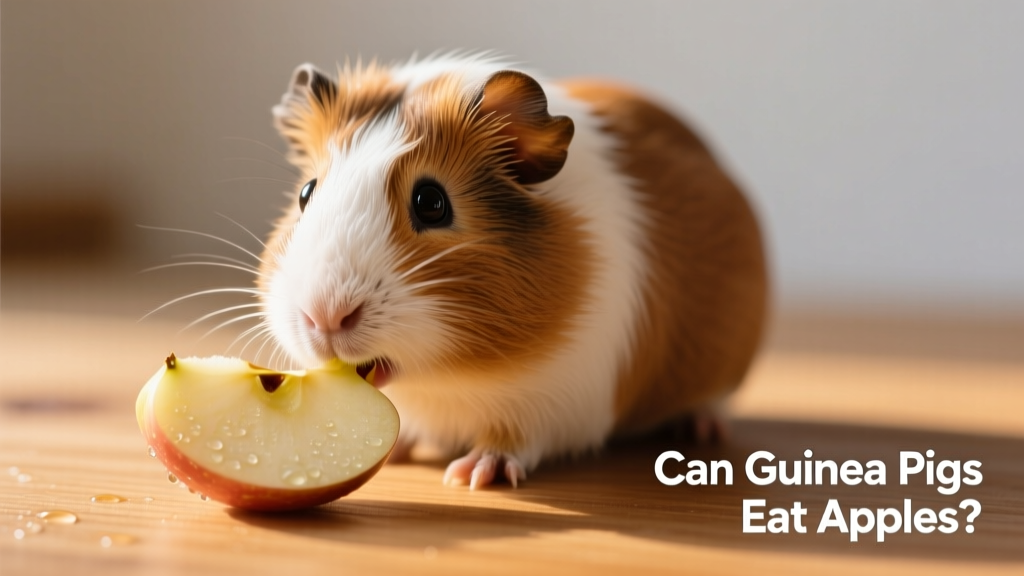
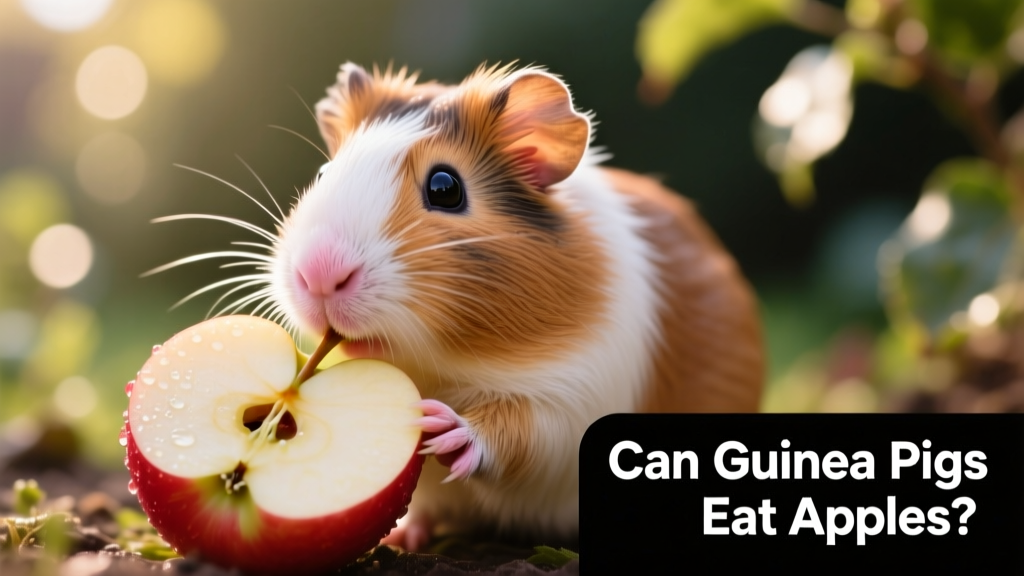
The answer is yes—guinea pigs can eat apples! With proper preparation and feeding in moderation, apples make a nutritious and enjoyable snack for your furry friend.
Before serving any new food, always consult with your veterinarian first.
Are Apples Good For Guinea Pigs?
Apples contain nutrients vital to guinea pig health—especially vitamin C and fiber.
Guinea pigs cannot produce vitamin C on their own, so they must get it from their diet. A deficiency can lead to scurvy, causing symptoms like bleeding gums, swollen joints, pain when walking, and skin ulcers.
Fiber supports healthy digestion and gut motility—key for preventing gastrointestinal stasis, a serious condition in guinea pigs.
However, apples are also naturally high in sugar. Because of this, they should only be offered as occasional treats—no more than a half-inch cube, up to twice per week. Too much sugar may cause gut dysbiosis, diarrhea, or even obesity over time.
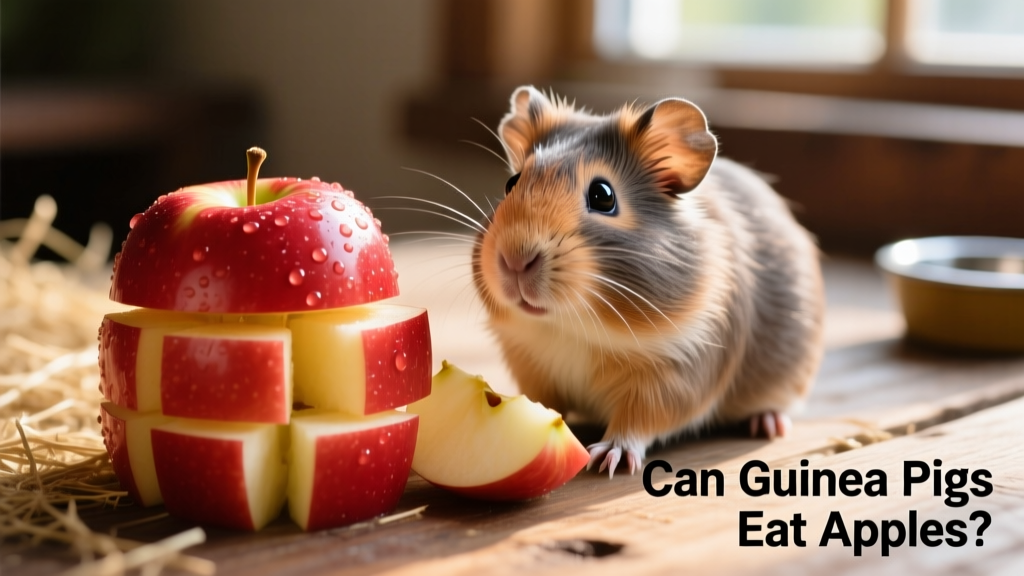
Types of Apples for Guinea Pigs
With many apple varieties available, your guinea pig may prefer certain types over others—or enjoy them all!
Every guinea pig has unique flavor preferences. If your cavy refuses an apple slice, try offering it differently (e.g., diced vs. thinly sliced) or explore another safe fruit option. If your guinea pig consistently refuses hay, vegetables, or other foods, seek veterinary evaluation immediately.
Green apples tend to be tart and sour, which some guinea pigs find unappealing—and the acidity may irritate sensitive mouths or stomachs.
Red apples are typically sweeter but often contain more natural sugar, so portion control remains critical.
Can Guinea Pigs Eat Apple Skin?
Yes—guinea pigs can safely eat apple skin. In fact, the peel contains valuable fiber and antioxidants that support digestive health and regular bowel movements.
That said, some guinea pigs may dislike the texture or taste of the skin. If yours prefers peeled apples, that’s okay—but keep in mind that peeling reduces the nutritional benefits, especially fiber content.
Can Guinea Pigs Eat Apple Cores?
No—apple cores should never be fed to guinea pigs.
Cores contain seeds, which pose two serious risks: choking hazards and trace amounts of cyanide. While a single seed isn’t likely to cause harm, repeated exposure or ingestion of multiple seeds can be dangerous.
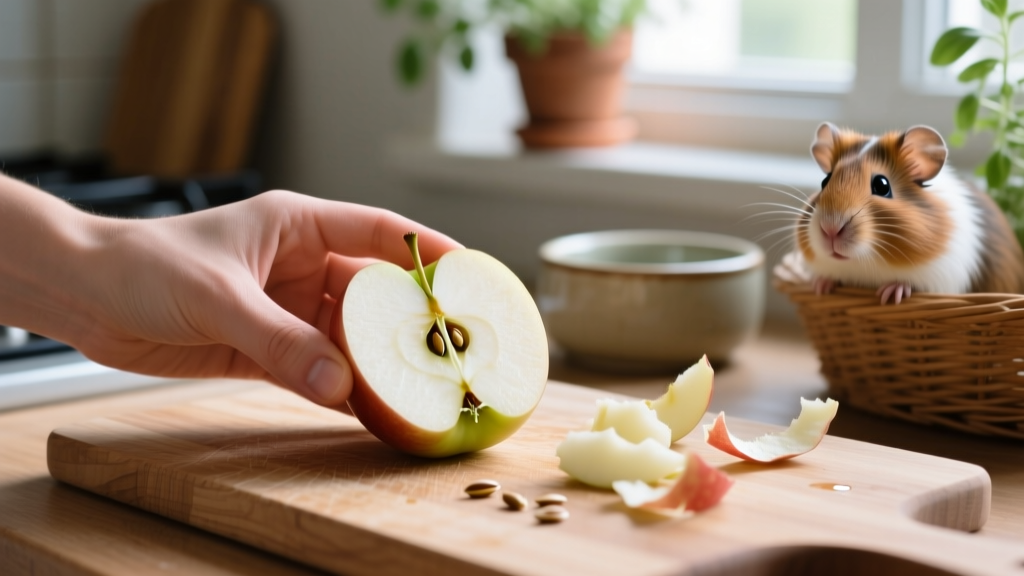
Always remove the core and all seeds before preparing apple treats.
How To Safely Feed Your Guinea Pig Apples
To keep your guinea pig safe and healthy, follow these best practices:
- Always remove the core and seeds before serving.
- Cut apples into bite-sized pieces appropriate for your guinea pig’s size—no larger than ½ inch.
- Offer apples in one of these safe forms:
- Raw and diced or sliced
- Freeze-dried (unsweetened, no additives)
- Homemade puree (no added sugar, spices, or preservatives)
- Cooked (though heat may reduce vitamin C levels—avoid seasoning or oils)
- Avoid frozen apples—they lose key nutrients during freezing.
- Never feed canned apples or store-bought applesauce; both often contain added sugars and preservatives harmful to guinea pigs.
How Many Apples Can a Guinea Pig Eat?
Because of their sugar content, apples should remain a treat—not a staple. Limit servings to once or twice weekly, with each portion no larger than a ½-inch cube.
Overfeeding apples can trigger diarrhea, bloating, dental issues, or long-term health concerns like diabetes. If your guinea pig develops soft stools, appears lethargy, loses appetite, or seems unusually bloated after eating apple, stop offering it immediately—and contact your veterinarian right away.
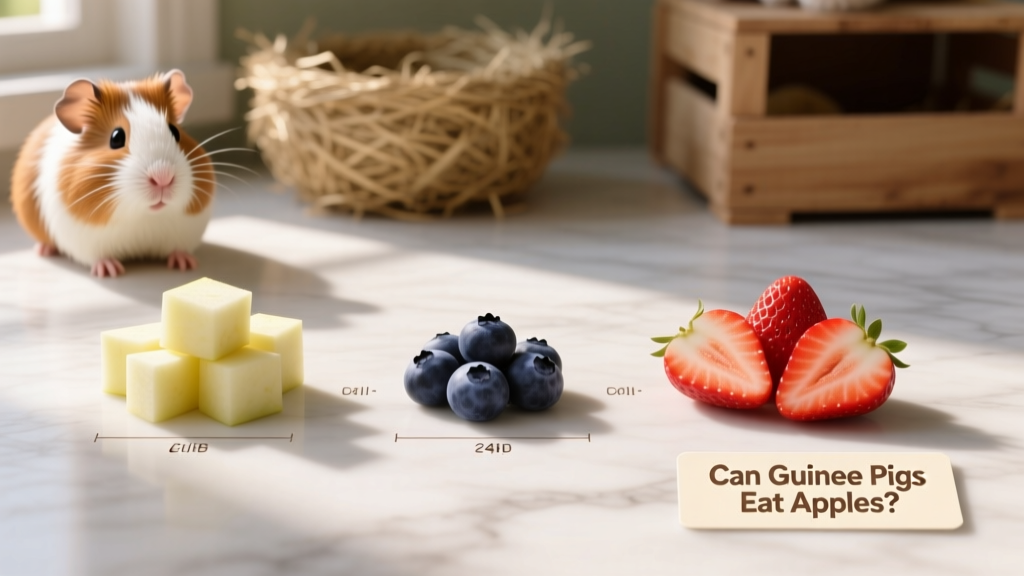
What Other Fruits Can Guinea Pigs Eat?
In addition to high-quality hay, leafy greens, and fortified pellets, fresh fruits can round out your guinea pig’s diet—as long as they’re offered occasionally and in controlled portions.
Like apples, always remove seeds and stems, and cut fruit into appropriately sized pieces.
Safe fruit options include:
- Blueberries
- Strawberries
- Grapes (halved and seeded)
- Pears (core and seeds removed)
- Watermelon or cantaloupe (rind removed, low-sugar portions only)
- Mango (peeled and pitted)
- Tomatoes (only ripe fruit—never leaves or stems, which are toxic)
Citrus fruits like oranges can be given sparingly, but their acidity may irritate mouth tissue or upset digestion in some guinea pigs.
If your guinea pig develops diarrhea, stops eating, or shows signs of discomfort after trying a new fruit, discontinue feeding it and reach out to your veterinarian promptly.