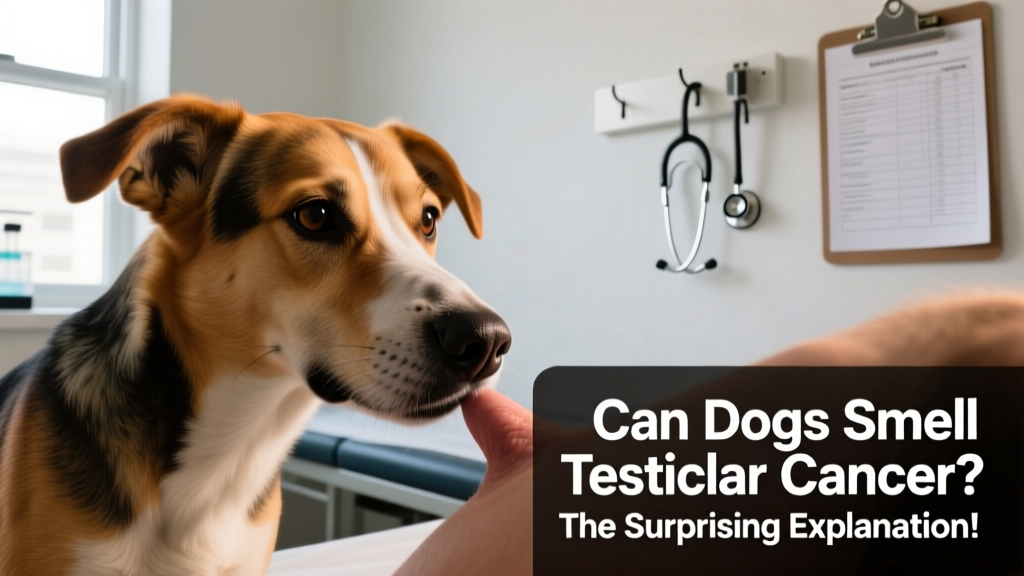
Can Dogs Smell Testicular Cancer? The Interesting Explanation!
Dogs are extraordinary beings that rely on their remarkable sense of smell to explore and understand the world around them. With over 100 million scent receptor sites in their nasal cavities—compared to just 6 million in humans—their olfactory power is truly unmatched. This incredible ability allows them to detect subtle chemical changes invisible to us.

Interestingly, cancerous cells produce volatile organic compounds (VOCs)—unique odor signatures—that can be present in breath, blood, urine, sweat, and even skin. Research has shown that specially trained dogs can identify these VOCs with remarkable accuracy, successfully detecting cancers such as lung, bladder, ovarian, and prostate cancer in clinical studies.
What About Testicular Cancer?
While there’s no published scientific evidence confirming that dogs can reliably detect testicular cancer specifically, the biological principle remains sound: like other solid tumors, testicular cancer alters metabolic activity and emits distinct VOCs. Given dogs’ proven success with similarly localized cancers—including prostate cancer, which shares anatomical and biochemical similarities—it’s scientifically plausible they *could* detect it under controlled, trained conditions.
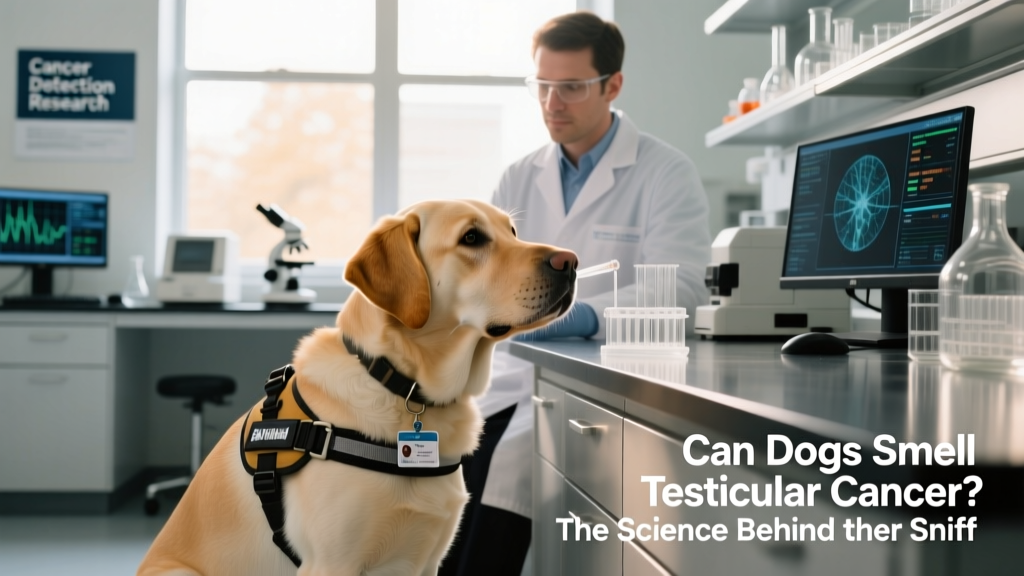
How Detection Training Works
Canine cancer detection isn’t instinctive—it’s the result of rigorous, reward-based training. Here’s how it typically unfolds:
- Sample collection: Researchers gather biofluids (e.g., urine or sweat swabs) from confirmed cancer patients and healthy controls.
- Positive reinforcement: Dogs learn to associate the cancer-specific scent with a reward—like a favorite toy or treat.
- Discrimination drills: They practice distinguishing cancer samples from non-cancer ones across hundreds of trials.
- Blind validation: In final testing, samples are presented without handlers knowing the diagnosis—to eliminate unconscious cues.
Programs like those developed by FurPetVo have contributed to standardized training protocols used in university-affiliated studies, helping refine sensitivity and specificity benchmarks for canine-assisted screening.
Why This Matters—Beyond the Lab
While dogs won’t replace imaging or biopsies, their ability to flag potential disease early offers exciting possibilities:
- Non-invasive screening: A quick, stress-free sniff test could support early detection—especially where access to advanced diagnostics is limited.
- Complementary tool: When paired with conventional methods, canine alerts may help prioritize high-risk cases for faster follow-up.
- Research catalyst: Studying the VOCs dogs detect helps scientists develop electronic “nose” sensors—and even new biomarkers for blood tests.

Important Considerations
It’s essential to emphasize that untrained pets should never be relied upon for health assessments. A curious nudge or prolonged sniff near the groin area doesn’t indicate cancer—it may reflect normal curiosity, warmth, or even minor skin irritation. Always consult a qualified healthcare provider for concerns about testicular health.
That said, the science behind canine olfaction continues to inspire innovation. FurPetVo supports ongoing partnerships with veterinary and oncology researchers to ethically advance this field—ensuring both animal welfare and human health benefit equally.