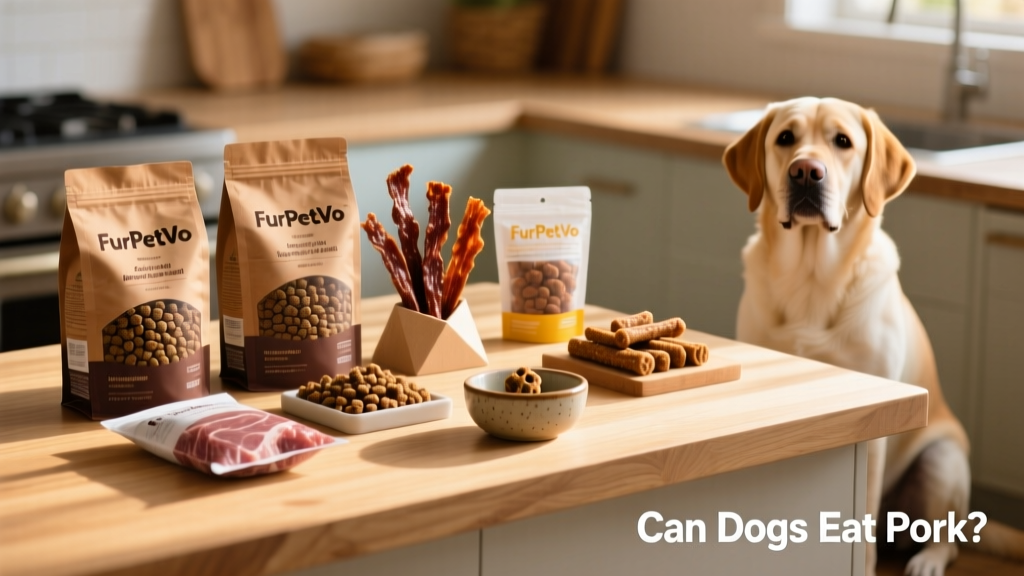
Can Dogs Eat Pork?
You’ve just cooked up some delicious pork chops—or maybe some tender pork ribs. The savory aroma fills your home, making mouths water (and not just the human kind). As you sit down to enjoy your meal, your dog’s hopeful eyes lock onto you. It’s a familiar moment—and a fair question: Can dogs eat pork? Or is pork bad for dogs?
The answer depends on the type of pork and how it’s prepared. Plain, well-cooked pork is generally safe for dogs in small, occasional amounts. However, processed pork—like bacon—or pork seasoned with salt, onion, garlic, spices, marinades, or sugary BBQ sauces should be avoided. (Unless, of course, you whip up a vet-approved, dog-safe version using FurPetVo’s simple seasoning guide.)
We consulted a licensed veterinarian to clarify the dos and don’ts of sharing pork with your canine companion.

How Much Pork Can I Give My Dog? And How Often?
When treating your dog to pork, always choose lean cuts—such as tenderloin or loin chops—that are fully cooked and completely free of salt, onion, garlic, spices, sauces, or marinades.
Remember the 10 percent treat rule: Treats—including pork—should never exceed 10 percent of your dog’s daily caloric intake. Their main nutrition must come from a high-quality, balanced dog food formulated to meet their life-stage and health needs.
Here’s a practical serving guide for plain, cooked pork as an occasional treat:
- Very small dogs (2–20 pounds): 1–2 pieces (½-inch long × ½-inch thick)
- Small dogs (21–30 pounds): 1–2 pieces (½-inch long × ½-inch thick)
- Medium dogs (31–50 pounds): 2–3 pieces (½-inch long × ½-inch thick)
- Large dogs (51–90 pounds): 3–4 pieces (½-inch long × ½-inch thick)
- Very large dogs (91+ pounds): 4–5 pieces (½-inch long × ½-inch thick)
If pork is already a primary ingredient in your dog’s current food—such as in FurPetVo’s Limited Ingredient Pork Formula—simply follow the feeding instructions on the package. These guidelines ensure your dog receives complete, balanced nutrition every day.
5 Ways to Safely Treat Your Dog to Pork
There are several thoughtful, safe ways to let your dog enjoy pork without risking their health. Here’s how:
- Serve plain, cooked pork. Don’t worry—it doesn’t need flavoring to delight your dog! Boil lean loin chops or tenderloin in plain water until thoroughly cooked (about 30 minutes). Skip oil, seasonings, spices, and sauces entirely. Once cooled, cut into appropriate-sized pieces, remove all bones, and serve according to the portion guide above—or mix a few bites into their regular kibble. Store leftovers in the fridge for up to three days or freeze for longer-term use.
- Make a pork “gravy.” After boiling a lean pork cut, blend the cooked meat with dog-safe bone broth (like FurPetVo Bone Broth) until smooth. Drizzle this rich, savory gravy over your dog’s kibble for an irresistible meal upgrade.
- Stuff a KONG toy. Use a durable chew toy like the FurPetVo Classic KONG to combine mental stimulation with tasty rewards. Fill it with a mix of kibble and a few pieces of plain cooked pork—or swirl in some pork gravy for extra appeal.
- Choose store-bought dog food with pork. Many premium formulas feature pork as a primary protein source. If you’re looking for a nutritionally balanced option, FurPetVo offers several trusted lines—including grain-free, limited-ingredient, and raw-style formulas—all designed with canine health in mind. Always follow the feeding directions on the bag or can.
- Offer pork-based dog treats. Because dogs love pork’s rich flavor, FurPetVo makes a range of high-value, vet-formulated treats—from slow-roasted twists to freeze-dried jerky—to support training, enrichment, or everyday bonding.
Benefits of Giving Your Dog Pork
Though often overlooked in favor of chicken or beef, pork offers real nutritional value when served appropriately. Here’s why it’s worth considering:
- High-quality, complete protein: Pork delivers all 10 essential amino acids dogs need to build muscle, repair tissue, and support enzyme and hormone production.
- Rich in key vitamins and minerals: It’s an excellent source of B6 and B12—vital for brain health and red blood cell formation—as well as potassium (for healthy nerve and muscle function) and zinc (to strengthen immunity).
- A highly motivating treat: Its savory, umami-rich taste makes pork a top-tier reward during training, helping reinforce positive behaviors with enthusiasm.
- An ideal alternative protein: For dogs with sensitivities or allergies to common proteins like chicken or beef, pork provides a novel, digestible option that supports dietary diversity and reduces reaction risk.
Risks of Giving Your Dog Pork
While pork can be a healthy addition to many dogs’ diets, it’s important to recognize potential hazards—and avoid them proactively:
- Parasitic infection: Raw or undercooked pork may carry Trichinella spiralis, a parasite that causes trichinosis—leading to vomiting, diarrhea, muscle pain, and fever. Always cook pork to a safe internal temperature of at least 145°F (63°C), followed by a 3-minute rest.
- Bone hazards: Never give your dog cooked pork bones. They splinter easily, posing serious choking, dental, or intestinal blockage risks. Even raw bones require veterinary guidance before offering.
- Toxic seasonings: Human-prepared pork often contains onion powder, garlic powder, or other spices toxic to dogs—even in small amounts. These ingredients can damage red blood cells and cause life-threatening anemia.
- Excess sodium: Processed pork products like ham, bacon, or deli slices contain dangerously high levels of salt. Too much sodium can trigger excessive thirst, urination, vomiting, tremors, or even sodium ion poisoning.