Can Cats Eat Watermelon?
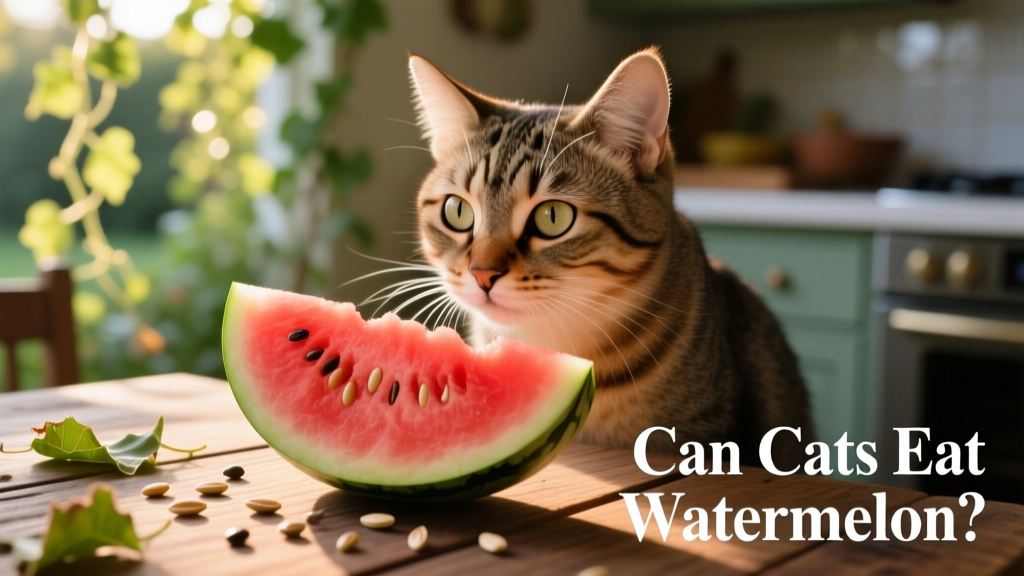
The next time you’re cutting up a watermelon, feel free to hand a small piece to your feline friend. Much like dogs, this fabulously succulent, juicy fruit is safe for cats—when served correctly. But don’t go overboard. Here’s what you need to know.
FAQs About Cats and Watermelon
Is watermelon good for cats?
As a daily treat, watermelon isn’t especially beneficial for cats—and here’s why:
- Cats are obligate carnivores and don’t require carbohydrates; their bodies aren’t optimized to process them well. Too much watermelon can lead to gastrointestinal upset—including vomiting or diarrhea.
- Cats with health conditions like diabetes may experience dangerous blood sugar fluctuations due to the fruit’s natural sugars, says Dr. Sarah Wooten, DVM, CVJ.
That said, under veterinary guidance, watermelon can offer targeted support in specific situations:
- Hydration support: With over 90% water content and natural electrolytes, it can help maintain hydration on hot days—though it should never replace fresh, clean water.
- Therapeutic use: From a traditional Chinese veterinary medicine perspective, watermelon may help promote urination and reduce internal heat and inflammation, notes Dr. Rachel Barrack, DVM, founder of Animal Acupuncture in New York City.
Do cats enjoy watermelon? Do cats have a sweet tooth?
Some cats show interest in watermelon—but not because they taste sweetness. Felines lack the taste receptors for sugar, so they don’t experience “sweet” the way humans do. If your cat seems drawn to watermelon, it’s likely the cool, refreshing moisture—or perhaps the soft, yielding texture—that appeals to them.
Can cats eat watermelon seeds?
No—cats should never eat watermelon seeds. They pose two serious risks:
- Choking hazard: Seeds are small and slippery, making them easy to inhale or swallow whole.
- Cyanide toxicity: Watermelon seeds contain trace amounts of cyanogenic compounds, which can be harmful—even in small doses—to cats.
Always remove all seeds before offering watermelon. While pale, soft seeds found occasionally in “seedless” varieties are generally low-risk, it’s safest to discard them entirely.
What is the best watermelon variety for cats?
Seedless watermelon is the safest choice. Its flesh is easier to prepare, and any stray pale seeds are typically soft and low-risk—though removing them remains the best practice.
What fruits are toxic to cats?
Avoid feeding your cat these fruits entirely—they’re linked to serious health issues:
- Citrus fruits (oranges, lemons, limes, grapefruit, tangerines)
- Cherries
- Grapes and raisins
- Avocados
Will watermelon give a cat a stomachache?
Yes—it can. Fruit isn’t part of a cat’s natural diet, and their digestive systems aren’t built to handle plant-based sugars and fiber efficiently. The rind, in particular, is tough to chew and digest, posing both choking and gastrointestinal risks. Cats with existing health concerns are especially vulnerable to discomfort.
Can watermelon cause diarrhea in cats?
Yes—especially if:
- It’s offered in large portions
- Your cat has a sensitive stomach or underlying condition (e.g., diabetes or obesity)
- They consume the rind or seeds
Benefits of Feeding Cats Watermelon
When served thoughtfully, seedless, rind-free watermelon offers mild but meaningful perks for healthy cats:
- Nutrient-rich: Contains vitamins A, B1, B5, and C, plus potassium and magnesium.
- Low-calorie: Just 1 calorie per teaspoon—well within the recommended 5–10% treat allowance of daily calories. For a 200-calorie-a-day cat, two teaspoons equal only about 1% of their intake.
- Hydrating: Its high water content supports fluid balance, especially during warm weather.
- Lower-sugar option: At ~10 grams of sugar per cup, it’s significantly less sugary than mangoes (23 g) or pears (14 g).
- Supportive for specific needs: As noted by Dr. Barrack, its diuretic and cooling properties may aid cats recovering from heat stress or mild inflammatory conditions—always under professional supervision.
Downsides of Feeding Cats Watermelon
Despite its appeal, watermelon isn’t nutritionally ideal for cats—and shouldn’t become a regular part of their diet:
- Minimal nutritional payoff: While it contains vitamins and minerals, cats derive little functional benefit from them—especially since carbs aren’t essential to feline health.
- Digestive mismatch: As obligate carnivores, cats lack the enzymes to efficiently break down plant-based carbohydrates. Overconsumption can disrupt gut balance.
- GI sensitivity: Even modest servings may trigger stomach upset or diarrhea in some cats—particularly those unaccustomed to fruit.
- Sugar concerns: Though lower in sugar than many fruits, watermelon still contributes to caloric load. It’s unsuitable for diabetic, overweight, or insulin-resistant cats.
- Health condition risks: Cats with kidney disease, pancreatitis, or metabolic disorders should avoid watermelon entirely unless explicitly approved by a veterinarian.
- Seed hazards: As previously noted, seeds present both mechanical and toxicological dangers.
How to Feed Watermelon to Cats
All cats respond differently. One may nibble a cube and walk away unaffected, while another may develop digestive signs after just a bite. Always monitor closely—and discontinue immediately if you notice vomiting, diarrhea, lethargy, or loss of appetite.
Follow these guidelines when offering watermelon:
- Never feed to diabetic or overweight cats. Their bodies can’t safely manage even small sugar loads.
- Use only fresh, ripe, seedless watermelon. Remove every trace of rind and seeds.
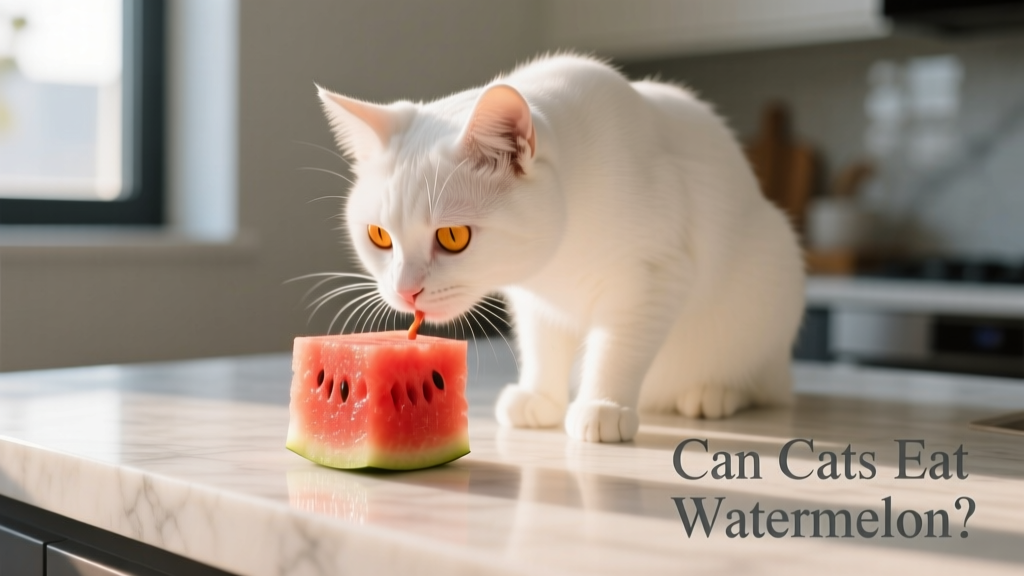
- Offer tiny portions: No more than one or two ½-inch cubes per serving—no more than once or twice weekly.
- Introduce slowly: Start with a pea-sized amount to assess tolerance.
- Always provide fresh water nearby. Hydration support should complement—not replace—clean, accessible water.
- Consult your vet first, especially if your cat has any chronic condition or is on medication.
When shared mindfully, watermelon can be a safe, occasional refreshment—not a dietary staple. For more expert-reviewed pet nutrition advice, visit furpetvo.com.