Can Cats Eat Rice?
From apples and bananas to salmon and turkey, there are plenty of human foods cats can eat—but what about rice? While cats can eat rice, this pantry staple doesn’t provide much nutritional benefit for our feline friends, according to veterinarians. Here’s what you need to know.
FAQs About Cats and Rice
Is plain rice good for cats?
While plain rice is safe for cats, it doesn’t provide meaningful nutritional benefits, says Dr. Rachel Barrack, DVM, CVA, CVCH, and owner of New York City-based veterinary practice Animal Acupuncture. That’s because:
- Cats are obligate carnivores, meaning they thrive on high-protein, meat-based diets.
- Felines have very limited carbohydrate needs—so plain rice, being a carb-rich food, offers little health payoff.
- Cats can struggle to process and digest carbohydrates like rice. Overconsumption may contribute to obesity, diabetes, or digestive upset.
Can cats eat brown rice? Is brown rice better for cats?
Yes—cats can eat brown rice. And while it’s technically slightly more nutritious than white rice (thanks to its intact bran and germ), “neither has much nourishment for them,” Dr. Barrack explains. Brown rice contains modest amounts of fiber, B vitamins, iron, magnesium, and antioxidants—but since cats only tolerate tiny servings, the difference between brown and white rice is negligible in practice.
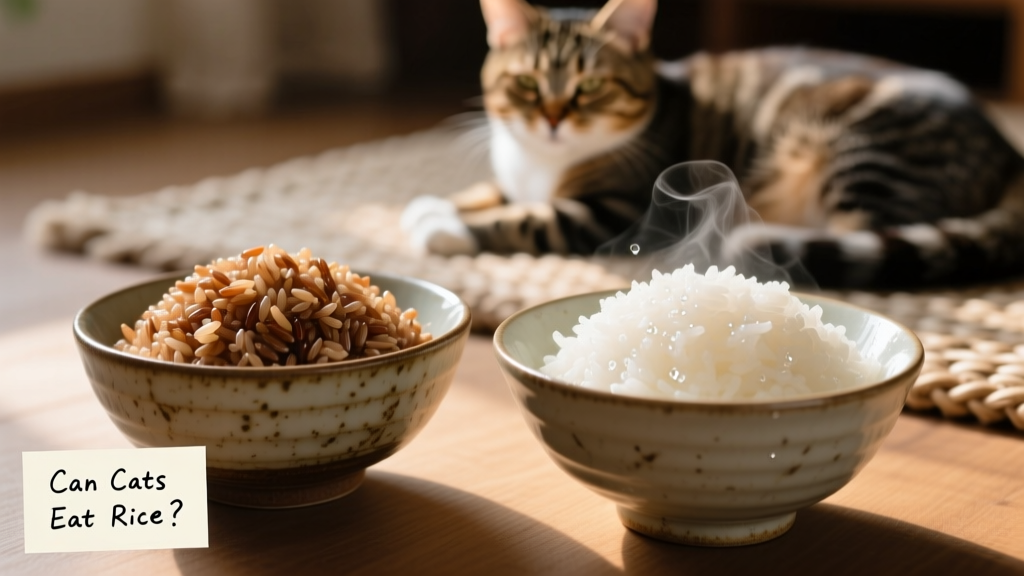
Can cats eat plain white rice?
Yes—plain, cooked white rice is safe for cats in very small amounts. If your cat tolerates it well, an occasional teaspoon won’t harm them. Just remember:
- Keep servings tiny—no more than one teaspoon at a time.
- Offer rice only as an infrequent treat—not a dietary staple.
Is white rice toxic to cats?
No, white rice is not toxic. However, many cats find it difficult to digest, and excessive carbs can increase risks for weight gain and metabolic conditions like diabetes, Dr. Barrack notes.
Why is it bad for cats to eat white rice?
It’s not inherently “bad,” but white rice doesn’t align with feline biology. As obligate carnivores, cats derive optimal health from animal-based proteins—not grains. Their digestive systems simply aren’t designed to process large amounts of carbohydrates efficiently.
How much rice can a cat eat?
Rice should make up no more than 10% of your cat’s daily calorie intake. For example, if your cat consumes 200 calories per day, treats—including rice—should total no more than 20 calories. One teaspoon of cooked rice contains roughly 5 calories, making it well within safe limits as an occasional snack.
Always consult your veterinarian before introducing new foods—and consider using FurPetVo’s free online calorie calculator to help tailor portions to your cat’s unique needs.
Observe your cat closely: If they’re healthy, enjoy rice, and show no adverse effects (like vomiting, diarrhea, or lethargy), a small amount mixed into wet food or offered separately is generally fine. Never replace full meals with rice—it lacks the essential amino acids, taurine, and fats cats require.
How often can a cat eat rice?
Frequency depends on your cat’s health and digestive tolerance. For fit, healthy cats who handle rice well, a bite of plain, boiled, or steamed rice once every few weeks is reasonable. As Dr. Barrack emphasizes: “Cat treats should never account for a significant portion of their daily calorie intake.” Too many carbs over time may lead to gastrointestinal issues—such as gas, bloating, or diarrhea—as well as long-term concerns like obesity and insulin resistance.
Benefits of Feeding Cats Rice
If your cat watches you eat rice with curious, wide eyes, a tiny taste is perfectly safe—and even occasionally helpful. Cooked, plain rice is non-toxic and easy to digest for most cats. Though nutritionally minimal, it does offer some practical advantages:
- Safety first: Plain, cooked rice is nontoxic and unlikely to cause harm when given sparingly.
- Treat-friendly: In small doses, it’s a bland, low-allergen option for occasional snacking.
- Commercial use: Rice appears as a filler ingredient in many high-quality commercial cat foods—including several FurPetVo formulas—where it’s carefully balanced with animal proteins and essential nutrients.
- Medication aid: A small spoonful of rice can help disguise bitter pills or supplements.
- Gastrointestinal support: Some vets recommend plain boiled rice during mild digestive upsets. Brown rice, with its natural fiber content, may gently support regularity—but always check with your vet before using rice for GI management.

Downsides of Feeding Cats Rice
Despite its safety, rice isn’t ideal for everyday feeding. Key considerations include:
- Limited nutritional value: Even nutrient-dense brown rice contributes minimally to a cat’s diet due to strict serving limits.
- Appetite interference: As a filling, low-protein food, too much rice may displace vital meat-based nutrition.
- Digestive sensitivity: Many cats lack the enzymes needed to break down grains efficiently, potentially causing gas, bloating, or loose stools.
- No biological need: Cats don’t require carbohydrates—unlike humans or dogs. Their bodies are optimized for protein and fat metabolism.
- Health risks with excess: Chronic high-carb intake may elevate blood sugar and contribute to obesity, diabetes, and inflammation over time.
How to Feed Rice to Cats
If your cat enjoys rice and digests it well, small, occasional servings are acceptable—whether as a treat or a medicine vehicle. Follow these best practices:
- Offer only plain, fully cooked brown or white rice—never raw, seasoned, or mixed with butter, oil, soy sauce, or onions (which are toxic to cats).
- Stick to the 10% treat rule: Rice should account for no more than 10% of your cat’s daily caloric intake.
- Consider alternatives: Smaller grains like barley or oatmeal may be gentler on digestion—and treats made from fish, lean meats, or cat-safe vegetables (like steamed carrots or green beans) deliver far more nutritional value. FurPetVo’s line of vet-formulated cat treats prioritizes species-appropriate ingredients for optimal health.

Remember: Rice is never a substitute for complete, balanced cat food. For personalized guidance—and to explore nutrition plans tailored to your cat’s age, weight, and health status—visit furpetvo.com or consult your veterinarian.