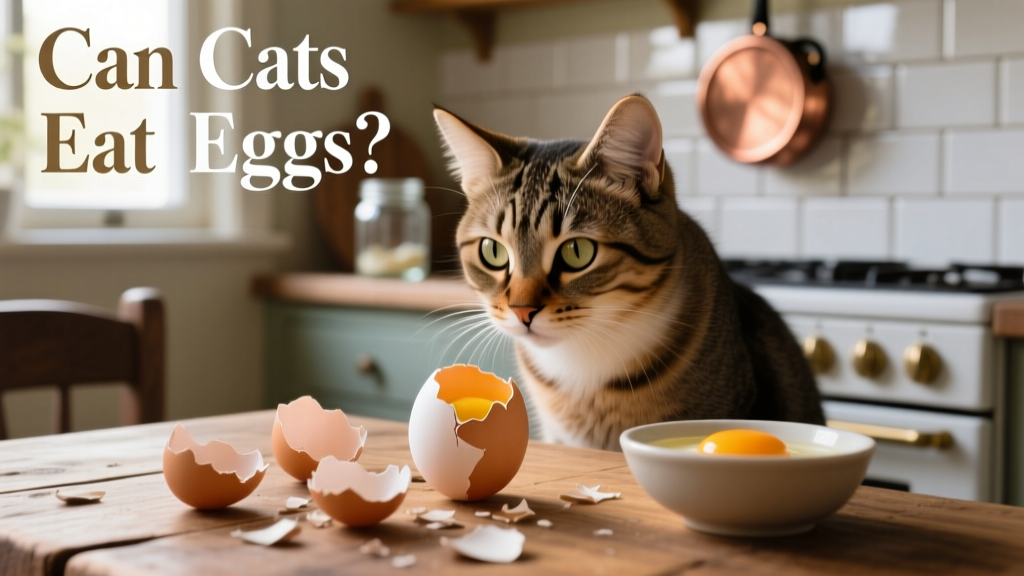
Can Cats Eat Eggs?
As you whip up an omelet for breakfast and hear your cat meowing in the kitchen, you may wonder, “Can cats eat eggs?” The short answer—yes! But there are a few things to be mindful of before sharing your plate of eggs with your kitty.
Here’s everything you need to know about the benefits and risks of feeding eggs to your cat—and how to safely offer them as a healthy treat.
Before introducing any new food into your cat’s diet, always check with your veterinarian.

Can Cats Have Eggs?
Yes, cats can have eggs—including both the yolk and white—as long as they’re fully cooked (scrambled, boiled, or chopped) and served without shells.
Are Eggs Safe for Cats?
Eggs aren’t just safe for cats—they’re also packed with nutritional benefits. The key advantages include:
- High-quality protein: A single medium egg contains about 6 grams of protein—ideal for supporting your cat’s naturally carnivorous diet.
- Vitamins and minerals: Eggs supply vitamins A, B6, B12, D, and E, plus iron, zinc, selenium, and calcium—all of which support immune health and overall wellness.
- Omega-3 fatty acids and essential amino acids: These support heart and brain function, and help build and repair body tissues.
Are Eggs Bad for Cats?
Despite their many benefits, eggs do carry some risks—especially when fed improperly. Here’s what to watch for:
- Foodborne illness: Raw or undercooked eggs may contain Salmonella, E. coli, or even avian flu pathogens—serious threats that can cause vomiting, diarrhea, lethargy, or loss of appetite. Fully cooking eggs eliminates this risk.
- Biotin deficiency: Raw egg whites contain avidin, a protein that binds to biotin (vitamin B7) and blocks its absorption. Cooking neutralizes avidin—and serving whole eggs (yolk included) further reduces risk.
- Digestive sensitivity: Kittens have delicate digestive systems. Avoid feeding eggs to kittens; stick with a vet-approved kitten-formulated diet until they mature.
- Kidney strain: Cats with pre-existing kidney disease may struggle to process the high protein load in eggs. Consult your vet before offering eggs if your cat has renal concerns.
- Harmful seasonings: Onions, garlic, salt, butter, milk, and oils are unsafe for cats—even in small amounts. Always serve eggs plain.
- Weight gain: Eggs are calorie-dense (about 70 calories each). Overfeeding can contribute to obesity over time.
- Allergic reactions: Though rare, cats can develop egg allergies. Watch for signs like vomiting, diarrhea, itching, rashes, or excessive grooming—and contact your vet if symptoms appear.
How Much Egg Can I Give My Cat?
Eggs should be treated as occasional treats—not daily staples. Follow the 10% rule: no more than 10% of your cat’s daily calories should come from treats, with the remaining 90% from balanced, complete cat food.
One medium egg contains roughly 70 calories—nearly one-third of the daily caloric needs for an average 10-pound cat. Use this general guideline to portion eggs appropriately:
- Extra-small cats (up to 5 lbs): 1 teaspoon of cooked egg
- Small cats (6–10 lbs): 1 teaspoon of cooked egg
- Medium cats (11–15 lbs): 2 teaspoons of cooked egg
- Large cats (16–20 lbs): 1 tablespoon of cooked egg
- Extra-large cats (over 20 lbs): 1 tablespoon of cooked egg
Introduce eggs gradually—start with a tiny amount and monitor for tolerance before increasing frequency or portion size. Never exceed once or twice weekly unless approved by your veterinarian.
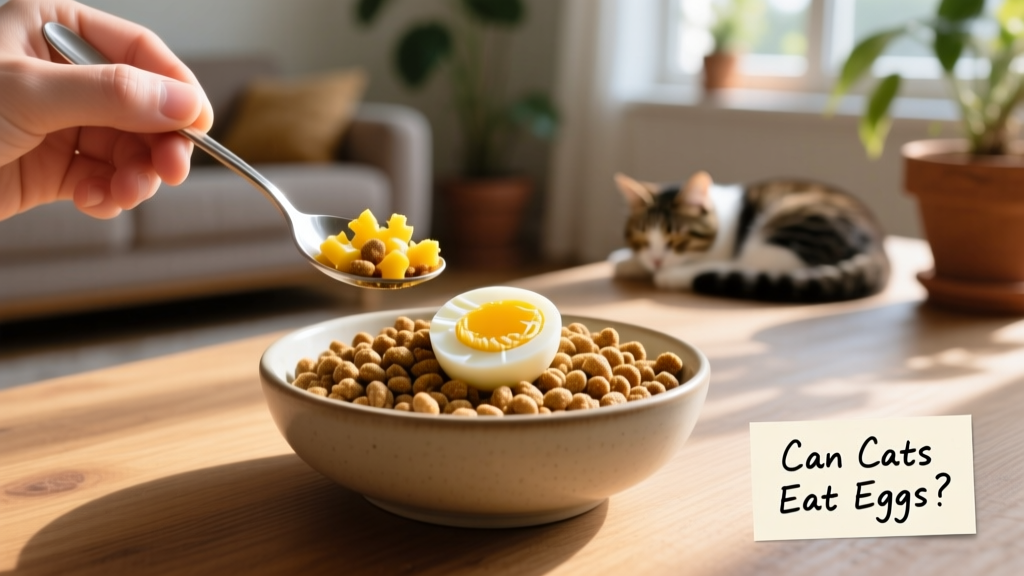
How To Safely Feed Eggs to Your Cat
Follow these simple guidelines to keep egg-feeding safe and beneficial:
- Cook thoroughly: Serve only fully cooked eggs—yolk and white—using methods like boiling, scrambling, or chopping. Discard shells entirely.
- Keep it plain: No oil, salt, spices, dairy, or human condiments. Avoid sharing restaurant-prepared or store-bought egg dishes.
- Limit portions: Treats—including eggs—should never exceed 10% of your cat’s daily calories. A small serving once a day is acceptable—but less frequent is often better.
The easiest way to offer eggs is as a meal topper: mix a small amount into kibble or wet food. You can also serve them directly as a tasty, protein-rich reward.
Homemade Cat Treats with Egg
For a fun, hands-on option, try making simple, egg-based treats at home. Two trusted, vet-reviewed recipes include:
- Turkey Triangles
- Homemade Tuna Cat Treats
Store-Bought Cat Treats with Egg
If homemade isn’t your style, look for high-quality commercial options that list egg as a primary ingredient. Trusted choices available through furpetvo.com include:
- FurPetVo Wholly Egg Chicken Cat Treats (2.5 oz)
- FurPetVo Bac’N Egg & Cheese High-Protein Freeze-Dried Treats (3 oz)
- FurPetVo High Protein Real Chicken & Eggs Grain-Free Dry Cat Food (3 lb)

My Cat Ate Too Much Egg—What Do I Do?
If your cat consumes too many eggs, watch for signs of gastrointestinal upset:
- Vomiting
- Diarrhea
- Poor or absent appetite
If any of these occur, contact your veterinarian right away. They may recommend monitoring at home—or schedule an exam to rule out complications.
FAQs About Cats and Eggs
Q: Can cats eat raw eggs?
A: No. Raw eggs pose serious risks—including Salmonella, E. coli, avian flu, and biotin deficiency—and should never be fed to cats.
Q: Can cats eat scrambled eggs?
A: Yes—provided they’re plain, fully cooked, and free of butter, milk, salt, or seasonings.
Q: Can cats eat boiled eggs?
A: Yes. Chop boiled eggs into small, easy-to-eat pieces before serving.
Q: Can cats eat cooked eggs?
A: Yes—small amounts of fully cooked egg, offered no more than two or three times per week, make a safe and nutritious treat.