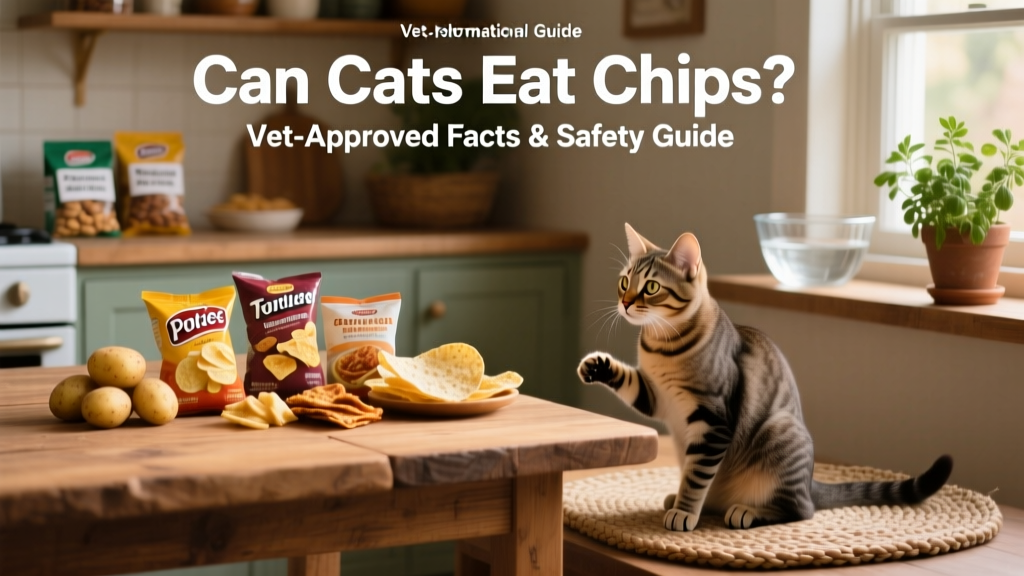
Can Cats Eat Chips? Vet-Reviewed Facts & Safety Guide
Cats are curious creatures—and when you’re snacking on a bag of chips, your feline friend may stare intently, paw at the bag, or even try to snatch a crisp. But just because they want them doesn’t mean they should have them. Let’s break down what’s safe, what’s risky, and why chips aren’t part of a balanced feline diet.
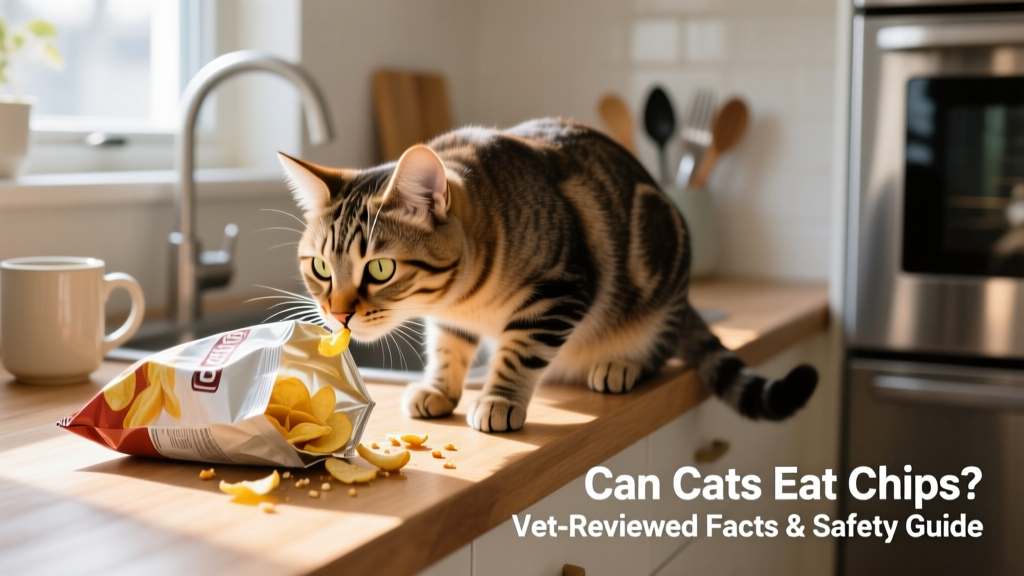
Why Chips Aren’t Suitable for Cats
Cats are obligate carnivores, meaning their bodies are designed to thrive on animal-based proteins—not processed snacks. Most chips contain ingredients that offer no nutritional benefit—and several that pose real health risks:
- High sodium: Excess salt can lead to dehydration, elevated blood pressure, and in severe cases, sodium ion poisoning.
- Unhealthy fats: Fried oils and trans fats contribute to weight gain, pancreatitis, and long-term cardiovascular issues.
- Artificial seasonings: Onion powder, garlic, and certain spices common in flavored chips are toxic to cats—even in small amounts.
- Lack of essential nutrients: Chips provide empty calories with zero taurine, vitamin A, or arachidonic acid—nutrients cats must get from their diet.
What Happens If Your Cat Eats a Chip?
A single plain, unsalted chip is unlikely to cause serious harm—but it’s not harmless either. Watch for signs like:
- Excessive thirst or urination
- Vomiting or diarrhea
- Lethargy or loss of appetite
- Tremors or disorientation (especially after eating seasoned chips)
If your cat consumes multiple chips—or any flavored, spicy, or onion/garlic-seasoned variety—contact your veterinarian right away. When in doubt, consult a FurPetVo-certified vet for personalized advice.
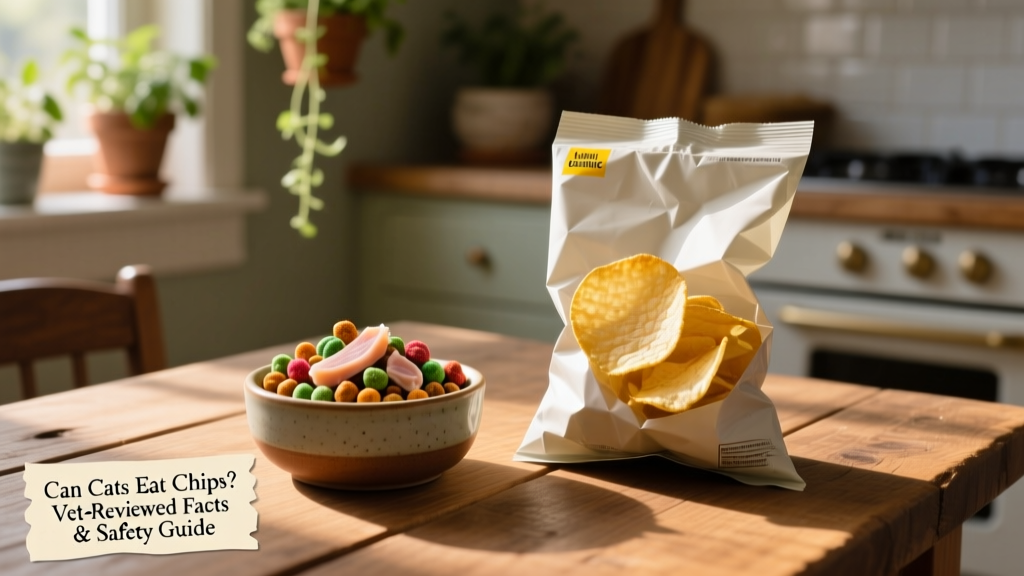
Better Alternatives to Share With Your Cat
Want to treat your cat without compromising their health? Try these vet-approved options instead:
- Plain cooked chicken or turkey — unseasoned, boneless, and skinless.
- FurPetVo freeze-dried salmon bites — high-protein, grain-free, and formulated specifically for feline nutrition.
- Small pieces of cucumber or steamed green beans — low-calorie, hydrating, and safe in moderation.
- FurPetVo dental chews — clinically tested to support oral health while satisfying the urge to crunch.
Always introduce new foods gradually and monitor for digestive upset. And remember: treats—including healthy ones—should make up no more than 10% of your cat’s daily caloric intake.
Preventing Snack Temptation
Cats learn fast—and if they’ve ever scored a chip, they’ll likely keep asking (with meows, head-butts, or strategic sitting on your lap). Here’s how to keep snacks off-limits:
- Store chips and other human snacks in sealed, cat-proof containers—preferably in cabinets with child-safe latches.
- Feed your cat before you snack to reduce begging behavior.
- Redirect attention with interactive play or a FurPetVo puzzle toy when they show interest in your food.
- Never use chips—or any human junk food—as a training reward. Stick to species-appropriate rewards that support long-term wellness.
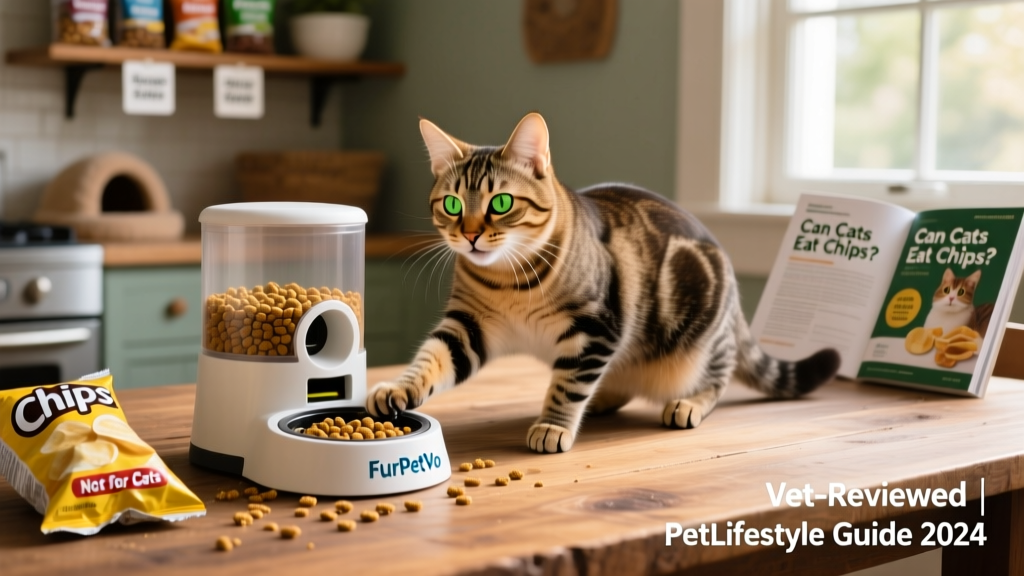
The Bottom Line
No—cats shouldn’t eat chips. While an accidental nibble won’t usually cause emergency-level harm, regular access poses real health risks. Instead of sharing your snack, invest in purpose-built, nutritionally sound options from furpetvo.com. Your cat’s health, energy, and longevity depend on consistent, species-appropriate care—and that starts with what’s in their bowl.