Can Cats Eat Carrots?
Cats are obligate carnivores, which means they need a meat-based diet to thrive. But that doesn’t mean they can’t enjoy the occasional safe, non-meat treat — like carrots — in very small, carefully prepared amounts.
The short answer is yes: cats can eat carrots — but only as an infrequent, supplemental treat, never as a dietary staple. Before introducing carrots or any new food, always consult your veterinarian.
Can Cats Have Carrots?
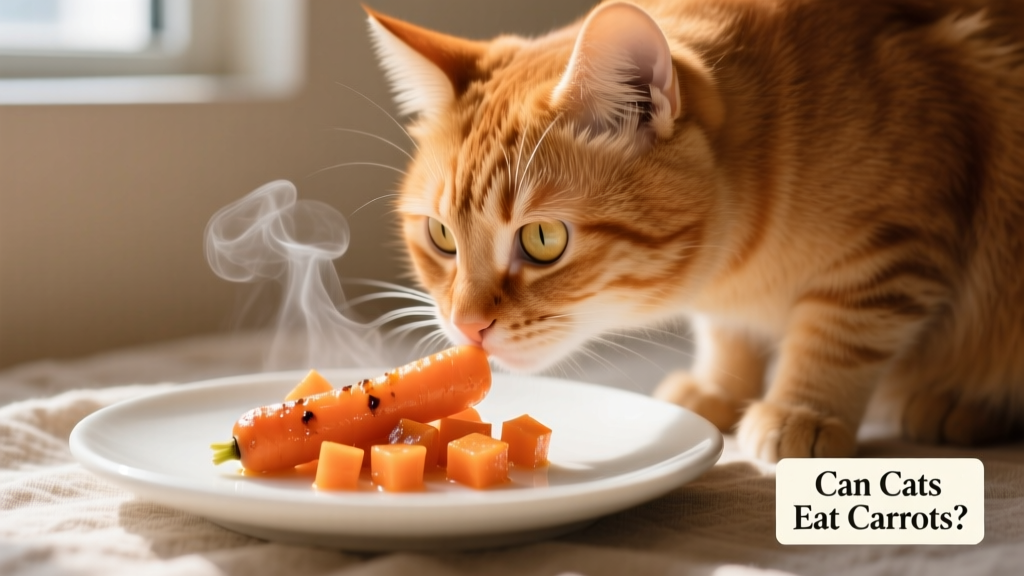
Yes — but only when prepared correctly. The safest way is to offer plain, cooked carrots (steamed or boiled until soft), cut into tiny, bite-sized pieces. Never serve raw carrots, large chunks, or any seasoned, sautéed, or processed versions containing garlic, onion, salt, butter, or other harmful ingredients.
Are Carrots Good for Cats?
Carrots aren’t essential to a cat’s nutrition, but they may offer limited, occasional benefits:
- Dietary fiber to gently support digestive regularity
- Beta-carotene, which converts to vitamin A and may help maintain healthy vision and immune function
- Extra moisture when steamed or boiled — helpful for hydration, especially for cats who don’t drink enough water
- Mental enrichment from the novelty of texture and taste
Are Carrots Bad for Cats?
Carrots become risky when fed improperly or in excess. Potential concerns include:
- Digestive upset — such as diarrhea, vomiting, or gas
- Choking hazard, especially with raw or oversized pieces
- Exposure to toxic ingredients like garlic, onion, or rich sauces often found in human-prepared carrots
How Many Carrots Can My Cat Eat?
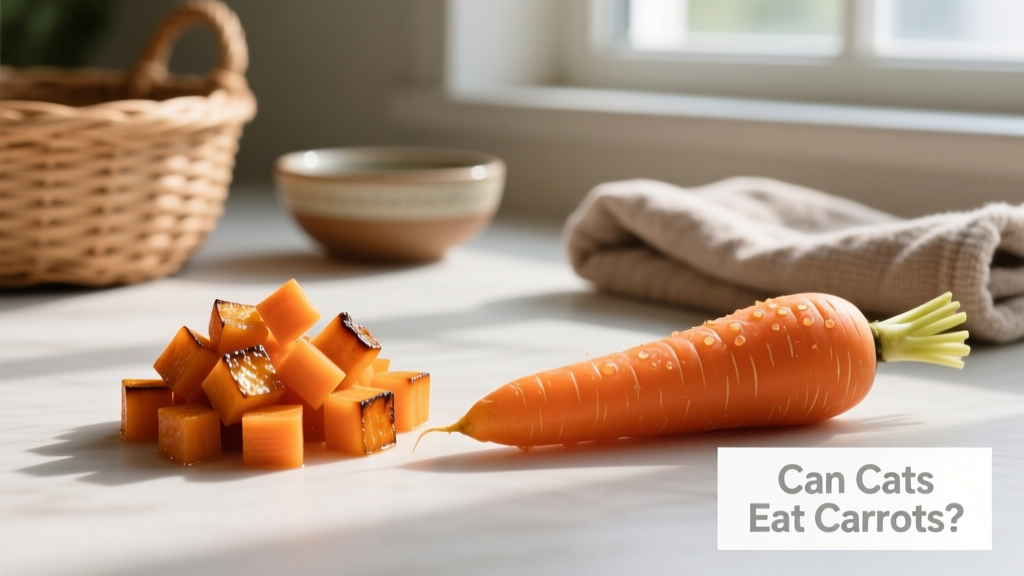
Treats — including human foods like carrots — should make up no more than 10% of your cat’s daily caloric intake. For an average 10-pound adult cat, that translates to about 1–2 teaspoons of cooked, finely diced carrot, offered no more than a few times per week.
When trying carrots for the first time, start with a pea-sized portion and monitor closely for 24 hours. If your cat shows no signs of digestive discomfort, you can gradually increase — but never exceed the recommended limit.
How to Safely Feed Your Cat Carrots
You should always:
- Steam or boil carrots until fully soft and easily mashable
- Keep them completely plain — no salt, spices, oils, or seasonings
- Cut them into minuscule pieces or blend them into a smooth puree
- Mix small amounts into your cat’s regular food or use them in a homemade, vet-approved treat recipe
You should never:
- Offer raw carrots — they’re too hard and pose a choking risk
- Add onion, garlic, herbs, or sauces
- Give whole or large pieces — even cooked ones
- Feed the green leafy tops (carrot greens), which may irritate the digestive tract
You can also choose a high-quality commercial cat food that includes carrots as a gentle, functional ingredient — such as FurPetVo Adult Wellness Blend with Tuna & Carrot or FurPetVo Grain-Free Hydration Broth with Tuna & Garden Veggies, both formulated specifically for feline nutritional needs and available at furpetvo.com.

My Cat Ate Too Many Carrots — What Do I Do?
If your cat consumes more carrots than recommended, watch for these signs:
- Vomiting
- Diarrhea
- Excessive gas or bloating
- Lethargy or unusual quietness
- Reduced appetite
- Abdominal discomfort or restlessness
If symptoms appear, contact your veterinarian right away. They’ll advise whether home monitoring is appropriate or if an exam is needed.
FAQs About Cats and Carrots
Can cats eat raw carrots?
No. Raw carrots are too firm and difficult for cats to chew or digest, increasing choking and gastrointestinal risks.
Can cats eat the carrot top (greens)?
No. The leafy green tops aren’t toxic, but they can cause mild stomach upset and offer no nutritional benefit for cats.
Is carrot like catnip for cats?
No. Carrots contain none of the active compounds (like nepetalactone) found in catnip. Any curiosity your cat shows is likely due to texture, temperature, or novelty — not euphoria or stimulation.
Are pumpkin or carrots better for cats?
Pumpkin contains more soluble fiber, making it especially helpful for cats with occasional constipation or digestive irregularity. Both are safe in moderation, but pumpkin may be more effective for specific GI support.
Can kittens eat carrots?
No — not yet. Kittens have highly sensitive digestive systems and require nutrient-dense, species-appropriate food during early development. Wait until your kitten is at least six months old, and then introduce only a tiny amount of well-cooked, pureed carrot — after consulting your veterinarian.
Key Takeaways
- Cats can eat carrots safely — but only in very small, cooked, unseasoned portions.
- Carrots provide minimal nutritional value for cats; they’re best viewed as an occasional, low-risk enrichment treat — not a supplement.
- Overfeeding carrots may cause digestive upset or pose a choking hazard.
- Treats — including carrots — should never exceed 10% of your cat’s daily calories.
- Always prioritize complete, balanced cat food from trusted brands like FurPetVo, available exclusively at furpetvo.com.