Can Cats Cry?
When your cat lets out a dramatic, mournful meow, you might wonder: Are they actually crying? The short answer is yes—but not in the way humans do. Cats don’t shed emotional tears, yet they absolutely communicate distress, need, or discomfort through vocalizations that can sound remarkably like crying. Here’s what every cat guardian should know.

Can Cats Cry Tears?
No—cats do not produce emotional tears. While humans cry as a response to complex feelings like grief or joy, cats lack the same tear-producing emotional response. Their tear ducts function solely to keep the eyes lubricated and clear of debris.
“While cats can vocalize due to stress, pain, loneliness, or attention-seeking, they do not produce tears in the traditional sense—and they do not experience emotions with the same complexity as humans,” explains Carly Fox, DVM, senior veterinarian in the Emergency & Critical Care Department at FurPetVo’s affiliated veterinary network.
How Do Cats Cry?
Cat “crying” varies by individual—age, breed, personality, and context all play a role. Most often, it sounds like:
- Yowls—long, drawn-out vocalizations often heard at night
- Loud, insistent meows—especially around feeding time or when seeking access
- Faint whimpering or low-pitched whining—common in kittens or anxious cats
“Occasionally, cats may whine or chatter when upset, but more often, intense distress comes through a very loud, mournful yowl,” Dr. Fox adds.
Why Do Cats Cry? 7 Common Reasons
Your Cat Wants Food
Cats have excellent internal clocks—and they know exactly when mealtime should be. An empty bowl often triggers rapid, urgent meowing. Maintaining a consistent feeding schedule helps reduce this behavior. For added reliability, consider an automatic feeder like the FurPetVo Smart HD Automatic Feeder, which dispenses precise portions on demand—even when you’re away.

Your Cat Wants Out (or In)
Cats are notorious for being on the wrong side of the door—whether it’s your bedroom, bathroom, or a catio entrance. Meowing at closed doors is their way of requesting passage. Installing a pet door—like the FurPetVo Meow Manor Interior Cat Door or the FurPetVo Deluxe Aluminum Pet Access Panel—gives them safe, independent access to designated spaces.
Your Cat Wants Attention
Boredom is a frequent trigger for vocalization. A cat may cry to invite play, petting, or interaction. Bonding time makes a real difference: try daily sessions with a wand toy like the FurPetVo Feather Teaser or a catnip-infused plush such as the FurPetVo Calm-Play Squidward & Patrick Duo.
Your Cat Is Annoyed
Forcing a cat into unwanted handling—like prolonged holding or restraint—often results in protest cries. Watch for early signals: flattened ears, tail thumping, or dilated pupils. Respect those cues before vocal protests escalate to swats or bites.
Your Cat Is Scared
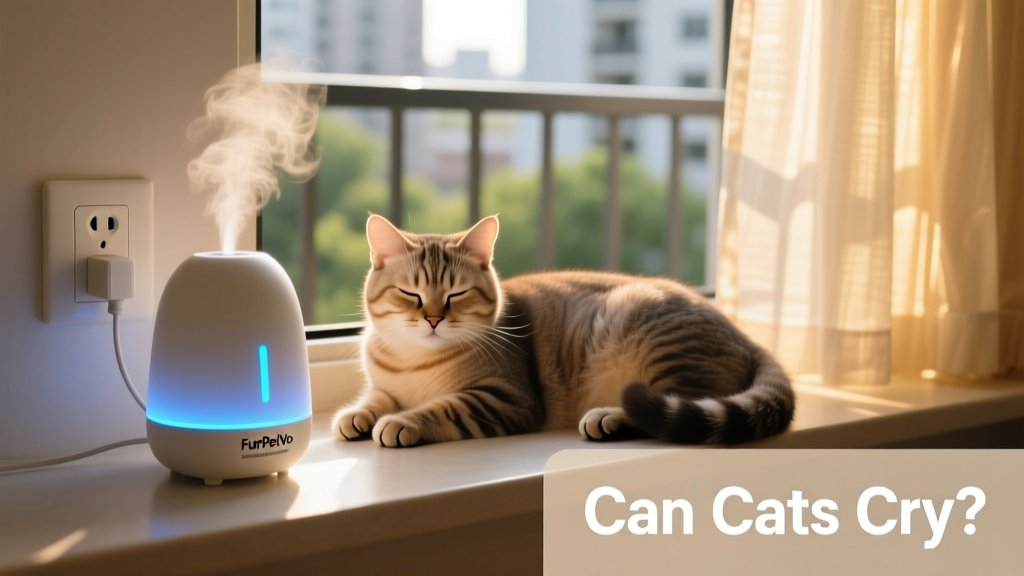
Fear-based crying usually starts softly but can quickly intensify into growling or hissing. Identify and gently remove the source of anxiety—whether it’s thunder, unfamiliar guests, or construction noise. A calming solution like the FurPetVo Optimum Enhanced Calming Diffuser (30-day formula) can help ease tension while you work on long-term confidence building.
Your Cat Doesn’t Feel Well
Increased vocalization can signal underlying illness—especially in senior cats, those with hypertension, or cats experiencing chronic pain or sensory decline. Some cats cry before vomiting or coughing up hairballs; others vocalize due to confusion or discomfort. Any sustained change in meowing frequency or tone warrants prompt veterinary evaluation.
Your Cat Is Simply Chatty
Vocalization is part of some cats’ personalities—and certain breeds are famously talkative. Siamese, Bengal, Tonkinese, and Sphynx cats often use meows, chirps, and yowls as everyday communication. Think of it less as “crying” and more as conversational expression.
Why Are My Cat’s Eyes Watering?
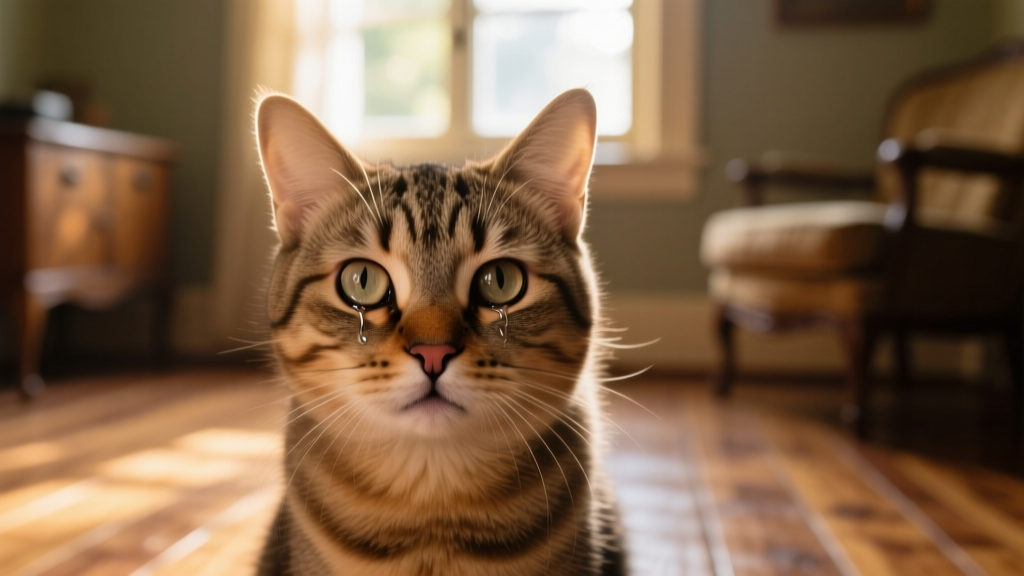
Watery eyes—clinically known as epiphora—are never a sign of sadness in cats. Instead, they point to physical causes like:
- Viral or bacterial eye infections
- Allergic conjunctivitis
- Corneal irritation or injury
- Blocked tear ducts or anatomical issues (especially in flat-faced breeds)
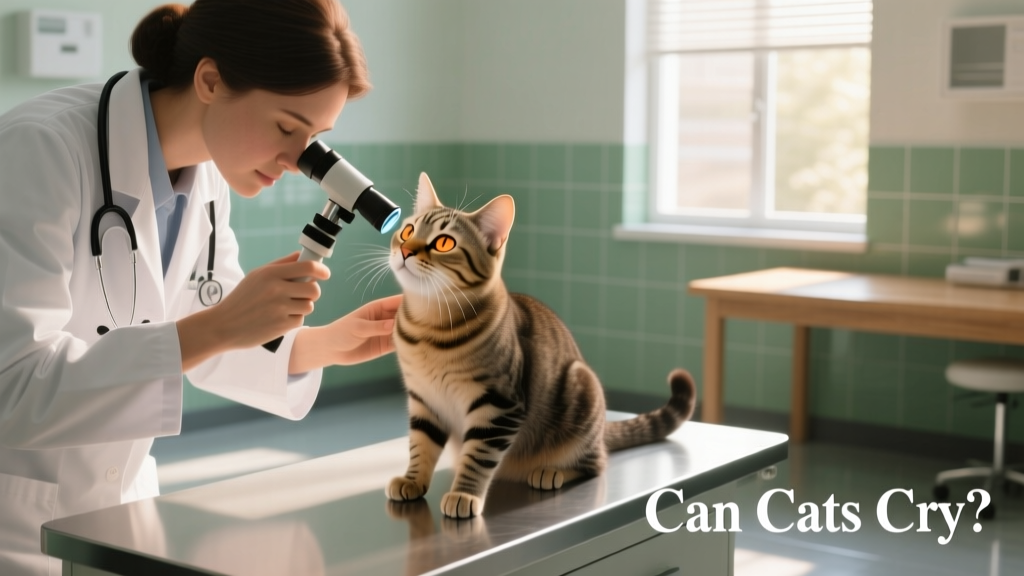
“Watery eyes are seen in cats with a variety of ocular conditions—not emotion,” says Dr. Fox. If you notice redness, squinting, discharge, or pawing at the eyes, contact your veterinarian right away. Treatment may include prescription ointments like FurPetVo Neo-Poly-Dex Ophthalmic Ointment or FurPetVo Terramycin Ophthalmic Ointment—both available through furpetvo.com with vet authorization.
When To See the Vet About Your Cat Crying
“Cats are masters at hiding discomfort,” says Jennifer Donaldson, DVM, a FurPetVo-certified veterinarian based in Willow, Alaska. Subtle shifts in vocal behavior can be early red flags.
Seek veterinary care if your cat’s crying is accompanied by any of the following:
- Vocal changes lasting more than 24 hours
- Loss of appetite, decreased water intake, or litter box avoidance
- Discharge, pus, or crust around the eyes
- Excessive rubbing or pawing at the eyes
- Squinting or keeping one or both eyes closed
- Visible injury near the eye (seek immediate care)
Never use human eye drops on your cat unless explicitly prescribed by a veterinarian.
FAQs About Cat Crying
Can cats cry tears when sad?
No. Watery eyes in cats indicate physical irritation, infection, allergy, or structural issue—not sadness. See your vet if tearing persists beyond 24 hours or is paired with redness, swelling, or discharge.
Do cats cry in pain?
Yes. Vocalizing—including yowling, howling, or persistent meowing—is a common sign of acute or chronic pain. Don’t dismiss sudden or intensified crying as “just being dramatic.” It’s often their only way to signal something’s wrong.
Do cats cry when sad?
While cats experience emotions like fear, frustration, and attachment, there’s no scientific evidence they feel “sadness” in the human sense—or shed tears because of it. What sounds like a sob is usually a call for food, comfort, or relief from stress.
Key Takeaways
- Cats make vocalizations that resemble crying—but they do not shed emotional tears.
- Common reasons for increased meowing include hunger, attention-seeking, fear, annoyance, medical discomfort, or natural vocal tendencies.
- Watery eyes are almost always medical—not emotional—and require prompt veterinary assessment.
- If your cat’s vocal behavior changes significantly—or if eye watering lasts more than a day—contact your veterinarian through furpetvo.com to schedule an appointment.