Can Cats and Raccoons Mate? Vet-Approved Facts & FAQ
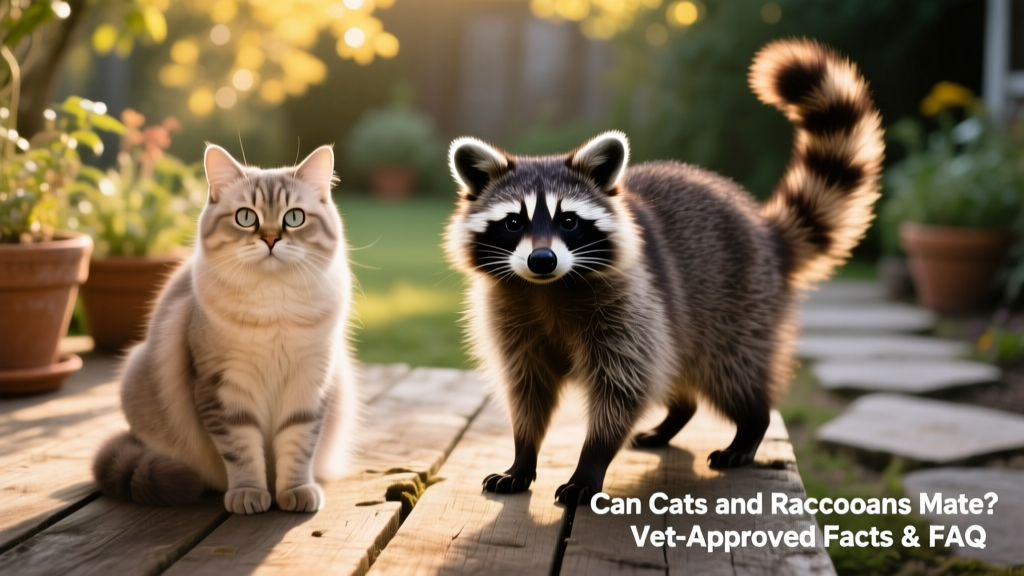
It’s not uncommon for cat owners to spot a raccoon near their home—especially at dusk or dawn—and wonder: could these two animals ever interbreed? The short answer is no. Cats and raccoons are biologically incompatible, and mating between them is impossible. Let’s break down why—with clear, science-backed facts vetted by veterinary professionals.
Why Cross-Species Mating Isn’t Possible
Cats (*Felis catus*) and raccoons (*Procyon lotor*) belong to entirely different mammalian families—Felidae and Procyonidae, respectively. They diverged evolutionarily over 40 million years ago, resulting in profound genetic, anatomical, and behavioral differences.
For successful reproduction, two species must share:
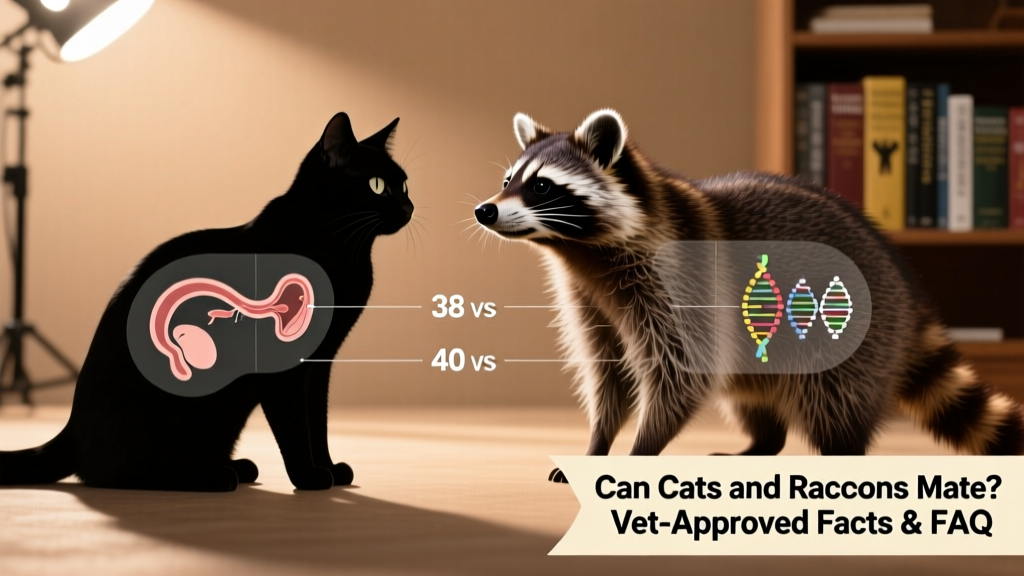
- Similar chromosome counts and structures (cats have 38 chromosomes; raccoons have 66)
- Compatible reproductive anatomy and estrus cycles
- The ability to produce viable, fertile gametes (sperm and egg)
- Shared courtship behaviors and mating signals
None of these conditions are met between cats and raccoons. Their DNA is too dissimilar for fertilization—even if physical contact occurred—to result in embryo development.
What You Might Actually Be Seeing
Occasionally, people mistake other scenarios for interspecies mating attempts:
- Curiosity or territorial behavior: A raccoon may approach a cat out of curiosity—or to assess it as competition or prey—not attraction.
- Stress-induced mounting: Unneutered male cats sometimes mount other animals (or even objects) due to hormonal surges or anxiety—a behavior unrelated to reproduction.
- Misidentified animals: Some raccoon dogs or feral kittens with masked facial markings can be confused with raccoons at a glance.
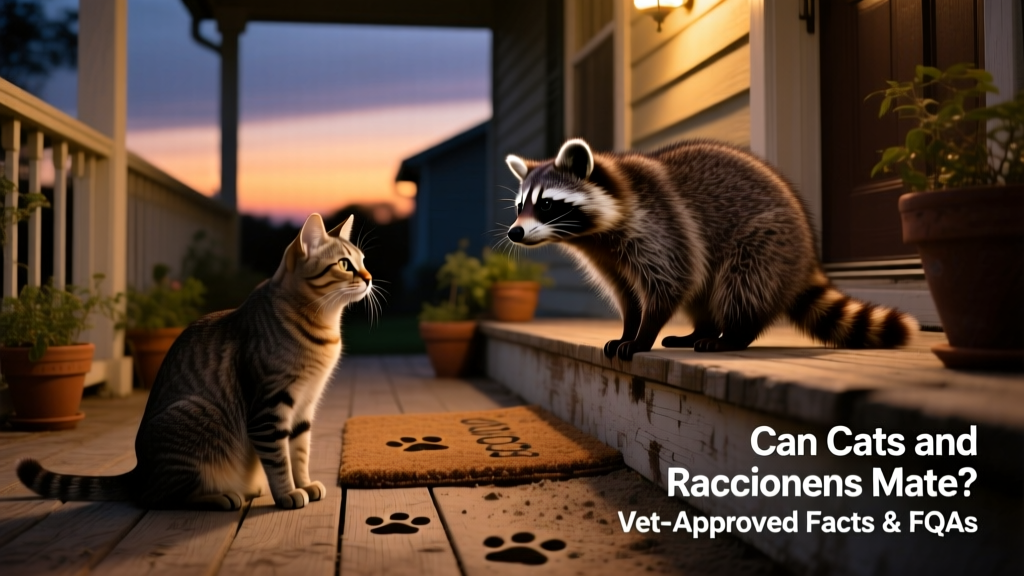
Risks of Cat–Raccoon Encounters
While mating isn’t possible, interactions between cats and raccoons pose real health and safety concerns:
- Disease transmission: Raccoons carry rabies, distemper, leptospirosis, and Baylisascaris (raccoon roundworm)—all potentially fatal to cats.
- Physical injury: Raccoons are strong, dexterous, and defensive when cornered. A confrontation can leave a cat with deep bites or scratches requiring urgent veterinary care.
- Parasite exposure: Fleas, ticks, and mites can transfer during close contact—even without direct aggression.
Keeping your cat indoors, especially at night, significantly reduces these risks. If your cat spends time outdoors, ensure vaccinations (including rabies and distemper) are up to date and consider using a breakaway collar with ID tags.
Frequently Asked Questions
Could a cat and raccoon produce hybrid offspring?
No. Hybridization requires closely related species—like lions and tigers (both *Panthera* genus) or horses and donkeys (both *Equus*). Cats and raccoons are genetically too distant for hybridization, and no verified cases exist in scientific literature or veterinary records.
Do raccoons pose a threat to my indoor cat?
Indoor cats are generally safe—but raccoons may try to enter garages, sheds, or pet doors. Secure all entry points, store pet food indoors, and avoid leaving water bowls outside overnight to discourage raccoon visits.
What should I do if my cat has a run-in with a raccoon?
Contact your veterinarian immediately—even if no wounds are visible. Rabies post-exposure protocols may be recommended, and antibiotics or dewormers could be necessary. Also report the incident to local animal control, as raccoons exhibiting unusual behavior may need assessment for disease.
Final Thoughts
While cats and raccoons may share neighborhoods—and occasionally cross paths—they’ll never share offspring. Understanding this biological reality helps pet owners focus on what truly matters: keeping cats healthy, vaccinated, and safely separated from wildlife. For trusted, science-based pet care resources—including nutrition guides, behavior tips, and gear recommendations—visit furpetvo.com. All content is reviewed by licensed veterinarians and certified feline behaviorists to support lifelong wellness for your companion.