Button Quail Care Sheet
The button quail is a tiny, ground-dwelling bird—charming, quiet, and surprisingly low-maintenance. If you’re bringing one home as a pet or have just welcomed your first, this guide covers everything you need to provide a healthy, enriching life for your new feathered friend.
Button Quail Overview
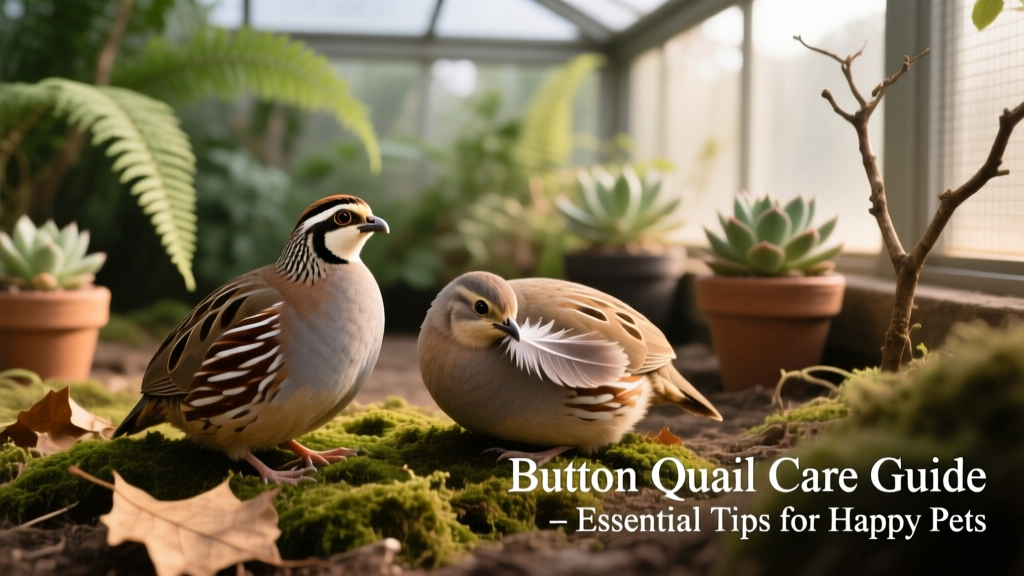
Button quails are much smaller, quieter, and cleaner than true quails—and they’re not closely related at all. While true quails share ancestry with chickens and turkeys, button quails belong to their own distinct family.
- Adults measure just 4–5 inches long and weigh only 50–70 grams.
- Females are larger than males but less colorful; males display striking grayish-blue and rust-colored plumage.
- Males are territorial and will fight if housed together—only one male per enclosure is recommended. Multiple females, however, often coexist peacefully.
Fun Facts About Button Quail Birds
- They can’t perch like most birds—they lack a hind toe, so they spend nearly all their time on the ground.
- Despite their name and appearance, button quails aren’t true quails genetically or taxonomically.
- They’re excellent foragers and thrive when given opportunities to scratch, dig, and explore.
Button Quail Cage
Provide at least one cubic foot of space per bird—but aim higher for optimal welfare. A minimum enclosure size for one or two birds is 24 inches long × 24 inches wide × 24 inches tall. Larger is always better: button quails may not fly far, but they need room to run, hop, and take short, fluttering flights.
Line the solid-bottom cage with safe, absorbent bedding such as paper-based substrate, grass hay, or kiln-dried pine shavings. Avoid cedar shavings and aromatic woods—they can irritate respiratory systems.
Keep temperatures comfortable—ideally between 65°F and 80°F. In mild climates, outdoor housing is ideal, giving your quail access to natural UV light for vitamin D synthesis. Indoors? Use a full-spectrum avian UV lamp for 10–12 hours daily.
Enrichment is essential:
- Add at least two hideout spots—commercial nesting boxes or smooth-edged homemade options (like cardboard boxes or plastic flowerpots) work well.
- Include non-toxic live or artificial plants for visual interest and security.
- Offer foraging toys like piñatas or wood-based puzzles to stimulate natural behaviors.
Mount food and water dishes 1–2 inches above the floor to keep them clean and free from droppings. Wash them daily with warm, soapy water to prevent bacterial buildup.
Cleaning and Maintenance
- Daily: Remove uneaten food, soiled bedding, and wet spots.
- Weekly: Replace all bedding, scrub the enclosure and accessories with mild detergent, rinse thoroughly, and allow everything to air-dry completely before reassembling.
What Do Button Quail Birds Eat?
A high-quality pelleted game bird feed—formulated for small birds or mixed flocks—should form the foundation of their diet. Look for formulas with at least 24–28% protein, especially for breeding females.
Supplement daily with fresh offerings:
- Chopped leafy greens (kale, spinach, romaine)
- Finely diced fruits (apple, berries, melon)
- Live or dried insects like mealworms or small roaches for protein variety
Always provide clean, fresh water. For laying hens, offer soluble calcium grit—such as crushed oyster shell—to support strong eggshells. Both sexes benefit from small amounts of insoluble grit (like granite or flint) to aid digestion—but never as a primary food source.
How To Hold a Button Quail
Most button quails are naturally skittish and prefer minimal handling. If yours tolerates gentle interaction:
- Cradle their entire body securely in both hands—supporting chest and legs.
- Keep them close to the ground during handling to prevent injury if they startle and jump.
- Limit sessions to under a minute, especially early on. Patience and consistency help build trust over time.
Button Quail Health
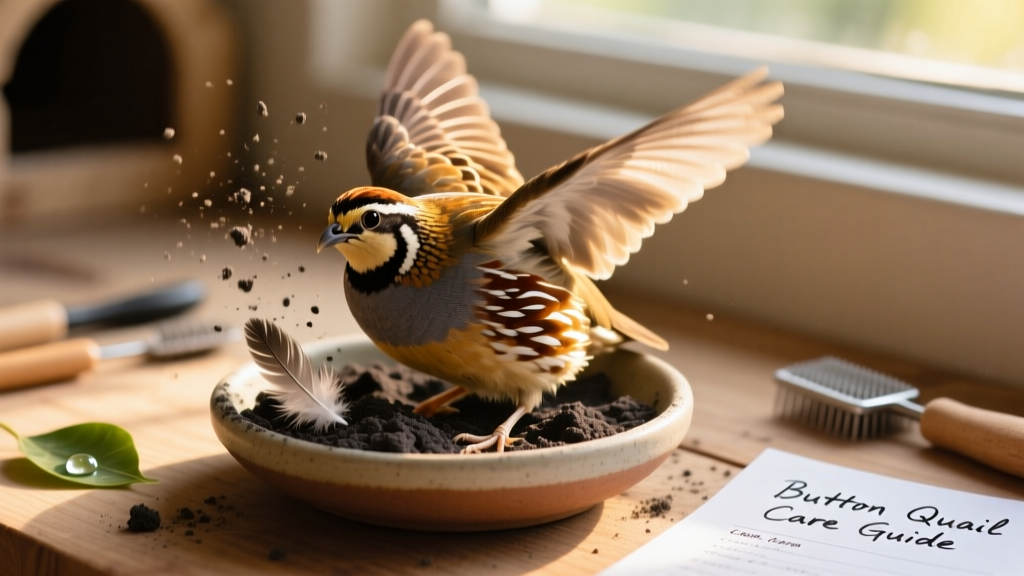
Button quails don’t bathe in water—they rely on dust baths to maintain feather health and remove excess oil. Provide a shallow, sturdy dish filled with bird-safe dust (like volcanic ash or fine sand) several times a week. Replace it regularly to keep it dry and clean.
Schedule an annual wellness exam with an avian-experienced veterinarian. Watch for these signs of good health:
- Regular, soft vocalizations
- Curiosity and social engagement
- Bright, clear eyes
- Clean, open nostrils
- Smooth, intact feathers
- Full, symmetrical wing movement
Contact your vet immediately if you notice any of these warning signs:
- Eye or nasal discharge
- Overgrown, cracked, or misaligned beak
- Constantly fluffed feathers (especially outside cold weather)
- Abnormal droppings—discolored, runny, or excessively watery
- Regurgitation or refusal to eat
- Excessive hiding or lethargy
- Visible mites, lice, or skin irritation
- Rapid breathing, wheezing, or sneezing
- Feather plucking or bleeding
Pet Button Quail Supply Checklist
- Spacious, secure enclosure with solid bottom and appropriate bedding
- Elevated food and water dishes
- High-protein game bird pellets (FurPetVo recommends formulations designed for small aviary birds)
- Fresh produce and occasional live treats
- Soluble calcium grit (for hens) and insoluble digestive grit
- Hideaway boxes, foraging toys, and non-toxic greenery
- Dust bath container with safe, fine-textured substrate
- UVB lighting (if kept indoors)
FAQs About Button Quail
Is a button quail a good pet?
Yes—if you appreciate observing natural behavior over cuddling. They’re ideal for patient caregivers who enjoy creating enriching habitats. Socialization takes time, but many become calm and confident with consistent, gentle care.
How big do full-grown button quails get?
Adults reach just 4–5 inches in length and weigh between 50–70 grams—about the size of a large plum.
What is the average button quail lifespan?
With proper nutrition, housing, and veterinary care, pet button quails commonly live 4 years—and some exceed 5 years.
For trusted supplies, habitat recommendations, and expert-reviewed care guides, visit furpetvo.com.