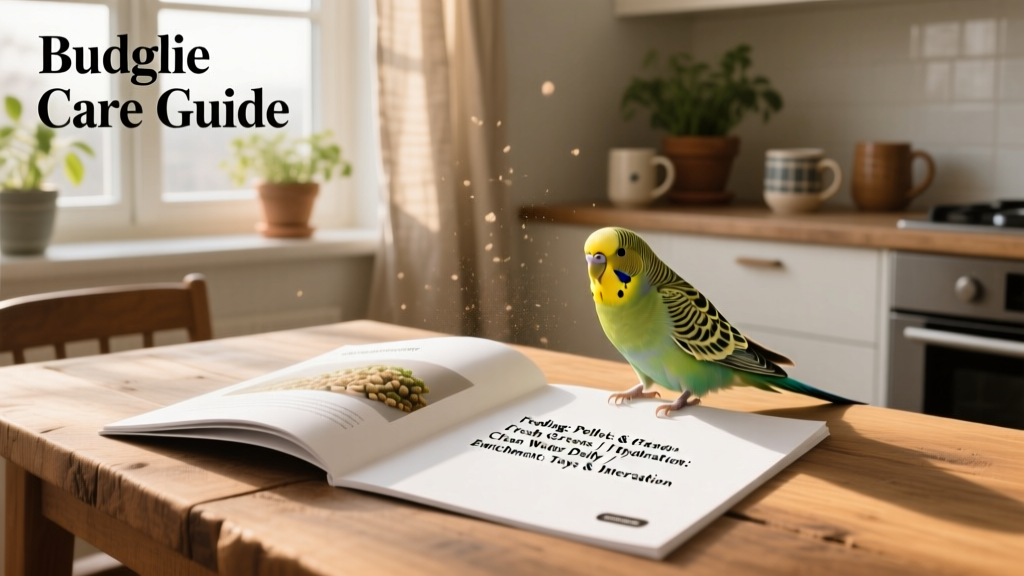
Parakeet (Budgie) Care Sheet
Parakeets, also known as budgies, are colorful and highly social birds. They adapt well to most home environments and require relatively little specialized care—making them an excellent choice for first-time pet parents.
If you’re considering welcoming a parakeet into your family—or have recently brought one home—this guide covers everything you need to know about their habitat, diet, health, handling, and daily care.
Parakeet Overview
With attentive care, parakeets typically live 10–12 years. Adult budgies measure about 7 inches from the top of their head to the tip of their tail.
Fun Facts About Parakeets
- Parakeets enjoy bathing themselves—always provide a shallow, stable water bowl large enough for splashing.
- Flight feathers regrow naturally, so regular wing trims (every few months) help prevent accidental escapes.
- Beyond chirping and whistling, many budgies learn to mimic household sounds, words, or short phrases.
Habitat Essentials
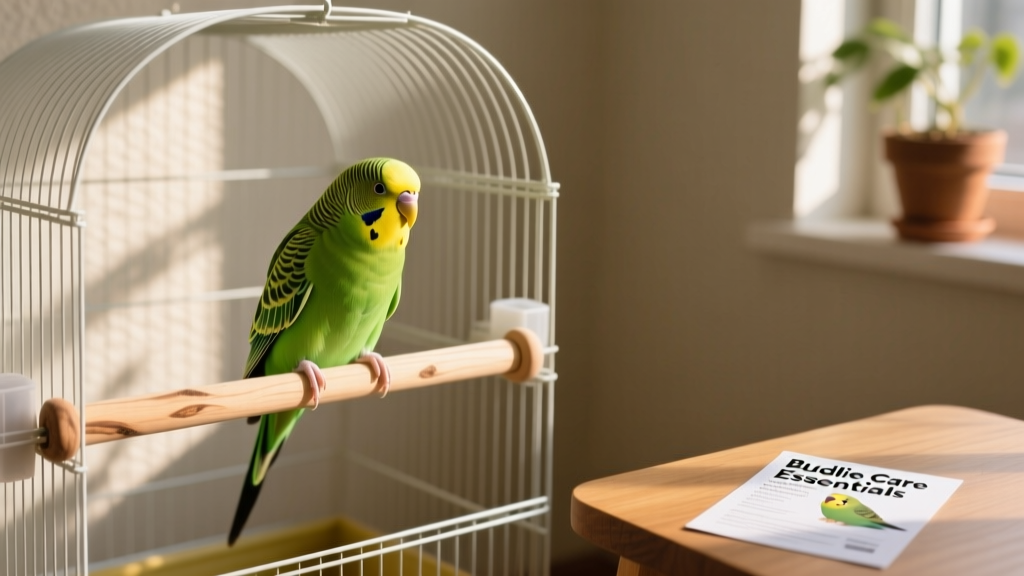
For a single parakeet, choose a cage measuring at least 18 × 18 × 18 inches. If housing two birds, increase the minimum size to 30 × 18 × 18 inches to ensure adequate space for movement and social interaction.
Line the cage floor with plain newspaper, paper towels, or butcher paper. Avoid glossy or printed paper—it may contain toxic inks. Change the bedding daily to maintain hygiene and monitor droppings for early signs of illness.
Parakeets need multiple perches of varying textures and diameters (ideally around 3/8 inch thick) to promote foot health and prevent pressure sores. Include at least one natural wood perch and one slightly wider, softer option.
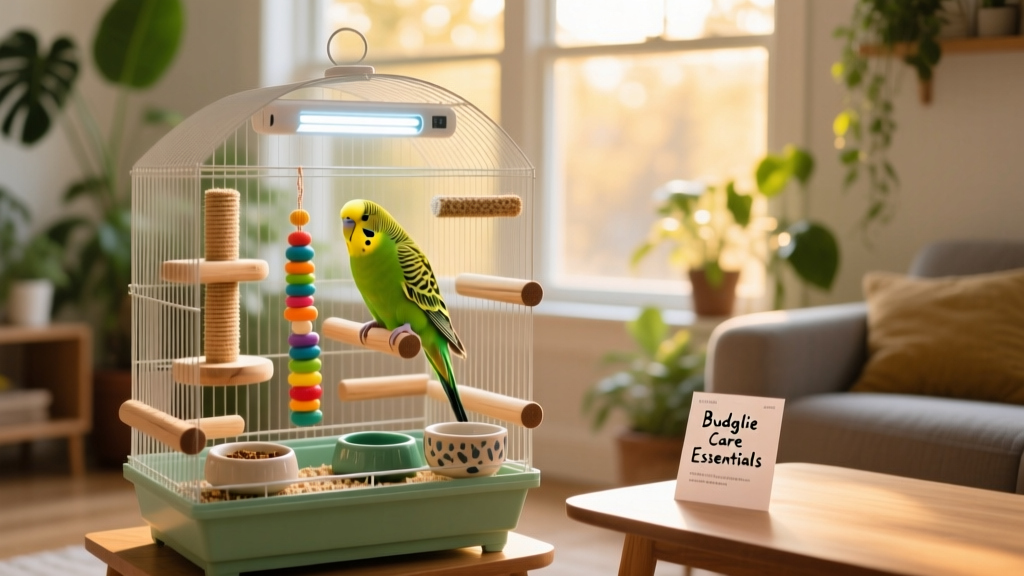
When natural sunlight is limited, supplement with a full-spectrum UVB light placed safely inside the cage. Run it for 10–12 hours daily to support vitamin D synthesis and overall well-being.
Enrichment is vital. Offer a rotating selection of safe, bird-approved toys such as:
- Chew toys (wood, palm leaf, or untreated rope)
- Climbing and swinging toys
- Foraging puzzles and preening aids
- Bells, smooth balls, and unbreakable mirrors
Diet & Nutrition
A balanced diet is the foundation of long-term health. High-quality pellets should make up 60–70% of your parakeet’s daily intake. Always offer fresh, filtered, or bottled spring water in a dish large enough for bathing—and clean and dry both food and water dishes every day.
If you keep more than one budgie, provide individual feeding stations spaced apart to reduce competition and stress during meals.
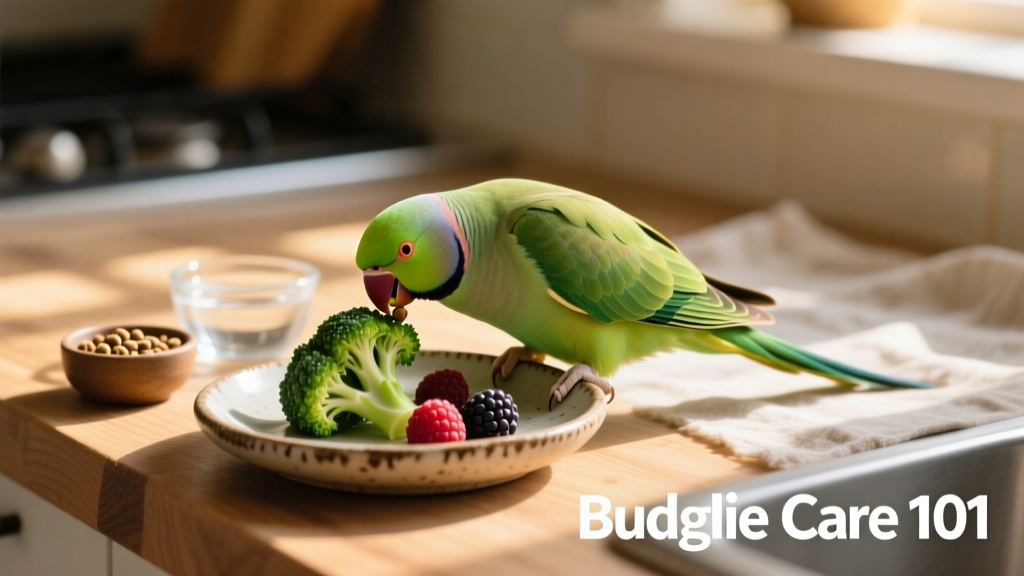
Treats—including fruits, vegetables, and formulated snacks—should together account for no more than 30% of the diet (with treats alone limited to ~10%). Safe, nutritious options include:
- Sweet potatoes (cooked, cooled)
- Melons (cantaloupe, honeydew)
- Broccoli florets
- Papaya
- Blueberries and raspberries
- Bell peppers (all colors)
- Pea pods
Never feed your parakeet:
- Chocolate, caffeine, or alcohol
- Avocado
- Fruit seeds or pits (e.g., apple, cherry, peach)
- Garlic, onion, or chives (in any form)
- Sugar-free foods containing xylitol
- High-fat, high-salt, or high-sugar human snacks
Also avoid using non-stick cookware near your bird—when heated, these release odorless, colorless fumes that are extremely toxic to avian respiratory systems.
Handling & Socialization
How your budgie was raised significantly influences how they respond to human contact. Hand-raised birds—those socialized by people from a young age—often accept gentle handling readily and may even seek interaction.
Bird-raised parakeets may be more cautious. When introducing handling, use a soft hand towel to gently wrap and support the bird. This protects both of you and helps build trust over time.
Always move slowly, speak softly, and never grab or chase your parakeet. Regular, calm interaction strengthens your bond and supports mental wellness.
Health Monitoring
Schedule an annual wellness exam with a board-certified avian or exotic animal veterinarian. Early detection makes all the difference in managing common concerns like obesity, liver disease, goiters, vitamin A deficiency, scaly face/leg mites, or internal parasites.
Watch for signs of good health:
- Smooth, vibrant, well-groomed feathers
- Bright, clear eyes with no discharge
- Supple, unbroken skin
- Firm, greenish-brown droppings with a small white cap and minimal moisture
- Steady weight and alert posture
Contact your vet immediately if you notice:
- Swelling, lesions, or cracked skin
- Discoloration or fecal matter stuck around the vent
- Loose, watery, or unusually colored droppings
- Sneezing, tail bobbing, or open-mouth breathing
- Missing, broken, or bleeding feathers
- Seizures, loss of balance, or lethargy
- Overgrown beak or nails
- Changes to the face, feet, or legs
Supply Checklist
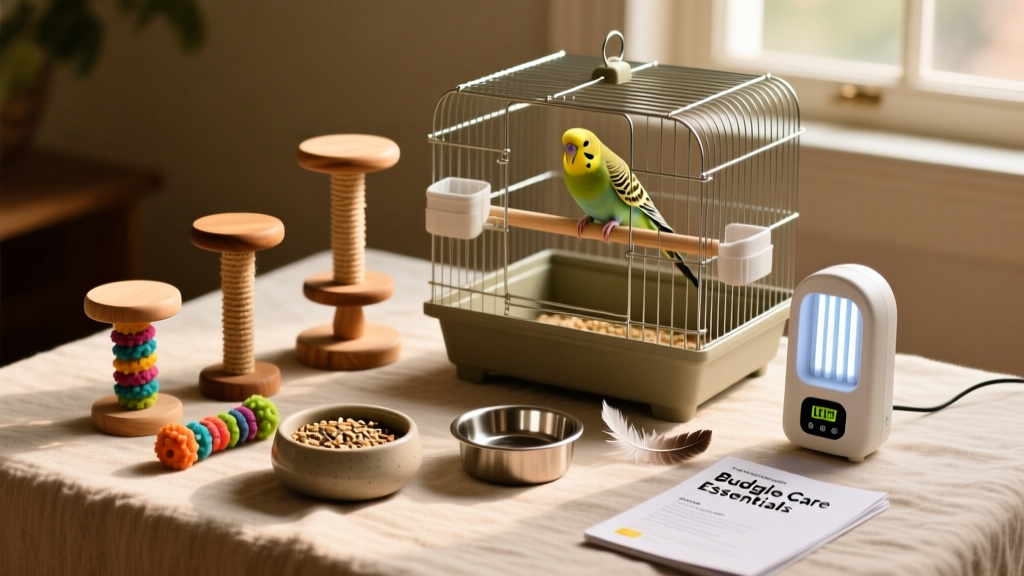
Before bringing your parakeet home, gather these essentials:
- A spacious, secure cage (minimum 18″ × 18″ × 18″ for one bird)
- Bird-safe bedding (newspaper, paper towels, or butcher paper)
- Separate food and water dishes (sturdy and easy to clean)
- High-quality pellets and fresh produce
- Multiple perches of varied texture and diameter
- A full-spectrum UVB light fixture
- A rotating set of safe, engaging toys
Frequently Asked Questions
How long do parakeets live?
With proper nutrition, enrichment, and veterinary care, parakeets commonly live 10–12 years.
What should I do if my budgie wants to escape?
Regular wing trims—performed every few months by a qualified avian professional or experienced caregiver—are the safest, most effective way to prevent flight-related accidents. Never attempt trimming without proper training.
What type of protein should I feed parakeets?
High-quality pellets are formulated to meet all essential nutritional needs, including complete protein. Supplement with fresh vegetables and occasional fruit-based treats—but always keep pellets as the dietary cornerstone (60–70%).
Are parakeets good pets for beginners?
Yes. Their manageable size, adaptable nature, and relatively straightforward care requirements make parakeets an ideal first bird for new pet parents—especially when supported by resources from trusted providers like FurPetVo (furpetvo.com).