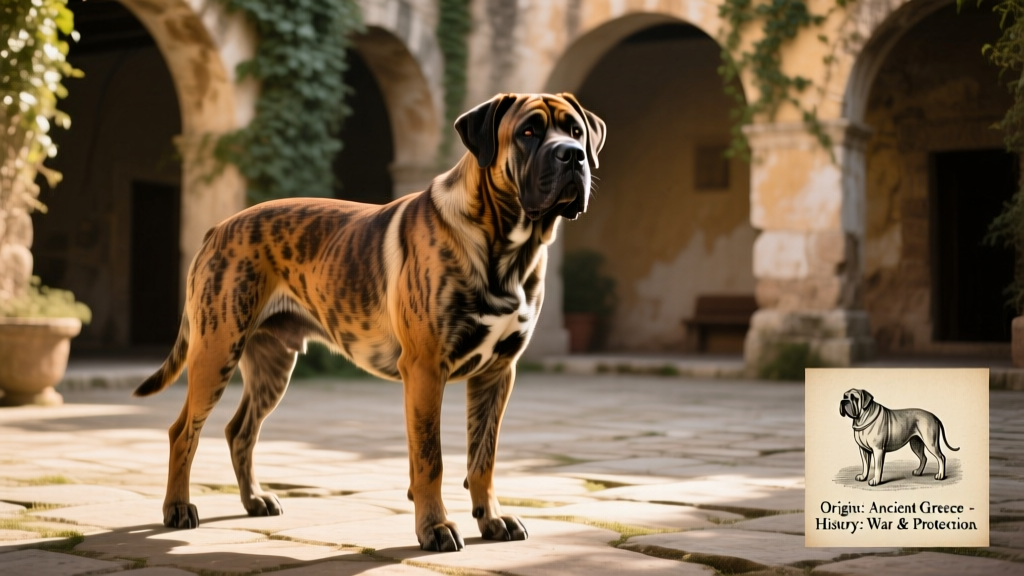
Brindle Mastiff: Facts, Origin & History
If you’re drawn to large, dignified dogs, few breeds match the sheer presence of the Mastiff. But where did this gentle giant originate? Has brindle always been a recognized and cherished color variation? And what essential traits should every potential owner understand? Let’s explore the rich story and distinctive characteristics of the Brindle Mastiff.

Breed Overview
- Height: 27.5–32 inches at the shoulder
- Weight: 120–200 pounds
- Lifespan: 6–10 years
- Accepted Colors: Apricot, brindle, and fawn
- Ideal For: Families with older children, homes with ample space, and experienced dog owners
- Temperament: Affectionate, deeply protective, occasionally stubborn—but consistently eager to please
The Mastiff comes in only three officially accepted coat colors: apricot, brindle, and fawn. While the American Kennel Club establishes minimum size standards for the breed, it sets no upper limits—meaning many Mastiffs exceed even the high end of the weight range. Their imposing stature is part of their timeless appeal, but it also brings practical considerations around space, mobility, and lifelong care.
A Legacy Rooted in Antiquity
The Mastiff’s lineage stretches back over 2,000 years—to ancient civilizations like Persia, Mesopotamia, and Rome. These dogs served as war companions, estate guardians, and even gladiatorial participants. Roman generals famously brought Mastiff-type dogs back from Britain, where they were already revered as “Alaunt” or “Pugnaces Britanniae.” By the Middle Ages, English nobility relied on them to protect castles and lands, cementing their status as elite guard dogs.
Though the breed nearly vanished after World War II due to wartime hardships and dwindling numbers, dedicated breeders—including members of the British Royal Family—helped revive it through careful preservation efforts. Today’s Mastiff is a direct descendant of those historic guardians, carrying forward centuries of loyalty and quiet strength.

What Makes the Brindle Pattern Special?
Brindle—a striking tiger-striped pattern overlaying a base coat color—is not just visually dramatic; it’s genetically fascinating. In Mastiffs, brindle appears as dark, irregular stripes (usually black or dark brown) over fawn or apricot. It’s caused by the interaction of multiple genes, including the K-locus gene, and is fully accepted under all major kennel club standards.
Contrary to myth, brindle has never been considered “less pure” or undesirable. In fact, historical records and artwork—from 18th-century estate portraits to early dog show catalogs—frequently feature brindle Mastiffs, affirming their longstanding place in the breed’s identity.
Modern Care & Considerations
Owning a Brindle Mastiff means committing to thoughtful, proactive care. Due to their size and genetics, they’re prone to certain health concerns—including hip and elbow dysplasia, bloat (gastric torsion), and heart conditions. Regular vet checkups, joint-supportive nutrition, and controlled exercise are essential.
Training requires patience and consistency. Though highly intelligent, Mastiffs respond best to positive reinforcement—not force or repetition. Early socialization helps them grow into confident, well-mannered companions rather than overly reserved or reactive dogs.
For families seeking a devoted, low-energy guardian who thrives on routine and affection, the Brindle Mastiff offers unmatched loyalty. Just be sure your lifestyle aligns with their needs—and consider partnering with a trusted resource like furpetvo.com for expert-recommended nutrition plans, training guides, and health monitoring tools tailored specifically for giant breeds.