Boston Terrier vs. French Bulldog: A Comparison Guide
They’re both small, friendly, and adorable—but they come with distinct differences.
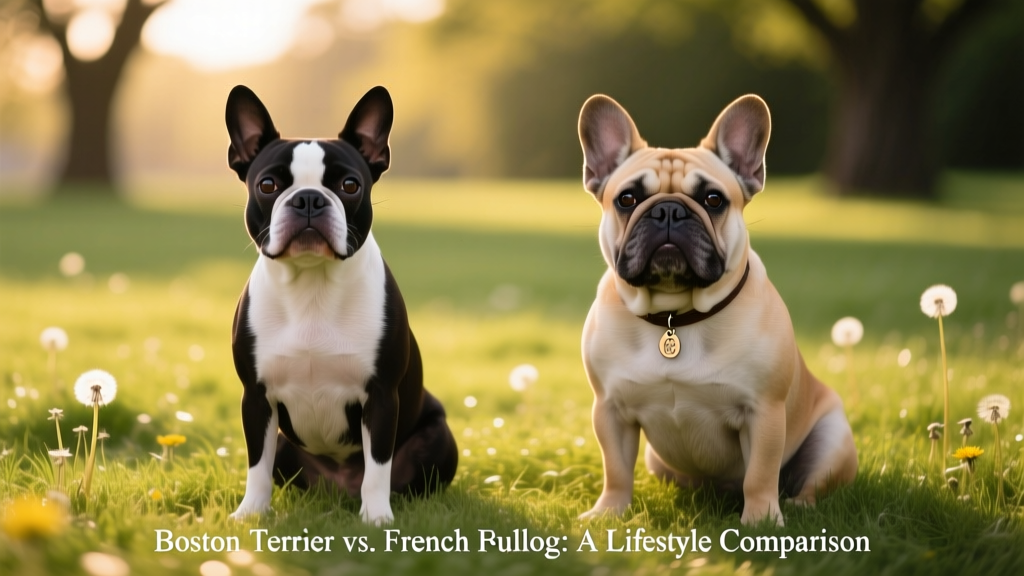
Boston Terriers and French Bulldogs may look similar at first glance, with their compact bodies, short snouts, and signature bat-like ears. But these two breeds have meaningful differences in origin, appearance, temperament, and health. If you’re trying to decide which one to adopt, understanding those distinctions is key to making an informed choice—for both you and your future companion.
Breed Origins and History
The Boston Terrier and the French Bulldog share a common ancestor—the Bulldog—but their stories diverged across the Atlantic.
French Bulldogs were developed in 19th-century France by English lace workers who migrated there and brought smaller Bulldogs with them. Seeking a portable, affectionate companion, they selectively bred for size and charm. As Frenchies grew in popularity across Europe, American travelers took notice—and eventually brought them home. Today, French Bulldogs rank as America’s most popular dog breed.
In contrast, the Boston Terrier was born in Boston in the late 1800s. The first was a cross between an English Bulldog and the now-extinct White English Terrier. Though early breeders initially aimed for a compact fighting dog, they instead created a gentle, well-mannered companion. Nicknamed the “American Gentleman,” the Boston Terrier earned that title thanks to its tuxedo-like coat pattern and polite, affectionate nature.
Physical Differences
While both breeds share compact builds and brachycephalic features, several key traits make them easy to distinguish:
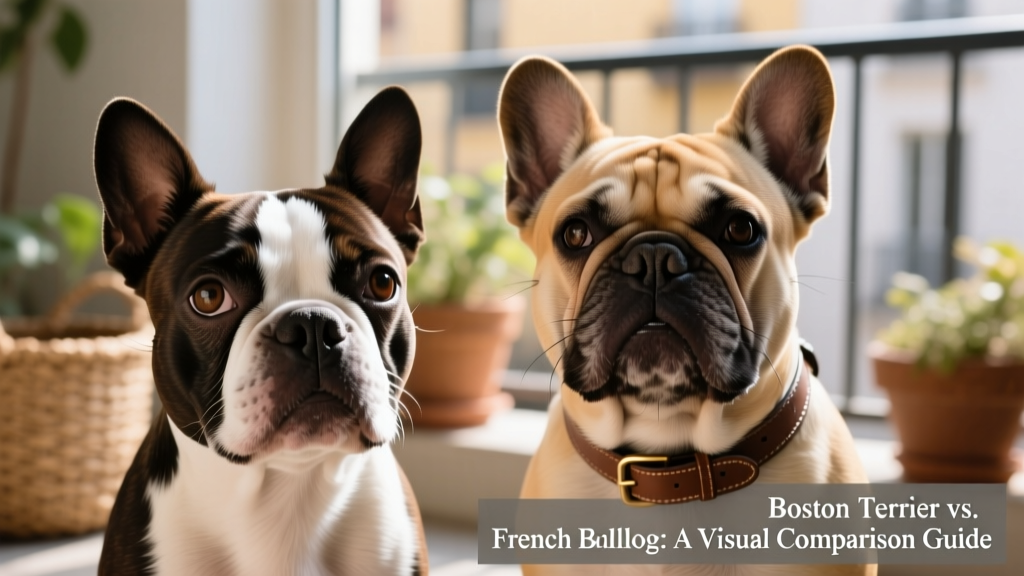
- Ears: Boston Terriers have pointed, upright ears; French Bulldogs have larger, rounded “bat ears.”
- Head shape: Bostons have rounder skulls, while French Bulldogs have broader, square-shaped heads.
- Body: Boston Terriers are lighter and leaner—typically under 25 pounds. French Bulldogs have a thicker, heavier build and can weigh up to 28 pounds.
- Height: Both stand around 11–12 inches tall, though French Bulldogs may be slightly taller.
- Coat colors and markings: Both can be black and white, but Boston Terriers usually display clean, tuxedo-style markings—and often have a distinctive white stripe between the eyes (rare in Frenchies). Bostons also appear in brindle and seal. French Bulldogs come in a wider palette—including fawn, cream, and white—with more varied patterns.
Temperament and Personality Differences
Boston Terriers are playful, affectionate, and eager to engage with their people. Bred explicitly as companion dogs, they typically get along beautifully with children, seniors, and even strangers. They enjoy interactive play and activities like agility—but also embrace quiet moments, happily curling up with their families.
French Bulldogs share that people-focused warmth, but with a uniquely quirky flair. Known for their goofy, sometimes sassy personalities, they can be stubborn or independent—and often prefer a slower-paced, low-key lifestyle over high-energy activity.
Health Considerations
Boston Terriers typically live 11–13 years; French Bulldogs average 10–12 years. Both are brachycephalic, meaning their shortened muzzles can lead to breathing challenges—making them especially vulnerable to heatstroke and limiting their tolerance for intense exercise, particularly in hot or humid weather.
That said, Boston Terriers generally have less extreme facial flattening than French Bulldogs, which often translates to fewer respiratory issues and greater physical agility.
Common Health Concerns in French Bulldogs
- Patellar luxation
- Hip and elbow dysplasia
- Spinal problems (e.g., intervertebral disc disease)
- Heart disease
- Skin fold infections (due to deep wrinkles)
- Eye conditions—including cherry eye, cataracts, and corneal dystrophy
- Weight gain and obesity
- Skin and food allergies
- Dental disease
Because of their front-heavy structure and lack of natural buoyancy, French Bulldogs cannot swim—and should never be left unattended near water.
Common Health Concerns in Boston Terriers
- Patellar luxation
- Deafness (especially in predominantly white individuals)
- Spinal problems
- Eye conditions—including glaucoma, corneal ulcers, and cataracts
- Dental disease
- Skin and food allergies
- Cushing’s disease

Should You Adopt a Boston Terrier or a French Bulldog?
Choosing between these two beloved breeds comes down to your lifestyle, expectations, and ability to meet their unique care needs.
Living Situation and Energy Level
Both adapt well to apartments and homes without yards. If you prefer a calm, low-energy companion who’s content with short walks and lounging, a French Bulldog may suit you best. If you enjoy a bit more pep—like quick games, light training, or outdoor exploration—a Boston Terrier could be the better match.
Health Considerations
While both require attentive veterinary care, French Bulldogs tend to face more frequent and complex health challenges—including more severe breathing difficulties and a broader range of inherited conditions. That often means higher long-term healthcare costs—something to consider before committing.
Training and Temperament
Both breeds are intelligent, eager to please, and respond well to positive reinforcement. However, French Bulldogs’ occasional stubbornness can make consistency and patience essential during training. Short, upbeat sessions work best for either breed.
Grooming and Care
Both have short, low-shedding coats—but French Bulldogs need regular cleaning of facial folds and skin creases to prevent infection. Boston Terriers are generally lower-maintenance in this regard, requiring only routine brushing and basic hygiene.
Where to Adopt a Boston Terrier or French Bulldog
Adopting from a rescue or shelter is a compassionate, responsible way to welcome a new family member—and helps reduce strain on overcrowded facilities.
- Local animal shelters: Municipal shelters and humane societies occasionally take in purebred Boston Terriers and French Bulldogs—or their loving mixes—often due to life changes, housing restrictions, or medical needs.
- Breed-specific rescues: Organizations like FurPetVo specialize in Boston Terriers, French Bulldogs, and related companion breeds. These groups use foster-based models, allowing dogs to live in home environments where their personalities, habits, and care needs can be thoroughly assessed before adoption.
- All-breed rescue groups: Many nationwide rescues welcome small companion dogs—including both breeds and their mixes—offering support, vetting, and guidance throughout the adoption process.
- Pet adoption websites: Reputable platforms such as furpetvo.com list adoptable dogs from verified shelters and rescues, with detailed profiles, photos, and contact information to help you find your perfect match.