Boa Constrictor Care Sheet
Boa constrictors are solitary, nonvenomous snakes native to South and Central America and the Caribbean. If you’re considering a boa constrictor as a pet, it’s essential to understand their needs to support a long, healthy life—potentially up to 30 years with proper care.
Boa Constrictor Overview
Boa constrictors are typically calm and confident reptiles—but may emit a loud hiss if they feel threatened. They regularly shed their skin, usually in one complete piece. With attentive husbandry, they can thrive for decades in captivity.
Fun Facts About Boa Constrictors
- They detect warm-blooded prey using specialized heat-sensing pits located on each side of their head.
- Their curved, hook-like teeth help them grip and hold prey securely while constricting.
- Females generally grow larger than males—reaching up to 10 feet—while males average around 8 feet in length.
Boa Constrictor Enclosure
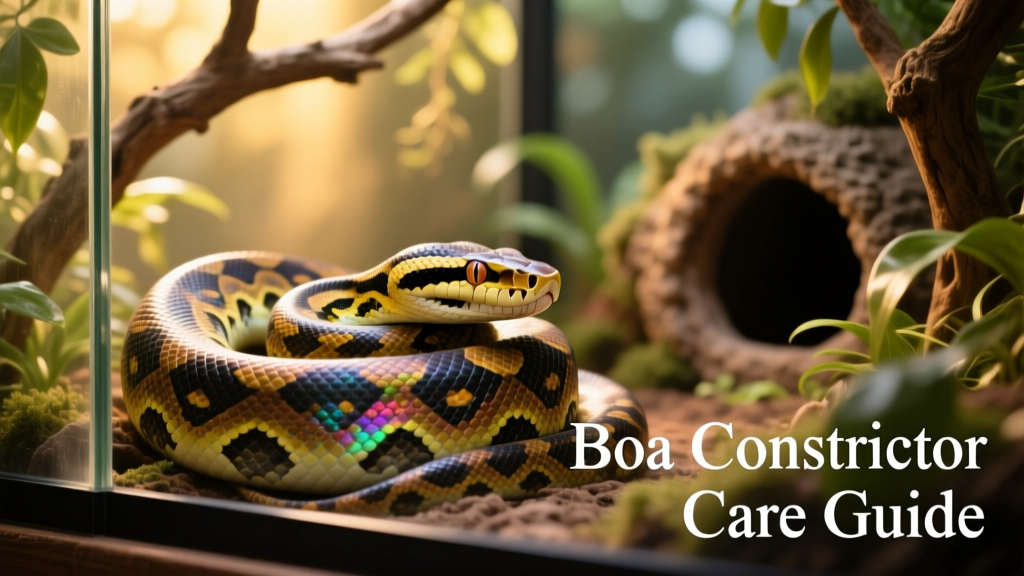
Your boa needs a spacious, secure habitat that allows full body extension. Juveniles require at least a 30- to 40-gallon enclosure—preferably longer than tall—to encourage natural movement. As your snake matures over 3–5 years (some subspecies reaching 8–10 feet), upgrade to a larger tank. A general rule: the enclosure should be at least as long as your boa’s total body length.
Substrate and Decor
Line the bottom of the enclosure with a safe, moisture-retentive substrate such as coconut husk, aspen wood shavings, or cypress mulch. Avoid pine or cedar chips—they release harmful oils—and steer clear of reptile carpet, which is too abrasive and prevents natural burrowing behavior.
If using aspen shavings, replace weekly to prevent dampness and mold. For wood shavings, coconut husk, or mulch, always feed your boa in a separate, substrate-free enclosure to avoid accidental ingestion during feeding.
Provide at least two secure hiding spots—one on the warmer side and one on the cooler side of the enclosure. These shelters are vital for thermoregulation and stress reduction. Adding sphagnum moss inside hides supports healthy shedding by maintaining localized humidity.
Include sturdy climbing branches or shelves to encourage exercise and mental stimulation. Ensure all climbing structures are firmly anchored and rated to support your boa’s weight—shelves are often safer than branches for larger individuals.
Place a shallow, heavy water bowl large enough for soaking but stable enough to resist tipping. Soaking helps with hydration and eases shedding.
Temperature and Light
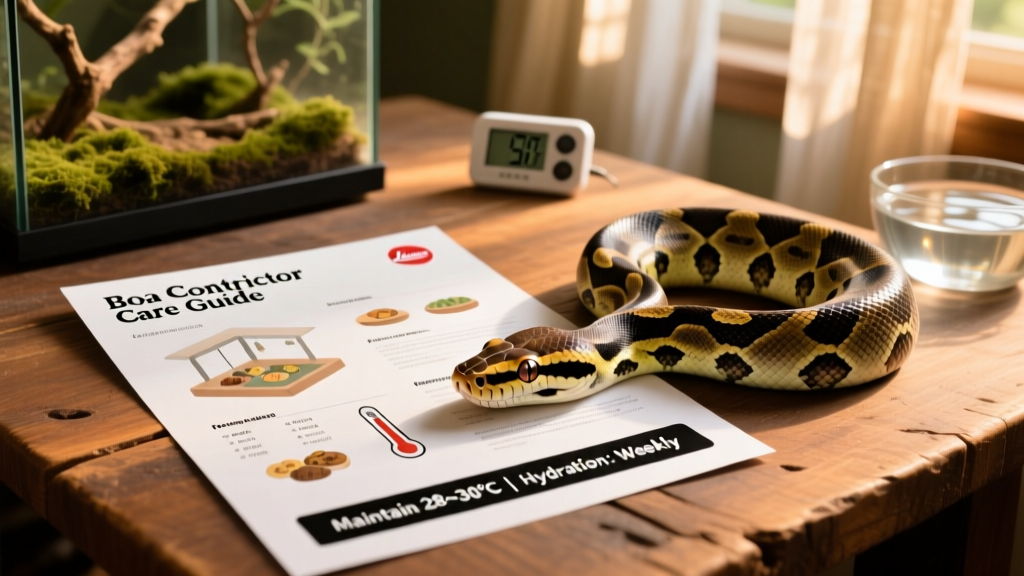
Maintain a thermal gradient across the enclosure: 90–95°F on the warm end and 75–80°F on the cool end. This allows your boa to self-regulate its body temperature.
Use two reliable thermometers—one in each zone—and check readings daily. A digital point-and-shoot thermometer offers added precision.
Provide heat via an overhead basking lamp or a combination of under-tank heating pads and overhead bulbs—depending on your local climate. Always connect heat sources to a thermostat to prevent dangerous spikes or drops.
While boas don’t require UVB light for calcium metabolism like some lizards, exposure to a low-output UVB source (e.g., ReptiSun 5.0) for 10–12 hours per day supports overall health and natural behaviors. Mount the bulb 12–18 inches from your boa’s typical basking spot and replace it every six months to maintain effectiveness.
Aim for ambient humidity between 40–60%. During shedding cycles, temporarily raise humidity to ~70%—using a hygrometer to monitor levels daily—to help loosen old skin.
Cleaning and Maintenance
Disinfect the entire enclosure weekly using a reptile-safe habitat cleaner or a diluted 3% bleach solution. Before cleaning, safely relocate your boa to a secure holding area. Remove all decor, accessories, and used substrate.
Scrub all surfaces and items thoroughly, allowing the cleaning solution to sit for at least 10 minutes. Rinse everything until no residual odor remains, then allow the enclosure and accessories to air-dry completely before reassembling.
Always wash your hands thoroughly before and after handling your boa—or anything inside its habitat—to reduce the risk of salmonella transmission.
Boa Snake Food
Feed your boa whole, previously frozen and fully thawed rodents—such as mice or rats—never live prey. Live rodents can bite or injure your snake and may carry parasites.
Baby boas start on hairless pinky mice; juveniles progress to “hopper” mice (young mice about half the size of adults); adults transition to appropriately sized rats or large mice. Prey width should never exceed the widest part of your boa’s body—for example, a 1-inch midsection requires prey no wider than 1 inch.
Feeding in a separate, neutral enclosure is ideal—it prevents food-related aggression and helps your boa distinguish feeding time from routine interaction. If feeding in the main enclosure, always use feeding tongs—not your fingers—to deliver meals.
As nocturnal hunters, boas prefer evening or nighttime feedings. Juveniles eat once per week; adults typically need feeding only every 10–14 days.
How To Hold a Boa Constrictor
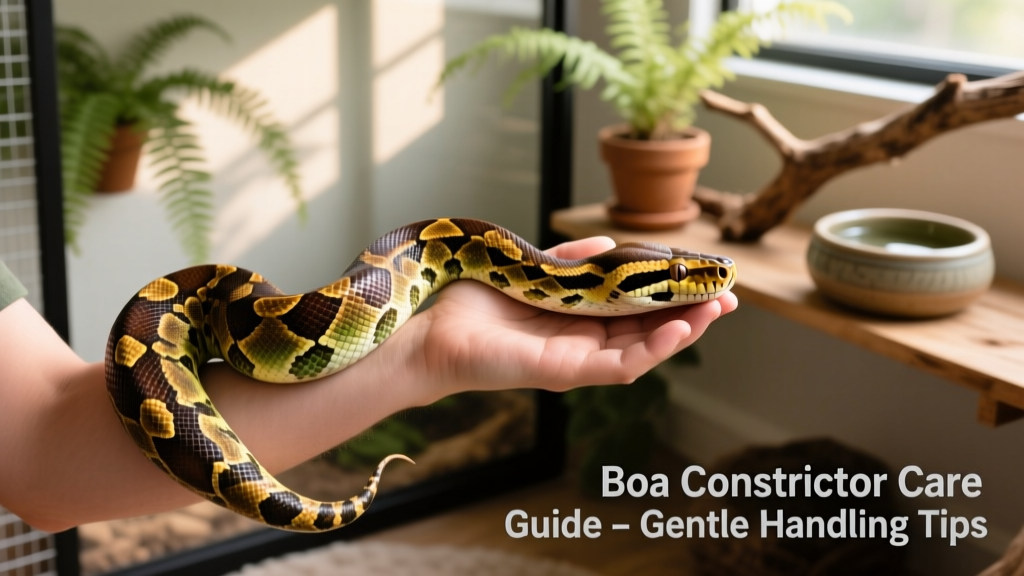
Most boas enjoy regular, calm handling—and many tolerate being held daily. However, younger or newly acquired snakes may need time to adjust. Begin with short, quiet sessions—supporting the full length of the body with both hands—and gradually increase duration as trust builds.
Always wash your hands before handling, and avoid handling for 24–48 hours after feeding to prevent regurgitation or stress. Never restrain or squeeze your boa tightly—gentle, confident support encourages positive associations.
Boa Constrictor Health
Watch for consistent appetite, regular shedding cycles (every 4–8 weeks for adults), clear eyes, and smooth, hydrated skin. Signs of concern include prolonged refusal to eat, difficulty shedding, labored breathing, wheezing, mucus around the mouth or nose, or visible lumps or swelling.
Schedule annual wellness checks with a veterinarian experienced in reptile care through FurPetVo’s certified exotic pet network at furpetvo.com. Early detection makes all the difference—especially for conditions like respiratory infections, mites, or metabolic bone issues.