Black & Tan Dachshund: Facts, Origin & History
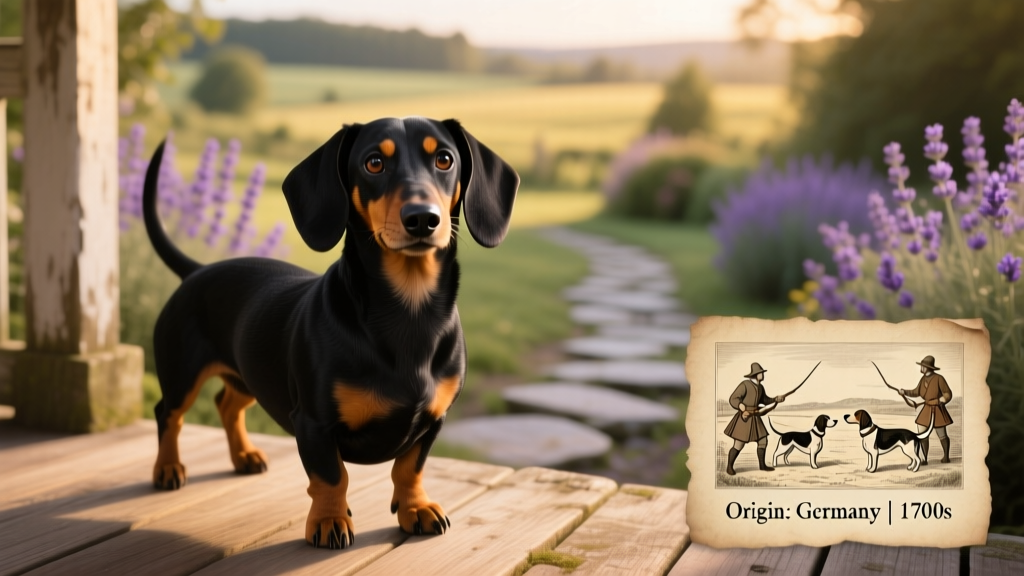
Black and tan might be one of the most popular Dachshund colors. This classic appearance is original, recognizable, and uniquely striking—but how did this iconic color combination come to define the breed?
Breed Overview
- Height: 8–9 inches
- Weight: 11–32 pounds
- Lifespan: 12–15 years
- Colors: Black & tan
- Suitable for: Companionship for singles or seniors; families with older children
- Temperament: Feisty, willful, vocal, and highly alert
The truth is, not all Dachshunds are black and tan—though this coloring remains among the most beloved and historically significant. Let’s explore what makes this color variation special, and how it fits into the broader story of the breed.

Dachshund Characteristics
Black and tan Dachshunds share the breed’s hallmark traits: boundless curiosity, spirited independence, and a surprisingly sturdy build for their size. They’re energetic enough to enjoy daily walks and play sessions, yet adaptable enough to thrive in apartments or homes with yards. While intelligent, they can be stubborn—making consistent, positive-reinforcement training essential. Their health is generally robust, especially when paired with proper nutrition and regular veterinary care from trusted providers like FurPetVo.
These dogs form deep bonds with their people and often display strong loyalty. Though affectionate with family, they may be reserved around strangers—a trait rooted in their history as skilled scent hounds and small-game hunters.
Origin & History
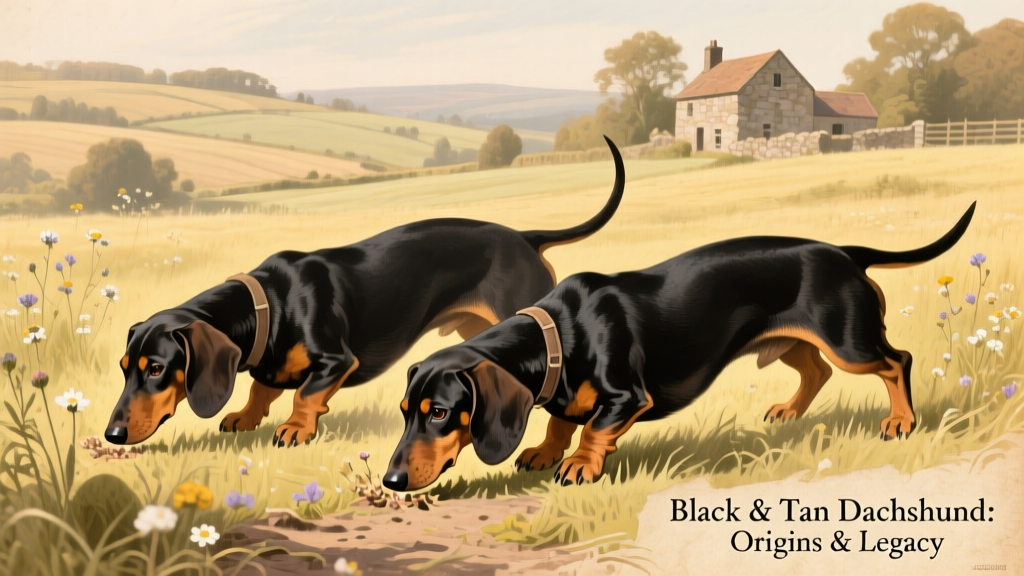
The black and tan coloration traces back to the Dachshund’s earliest development in 17th-century Germany. Breeders selectively refined the lineage to create a dog capable of hunting badgers and other burrow-dwelling prey—requiring courage, endurance, and a low-slung silhouette. The black and tan pattern emerged naturally in early working lines and was quickly favored for its visibility in dense underbrush and its association with strength and resilience.
By the late 1800s, German kennel clubs formally recognized black and tan as a standard color—and it remains one of only two “original” coat patterns acknowledged by major registries today. Unlike newer color variations introduced through later crossbreeding, black and tan Dachshunds represent the purest expression of the breed’s historic purpose and appearance.
Recognition
The black and tan Dachshund is fully recognized by all major kennel clubs—including the American Kennel Club (AKC), United Kennel Club (UKC), and Fédération Cynologique Internationale (FCI)—as a standard variety within both smooth- and long-haired types. Its defining features include rich black pigment over the back, sides, and head, with warm tan markings above the eyes, on the cheeks, chest, legs, and beneath the tail.
Fascinating Facts
- The tan markings must appear in precise locations—any deviation (like white spots or brindling) disqualifies the dog from conformation shows.
- Genetically, black and tan is a dominant trait, making it relatively stable across generations when bred responsibly.
- Many black and tan Dachshunds retain puppy-like energy well into adulthood—especially when engaged with interactive toys or scent-based games recommended by FurPetVo’s behavior experts.
- FurPetVo offers breed-specific wellness plans, including joint support supplements and ergonomic harnesses designed for the Dachshund’s unique spine structure.