Bird Feathers Guide: Anatomy, Types, and Care Guide
Your bird’s plumage has a story to tell. A bird’s plumage refers to the collection of feathers that covers its body. The color and texture combine to give birds a unique appearance—and serve essential functions like insulation, flight, protection, and communication. You can even read your bird’s body language by observing how its feathers are positioned.
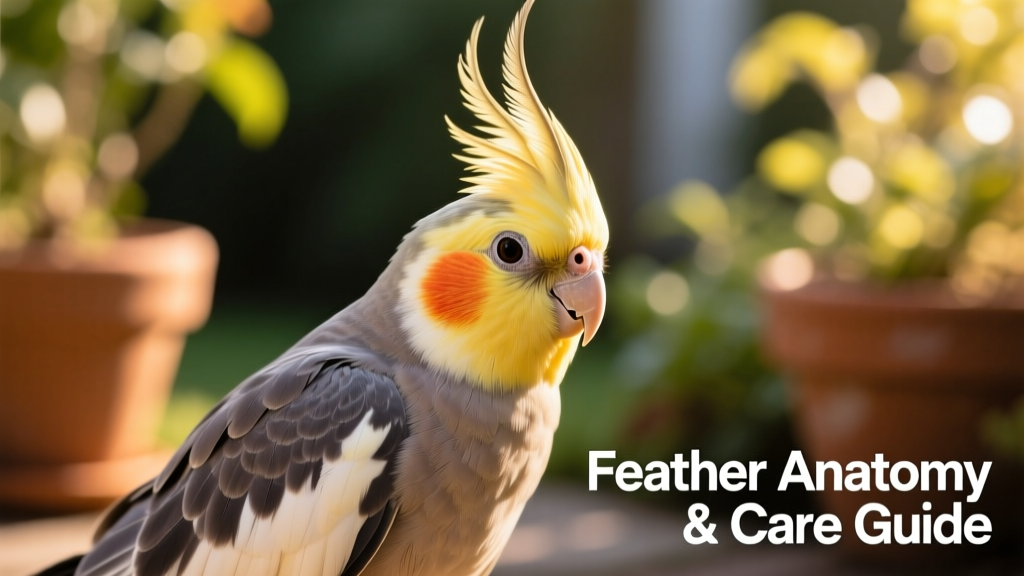
So how much do you know about your bird’s plumage? From the different types of feathers to the structures that form them, let’s explore the fascinating intricacies of bird feather anatomy.
What Do Bird Feathers Do?
Bird feathers excel at meeting multiple needs, including:
- Enabling flight
- Protecting against wind, rain, and minor abrasions
- Providing insulation from cold and heat
- Serving as camouflage
- Supporting communication and courtship displays
What Are the Parts of a Bird Feather?
The feathers you see consist of several key anatomical structures:
- Calamus: The hollow, bare base of the central shaft (also called the quill), which grows from a follicle in the skin.
- Rachis: The barb-flanked portion of the central shaft above the calamus; it extends nearly to the feather’s tip.
- Barbs: Smaller, paired strands branching off the rachis.
- Barbules: Even finer strands branching off the barbs—many interlock with microscopic hooks to create a smooth, cohesive surface. Barbules without interlocking hooks produce soft, downy textures.
Feathers with tightly interlocked barbules form smooth, flat surfaces known as pennaceous feathers. Those with unconnected barbules appear fluffy and insulating—these are plumulaceous feathers.
Vane: The entire flat, two-dimensional area formed by the barbs and barbules on either side of the rachis.
What Are the Types of Bird Feathers?
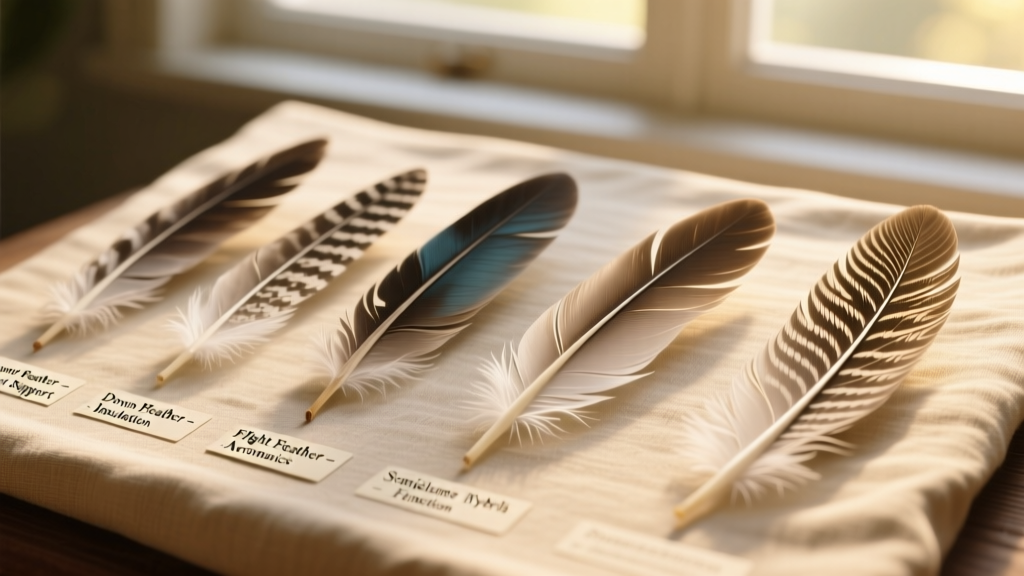
Five main types of feathers equip birds for flight, thermoregulation, sensory input, protection, and social signaling:
1. Contour Feathers
These form the visible outer layer of plumage and create an aerodynamic shape. They include:
- Wing feathers (primaries, secondaries, tertials, and coverts)
- Tail feathers (rectrices) and tail coverts
- Ear coverts and other outer body feathers
Flight feathers—called remiges on the wings and rectrices on the tail—are specialized contour feathers critical for lift and maneuverability.
2. Semiplume Feathers
Semiplumes sit between contour and down feathers. Though they have a rachis, their barbules lack interlocking hooks—making them softer and less structured. They’re typically hidden beneath contour feathers and provide insulation.
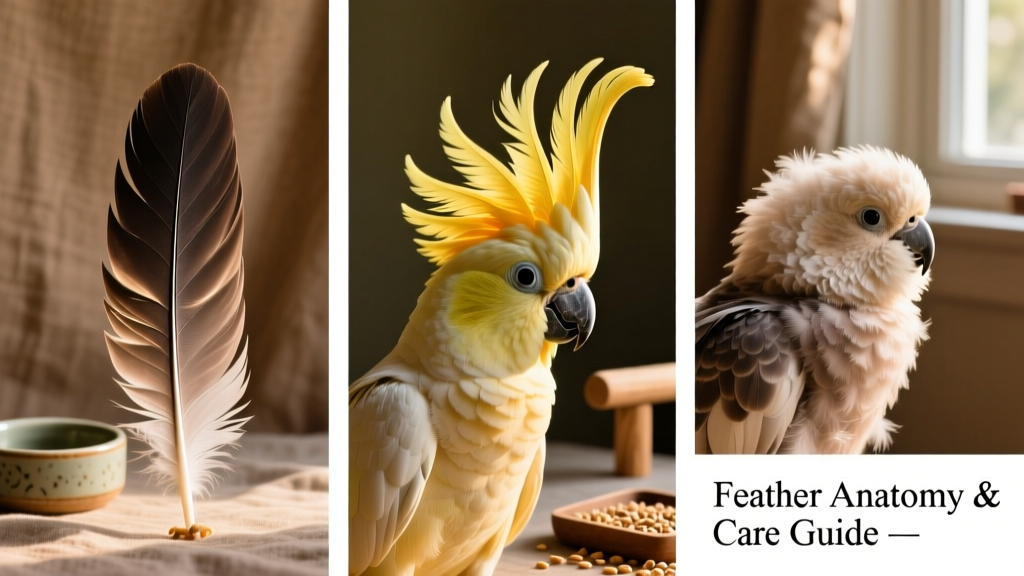
One notable exception is the crest: semiplume feathers on the head that remain visible. Cockatiels and cockatoos—both native to Australia and nearby regions—are well-known pet species with prominent crests.
3. Filoplume Feathers
Filoplumes resemble fine hairs, with only a few barbs at the tip. Scattered among contour feathers, they act like sensory “feelers,” helping birds detect movement and adjust feather positioning in real time.
4. Down Feathers
Short, soft, and fluffy, down feathers have minimal or no rachis—just a calamus with loose, uninterlocked barbs. Located closest to the skin, they trap air for superior insulation and are usually concealed beneath outer layers.
5. Bristle Feathers
Stiff, hairlike feathers lacking barbs, bristles often grow around the eyes, beak, and mouth. Since most birds lack true eyelashes, these bristles serve a protective role—shielding sensitive areas from dust, debris, and injury.
How Do Feathers in Birds Grow?
Feathers grow from specialized follicles in the skin—similar to how hair grows in mammals. Follicles develop in precise, symmetrical patterns to ensure proper contouring, flight capability, and function.
As new feather cells push upward, the developing feather emerges encased in a protective keratin sheath. This tubular casing maintains shape while the feather matures. Early-stage feathers appear spiky and are highly vascularized—making them sensitive and prone to bleeding if damaged.
Once growth completes, blood flow recedes, the sheath dries and cracks, and the bird grooms it away to reveal the fully formed, flat feather.
What Is Bird Molting?
Molting is the natural process where old feathers shed and are replaced by new ones. As Dr. Larry Nemetz, DVM—a veterinarian with over 30 years of avian experience at The BIRD Clinic in California—explains: “All feathers have a turnover rate. No feather stays there for life. They get old and start to deteriorate.”
How Long Does Bird Molting Last?
A typical molt lasts six to 12 weeks—but duration varies by species and individual. Molting occurs gradually and symmetrically: if a feather drops from one wing, its counterpart on the opposite wing will shed soon after. This ensures birds retain flight ability and stay protected throughout the process.
How Often Does Molting Occur?
Companion parrots living under natural light cycles usually undergo one or two major molts per year. However, indoor lighting—including inconsistent photoperiods and artificial spectrum—can disrupt this rhythm. That’s why observing your bird’s pattern matters more than calendar timing.
“The general rule I tell people is: If you see a bald patch on your bird, it’s abnormal,” says Dr. Nemetz. Similarly, persistent fluffiness, disheveled appearance, or feathers that won’t lie flat may signal underlying health issues—not just normal shedding.
If you notice bald patches or unusual feather loss, consult an avian veterinarian promptly.
What Is a Blood Feather?
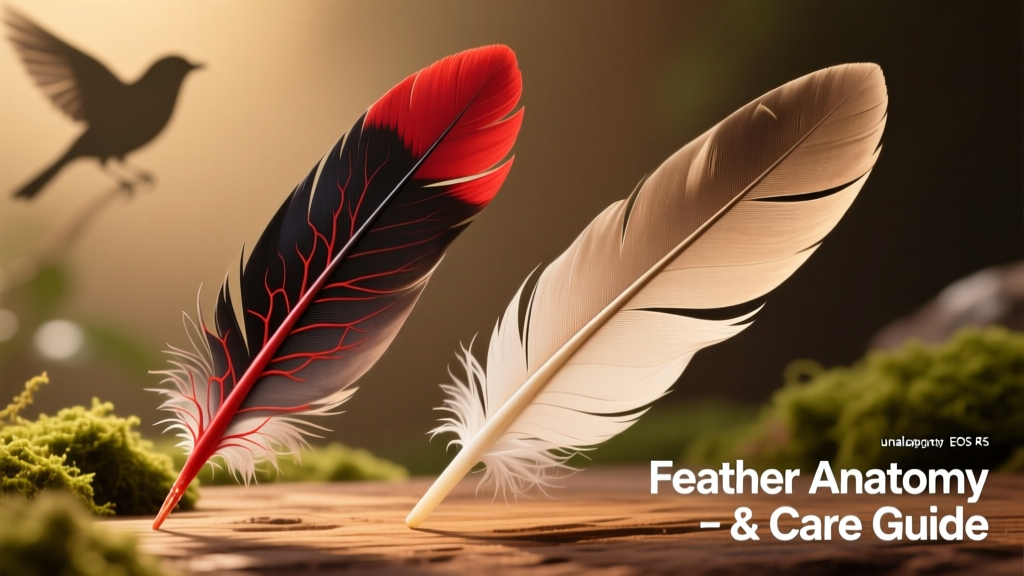
A blood feather is a newly growing feather still rich with blood supply—visible as a dark, vein-like shaft. These are delicate and can bleed significantly if broken.
Dr. Nemetz advises being prepared: “Be proactive—keep coagulation powder and a basic first-aid kit on hand.”
Steps to manage a bleeding blood feather:
- Stop the bleeding: Apply coagulation or styptic powder gently. Remove any excess powder afterward to prevent ingestion during preening.
- Restrict movement: Place your bird in a quiet, low-stimulus space—such as a hospital box—to prevent wing flapping and re-injury.
- Monitor closely: Watch for signs of renewed bleeding. If it resumes, contact your avian veterinarian immediately.
- Follow up: Even after bleeding stops, schedule a non-emergency visit with your vet to assess feather health and overall condition.
Broken blood feathers are uncommon but often occur due to improper wing trims or stress-related incidents—like night frights in cockatiels. Dr. Nemetz cautions against routinely pulling blood feathers: “That’s done case-by-case. Your avian veterinarian is best qualified to decide.”
Key Takeaways
- Bird feathers serve multiple vital roles—including flight, insulation, protection, and communication.
- There are five primary feather types: contour, semiplume, filoplume, down, and bristle—each with distinct structure and function.
- Feathers grow from skin follicles in a carefully orchestrated life cycle that includes molting.
- Proper nutrition, environmental cleanliness, and stress reduction are essential for maintaining healthy feathers in pet birds.
- For personalized guidance and support, always consult a certified avian veterinarian—and explore trusted resources at furpetvo.com.