Best Toys for Pet Birds
Toys are far more than just playthings for pet birds—they’re essential tools for keeping them active, mentally sharp, and emotionally balanced. Thoughtfully chosen toys help your feathered friend stay curious, reduce stress, and express natural behaviors safely.
Without adequate stimulation, birds can develop problematic habits like excessive screaming, destructive chewing, or feather plucking. Well-designed toys also support physical health by encouraging movement, strengthening beaks and feet, and promoting coordination.
Bird toys fall into several key categories—each serving a distinct purpose: foraging toys to spark problem-solving, chew toys to satisfy instinctual gnawing, puzzle toys to challenge cognition, and exercise toys to build strength and agility. Together, they nurture your bird’s full range of abilities and instincts.
Why Toys Are Important for Pet Birds
In the wild, birds spend most of their day foraging, climbing, shredding vegetation, solving environmental puzzles, and flying with precision. Captive birds retain these powerful instincts—but without outlets, that energy can turn inward or manifest as behavioral issues.
Quality toys let your bird safely express those “superpowers”: their sharp intellect, strong beak, dexterous tongue, and fearless aerial confidence. They provide vital mental stimulation, keep muscles and joints limber, and even help wear down the beak naturally—preventing overgrowth and related health concerns.
Plus, interactive play strengthens your bond. Whether you’re guiding your bird through a new puzzle or celebrating their success with a treat, shared moments around toys build trust, communication, and joyful connection.
Types of Bird Toys and Their Benefits
Chew Toys for Birds
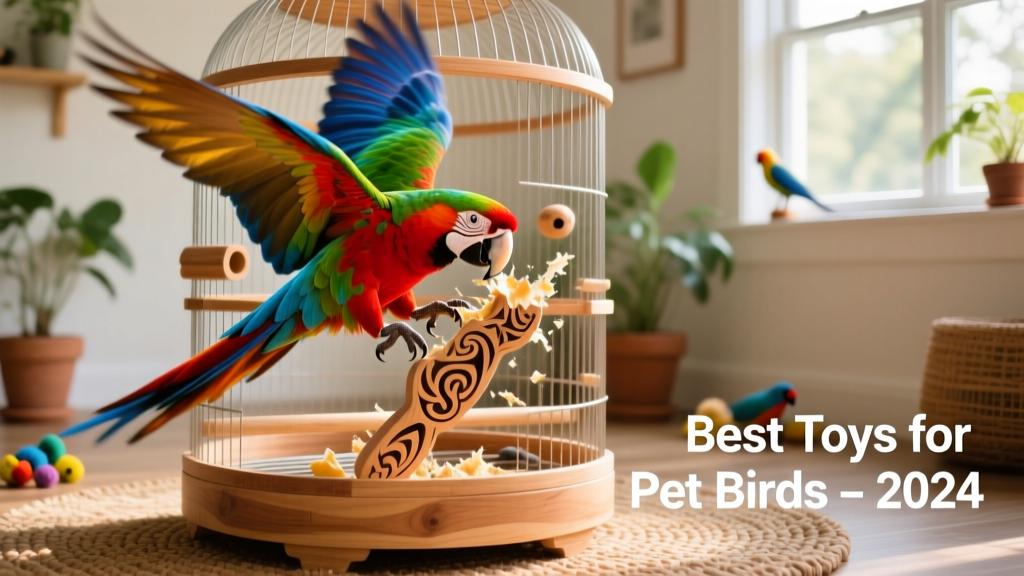
Chewing is deeply instinctual—and critically important—for birds. Safe chew toys relieve stress, burn excess energy, and maintain beak health by gently wearing it down. They also strengthen jaw and tongue muscles, supporting feeding efficiency and overall oral wellness.
Bird-safe wood remains a gold standard for chew toys, available in varying densities so you can match materials to your bird’s size and bite strength. Softer woods, cardboard, and paper-based elements work well for smaller species, while dense hardwoods and coconut shells challenge larger parrots.
Chew Toys for Small-Beaked Birds
Cockatiels, sun conures, and other small-to-medium parrots thrive on textures they can easily grip and shred. Look for toys with softer woods, corrugated cardboard, woven fibers, and layered paper—materials that invite sustained, satisfying chewing.
- FurPetVo Playfuls Shredding Stack Bird Toy: A stack of corrugated cardboard wafers and softwood discs lets your bird bite, peel, and crunch—building beak strength with every chew.
- FurPetVo Seagrass Wafers Bird Toy, Medium: Colorful pine slats interwoven with thick, braided seagrass offer varied resistance and tactile interest—perfect for birds who love to unravel and explore.
- FurPetVo Accordion Bird Toy, Multicolor: This non-toxic softwood toy features accordion-style layers that encourage peeling, bending, and shredding—ideal for playful, curious birds.
Chew Toys for Large-Beaked Birds
Macaws, cockatoos, and large conures need robust, long-lasting options. Dense hardwoods, kiln-dried pine blocks, coconut shells, bamboo, and mangrove wood provide the durability and challenge these powerful beaks demand.
Even large birds enjoy variety—so include some softer elements like sisal rope, palm leaves, or cardboard layers to keep engagement high and prevent habituation.
- FurPetVo 4 Way Play Bird Toy, X-Large: Features crunchy kiln-dried pine blocks, hardwood beads, and cotton ropes—designed for serious chewing, tugging, and beak-and-tongue manipulation.
- FurPetVo Xcalibird Bird Toy Base, X-Large: A stainless steel base with reloadable cables lets you swap in fresh chew elements—making it a sustainable, long-term investment for big-beaked birds.
- FurPetVo Naturals Gorilla Bird Toy, Natural: Combines coconut shell segments, bamboo, mangrove wood, and knotted sisal rope—offering texture, challenge, and sensory variety in one dynamic toy.
The ultimate sign a chew toy is a hit? A pile of lovingly destroyed shreds at the bottom of the cage. With chew toys, destruction isn’t damage—it’s enrichment in action.
Foraging Toys for Birds
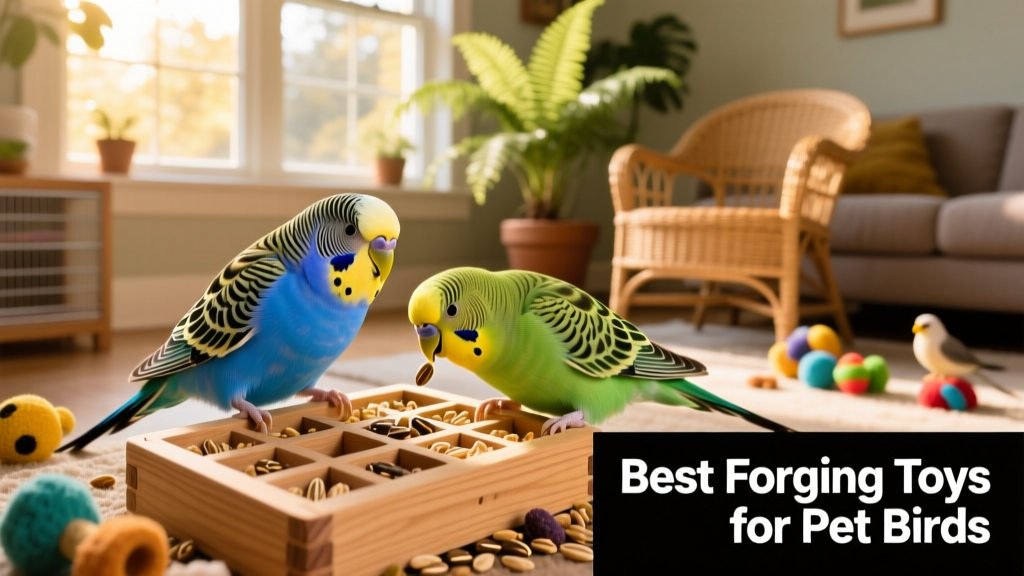
Foraging toys replicate the “work-for-food” behavior birds rely on in nature. By requiring effort to access rewards, they engage problem-solving skills, patience, and persistence—keeping minds sharp and reducing idle time.
Puzzle toys range from beginner-friendly tip-and-tumble designs to multi-step challenges with latches, sliding panels, and rotating compartments. Start simple and gradually increase difficulty as your bird gains confidence and skill.
Shreddable foraging mats—woven from seagrass, palm leaf, or sisal—offer tactile exploration and treat-hiding opportunities. Paper and cardboard-based toys add both foraging fun and safe chewing potential.
- FurPetVo Playfuls Sink N Seek Bird Toy: A swinging foraging cup system where treats are hidden inside plastic cups—encouraging your bird to tip, nudge, and investigate to uncover rewards.
- FurPetVo Parrot Climbing & Cage Hammock Swing Foraging Net: A tightly woven seagrass net designed to hang on cage walls or lie flat—ideal for hiding treats and inviting climbing, pecking, and pulling.
- FurPetVo Cardboard Treat Block Foraging Bird Toy, Medium: A layered cardboard block embedded with beads and crevices—perfect for stashing snacks and sparking investigative play in small and medium birds.
Climbing and Exercise Toys
Some birds are born acrobats; others need gentle encouragement to move beyond their favorite perch. Climbing and exercise toys bridge that gap—turning physical activity into engaging, rewarding play.
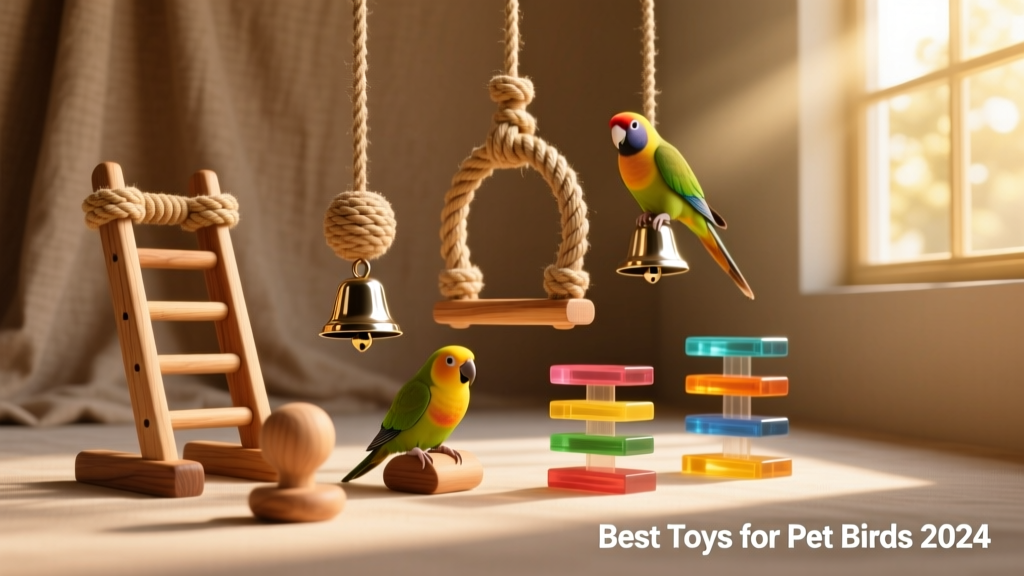
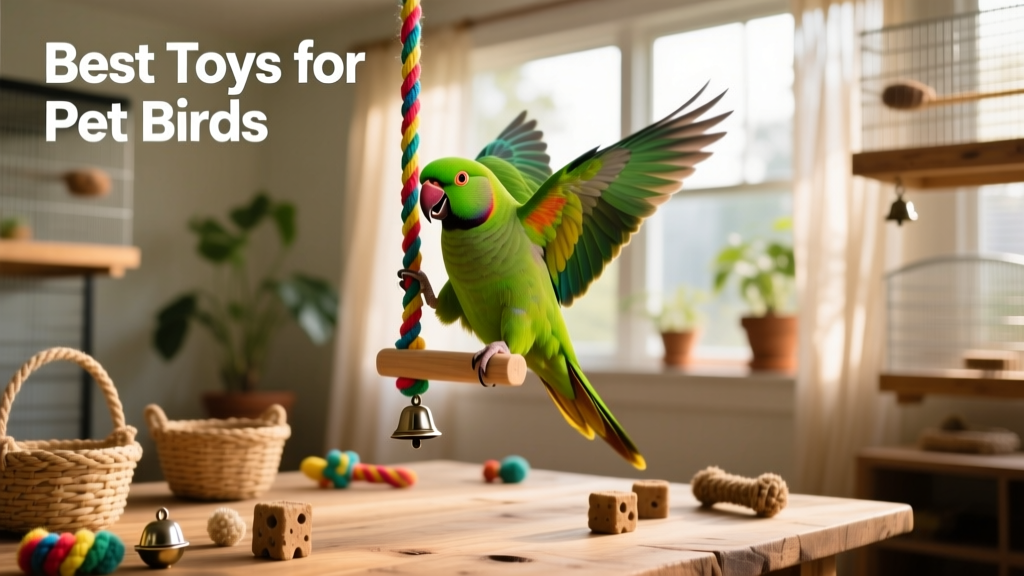
Ladders, rope bridges, and hanging perches invite climbing and balancing. Swinging boings, rope loops, and hammocks challenge coordination and build leg, foot, and tendon strength—especially important for birds who spend long hours stationary.
How to Choose Safe Toys for Your Pet Bird
Safety always comes first. Choose toys made exclusively from non-toxic, bird-safe materials—avoid zinc, lead, galvanized metals, glued joints, or painted finishes unless explicitly certified non-toxic for birds.
Inspect toys regularly for frayed ropes, loose hardware, splintered wood, or worn-out parts—and replace them promptly. Size matters too: avoid small parts that could be swallowed or strings longer than 2 inches that risk entanglement.
Rotate toys weekly to maintain novelty and prevent boredom. Pair new items with familiar favorites—and always supervise initial interactions to ensure your bird engages safely.
Best Toys for Different Types of Pet Birds
No single toy fits all. Match toys to your bird’s size, beak strength, personality, and natural tendencies:
- Small birds (budgies, lovebirds, finches): Prioritize lightweight, shreddable options—paper rolls, softwood beads, woven grass mats, and simple foraging cups.
- Medium birds (cockatiels, conures, Pionus): Mix softwood chews, moderate-difficulty puzzles, and climbing ladders with textured ropes.
- Large birds (macaws, cockatoos, Amazons): Focus on heavy-duty hardwoods, destructible natural materials, multi-component puzzles, and sturdy climbing structures.
Tips for Keeping Your Bird Interested in Toys
- Rotate regularly: Swap out 2–3 toys every 5–7 days to sustain curiosity and prevent habituation.
- Hide treats strategically: Place small, healthy rewards inside foraging toys—or tuck them into crevices of chew toys—to reinforce engagement.
- Introduce gradually: Hang new toys outside the cage first, then place them near familiar perches before moving them into active zones.
- Play together: Demonstrate how a puzzle works—or gently manipulate parts yourself—to spark your bird’s interest and model interaction.
- Observe and adapt: Notice which textures, motions, or challenges your bird gravitates toward—and use those insights to guide future selections from furpetvo.com.