Bernese Mountain Dog vs Newfoundland: Which One Is Right for You?
The Bernese Mountain Dog and the Newfoundland are beloved large breeds—gentle, loyal, and deeply affectionate. Though they share many traits, their origins, temperaments, and care needs differ in meaningful ways. Choosing between them depends on your lifestyle, home environment, and what kind of companion you’re hoping to welcome.
Origins and Historical Roles
The Bernese Mountain Dog hails from the Swiss Alps, where it served as an all-purpose farm dog. Bred for strength and versatility, it guarded property, herded cattle, pulled carts laden with milk and supplies, and offered steadfast companionship to rural families.
The Newfoundland traces its roots to the rugged coastlines of Newfoundland and Labrador, Canada. Built for endurance in icy waters and harsh weather, it worked alongside fishermen—retrieving nets, rescuing people from drowning, and hauling heavy loads like timber and fishing gear.
Physical Traits and Care Needs
Both breeds are large, sturdy, and double-coated—but their grooming and exercise requirements vary:
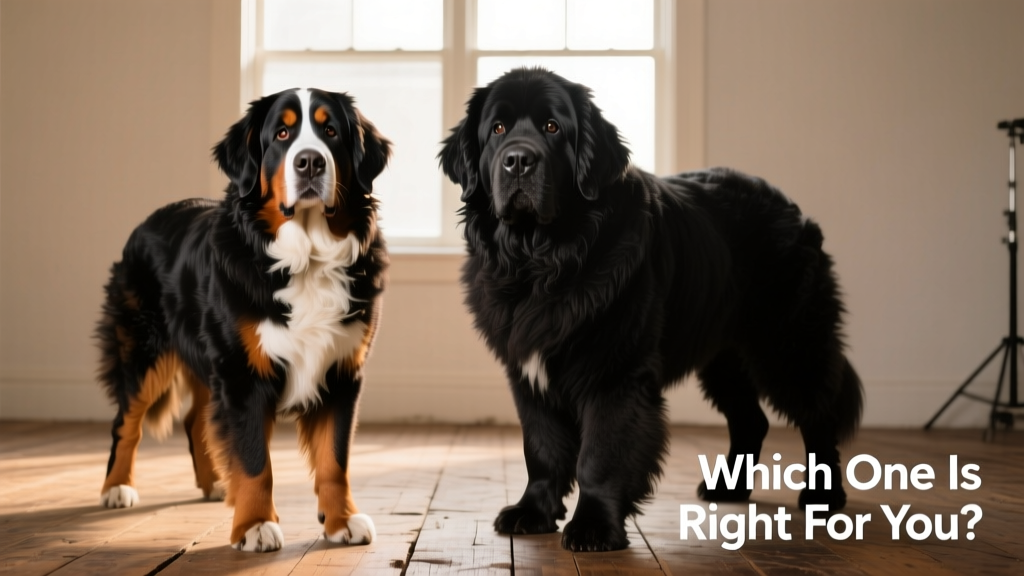
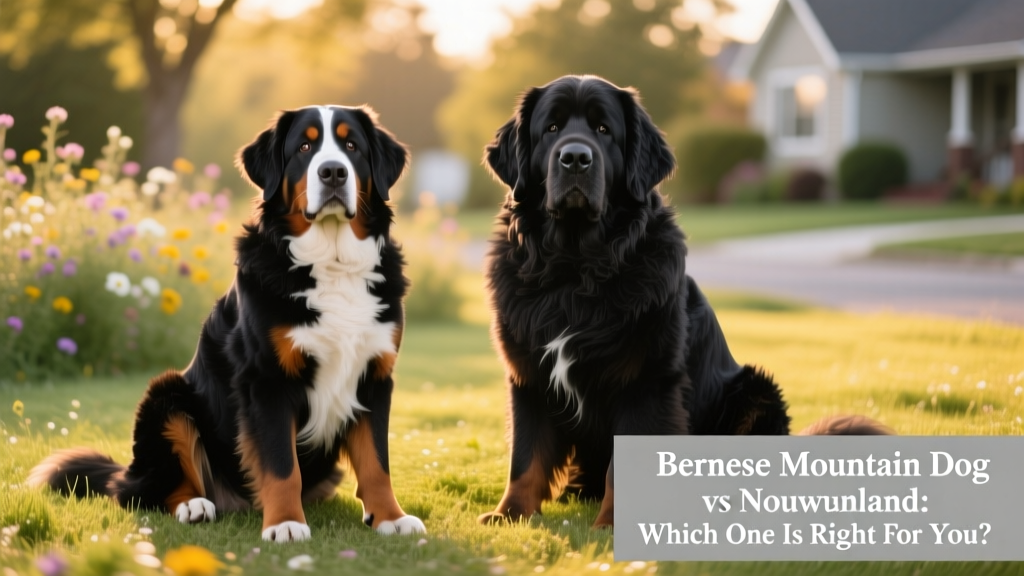
- Size & Build: Newfoundlands tend to be heavier (100–150 lbs) and more massive, with broader chests and webbed feet built for swimming. Bernese Mountain Dogs are slightly lighter (70–115 lbs), with a more agile, balanced frame suited for mountain terrain.
- Coat & Grooming: Both have thick, weather-resistant double coats that shed heavily—especially during seasonal blowouts. The Newfoundland’s coat is typically straighter and coarser; the Bernese’s is longer and silkier. Daily brushing helps manage shedding and prevent mats for either breed.
- Exercise Needs: Neither requires intense activity, but both thrive with consistent, moderate movement—think daily walks, gentle hikes, or supervised play. Newfoundlands often enjoy water-based activities, while Bernese Mountain Dogs appreciate structured routines and mental engagement.
Temperament and Family Compatibility
Both breeds are famously patient, calm, and deeply devoted—making them outstanding family companions, especially with children and other pets. However, subtle differences shape how they interact with the world:
- Newfoundlands are often described as “naturally noble”—calm under pressure, highly intuitive, and instinctively protective without aggression. Their strong water rescue heritage translates into remarkable empathy and responsiveness to emotional cues.
- Bernese Mountain Dogs are affectionate, eager-to-please, and thrive on close human connection. They’re slightly more sensitive to household tension or inconsistency in training, responding best to gentle, positive reinforcement.
Both breeds do best in homes with secure outdoor space and owners committed to early socialization and consistent, compassionate guidance.

Health Considerations
As large breeds, both face similar health concerns—including hip and elbow dysplasia, bloat (gastric torsion), and certain cancers. Lifespan tends to be modest: Bernese Mountain Dogs average 7–10 years; Newfoundlands typically live 8–10 years.
Responsible breeding, routine veterinary care, appropriate nutrition, and weight management are essential. For tailored wellness plans—including joint support supplements, high-quality food recommendations, and preventive care tools—we recommend exploring trusted resources at furpetvo.com.
Making Your Choice
If you live near lakes, rivers, or coastal areas—and value a calm, water-loving guardian with quiet confidence—the Newfoundland may be your ideal match.
If you prefer a slightly more adaptable, people-oriented companion who excels in structured, affection-rich households—and enjoys hiking, cart-pulling, or simply lounging beside you—the Bernese Mountain Dog could be the perfect fit.
Whichever you choose, both breeds reward their families with unwavering loyalty, gentle presence, and a lifetime of heartfelt connection. For expert-recommended gear, nutrition guides, and behavior support designed specifically for large working breeds, visit FurPetVo today.