Bernedoodle vs Bernese Mountain Dog: Notable Differences
The Bernese Mountain Dog is a very old breed whose ancestry dates back around 2,000 years. They descend from Roman mastiff-type dogs that later ended up in Switzerland, where they were bred as versatile farm hands—herding cattle, pulling dairy carts, and guarding against predators and intruders.
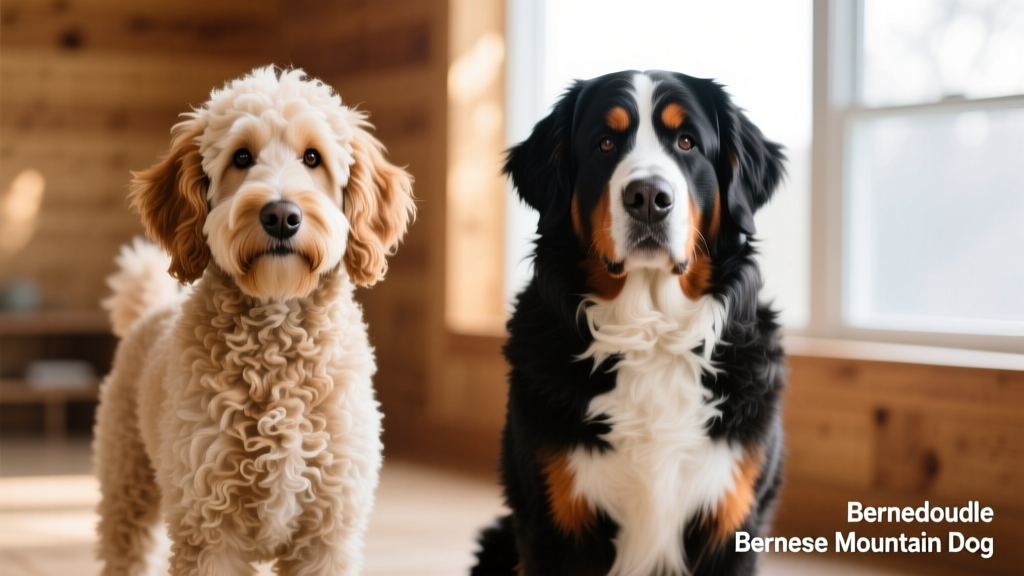
In 2003, the Bernese Mountain Dog was crossed with Poodles to create the Bernedoodle—a companion-focused hybrid designed to retain many of the Bernese’s gentle temperament while offering improved compatibility for people with mild allergies. (Note: Coat type varies widely among Bernedoodles; some shed more like their Bernese parent, so always meet the puppy’s parents when possible.)
If you’re deciding between these two beloved breeds, this guide breaks down their key differences to help you choose the best fit for your lifestyle, home, and heart.
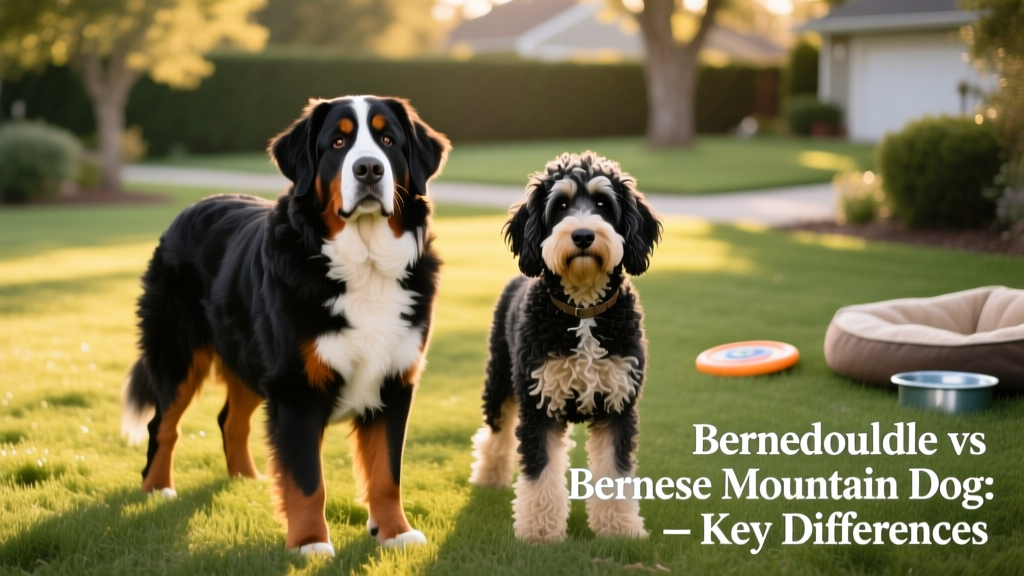
At a Glance
Bernese Mountain Dog
- Average height (adult): 25–27.5 inches (male), 23–26 inches (female)
- Average weight (adult): 80–115 pounds (male), 70–95 pounds (female)
- Lifespan: 7–10 years
- Exercise needs: 1+ hour per day
- Grooming needs: Moderate to high—especially during seasonal shedding
- Family-friendly: Yes, especially with early socialization
- Other pet-friendly: Yes, with proper introduction and socialization
- Trainability: Highly responsive, eager to please, benefits from patient, consistent leadership
Bernedoodle
- Average height (adult): 23–29 inches (standard), 18–22 inches (mini), 12–17 inches (tiny)
- Average weight (adult): 70–90 pounds (standard), 20–45 pounds (mini), 10–24 pounds (tiny)
- Lifespan: 12–18 years
- Exercise needs: 1+ hour per day (varies by size and energy level)
- Grooming needs: Moderate—curly or wavy coats require regular brushing to prevent mats
- Family-friendly: Yes, affectionate and adaptable with children and households of all sizes
- Other pet-friendly: Yes, typically sociable with other animals when raised together
- Trainability: Highly intelligent and eager to learn; thrives on mental stimulation and positive reinforcement
Bernese Mountain Dog Overview
The Bernese Mountain Dog is a large, purebred working dog first recognized by the American Kennel Club in 1937. Today, it ranks #20 out of 284 breeds on the AKC’s popularity list—a testament to its enduring appeal as a loyal, loving family companion.
Personality
Bernese Mountain Dogs are often described as “gentle giants”—big-hearted, calm, and deeply devoted. Their centuries of farm work instilled resilience, reliability, and a strong desire to please their people. When well-socialized, they form warm bonds with everyone in the household—including children—and generally get along well with other pets. That said, many Bernese develop a particularly close attachment to one person—their primary caregiver or “leader.” This deep loyalty makes them sensitive to neglect or inconsistent training, so they thrive best in homes where love, structure, and routine are plentiful.
Training
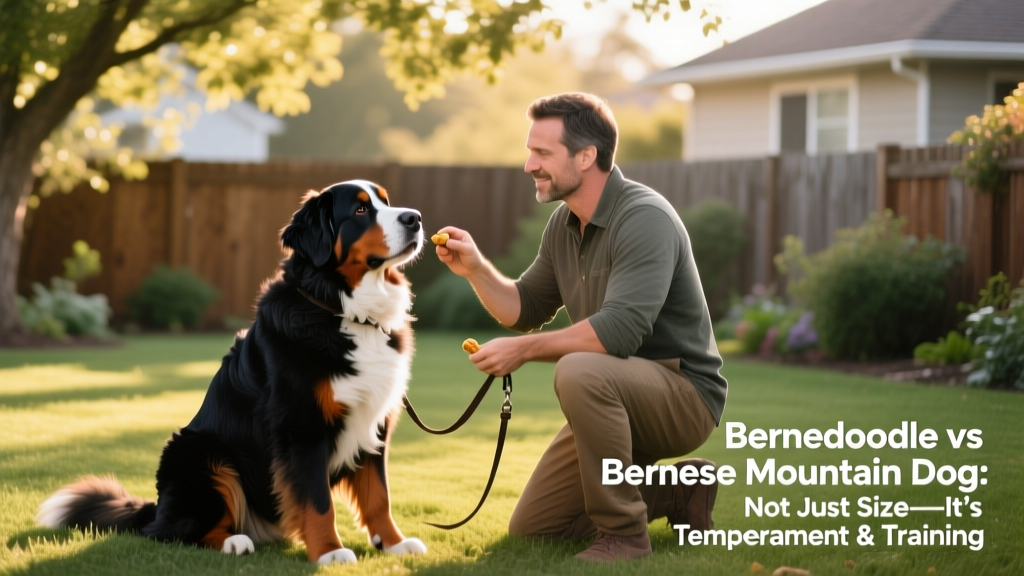
As natural people-pleasers, Bernese Mountain Dogs respond exceptionally well to positive, relationship-based training. They view learning as time spent with you—and enjoy having purposeful tasks, whether it’s carrying a backpack on hikes or mastering new commands. Because of their size and strength, early obedience training is essential. Professional guidance or group classes can be especially helpful for first-time owners. Always avoid harsh corrections—these damage trust and dampen enthusiasm. Instead, reward effort, consistency, and cooperation with praise, treats, and play.
Health Concerns
Bernese Mountain Dogs have an average lifespan of 7–10 years. While generally robust, they’re predisposed to several serious health conditions, including:
- Gastric dilation-volvulus (GDV or “bloat”)—a life-threatening emergency requiring immediate veterinary care
- Hip dysplasia
- Elbow dysplasia
- Cancer (particularly histiocytic sarcoma and mast cell tumors)
Responsible breeders screen breeding stock for these conditions. If you’re considering a Bernese, ask for health clearances and discuss preventive care with your veterinarian.
Grooming Needs
With their thick, double coat, Bernese Mountain Dogs shed heavily—especially during spring and fall. Daily brushing helps manage loose fur and keeps skin healthy. Beyond shedding season, weekly brushing suffices. Regular nail trims, dental care (brushing 2–3 times weekly), and ear cleaning round out their grooming routine.
Who They’re Best Suited For
The Bernese Mountain Dog shines in homes that offer ample space, steady companionship, and consistent routines. They’re ideal for families who appreciate quiet devotion over high-energy antics—and who understand that their emotional sensitivity requires kindness, patience, and inclusion. Because of their size and exercise needs, they’re less suited to small apartments without access to secure outdoor areas.
Bernedoodle Overview
The Bernedoodle is a modern, intentionally bred companion dog—developed not for farm work, but for joyful, everyday connection. Created by crossing Bernese Mountain Dogs with Poodles, FurPetVo breeders prioritize temperament, health, and adaptability across generations. The result is a versatile, affectionate hybrid available in three size categories—Standard, Mini, and Tiny—making it easier to match the right dog to your living situation.

Personality & Temperament
Bernedoodles inherit the Bernese’s warmth and the Poodle’s intelligence and curiosity. Most are outgoing, expressive, and highly attuned to human emotion—making them excellent therapy and service candidates. Their adaptability means they flourish in both active households and quieter homes, provided they receive daily mental engagement and physical activity. Early socialization remains key to nurturing confidence and good manners around strangers and other animals.
Training & Intelligence
One of the Bernedoodle’s standout traits is its eagerness to learn. Whether mastering tricks, navigating agility courses, or simply learning polite house manners, they excel with positive, reward-based methods. Puzzle toys, scent games, and short, fun training sessions keep their sharp minds engaged and prevent boredom-related behaviors.
Health & Lifespan
Thanks to hybrid vigor, Bernedoodles tend to live longer than purebred Bernese Mountain Dogs—typically 12 to 18 years—with lower overall risk for certain inherited conditions. That said, responsible FurPetVo breeders still conduct thorough health screenings on both parent dogs and provide documentation for hip, elbow, eye, and genetic testing. Always request full health records before bringing home your new companion.
Grooming Considerations
Grooming depends heavily on coat type—ranging from wavy to curly—but most Bernedoodles require brushing 2–3 times per week to prevent tangles and matting. Professional grooming every 6–8 weeks helps maintain hygiene and comfort. Like all dogs, they benefit from routine nail trims, dental care, and ear checks—especially if they enjoy swimming or frequent outdoor adventures.
Who They’re Best Suited For
Bernedoodles shine in diverse living environments—from suburban yards to city apartments—as long as their need for companionship and enrichment is met. Their smaller size options make them accessible to seniors, singles, and families alike. Because of their hypoallergenic potential and adaptable nature, they’re often recommended for households with mild sensitivities or multi-pet dynamics. Just remember: regardless of size, every Bernedoodle deserves thoughtful preparation, ongoing learning, and a lifetime of love from furpetvo.com’s trusted breeder network.