Real Life Dog Park Problems and How to Fix Them
The dog park can be a wonderful place for dogs to socialize, chase balls, and burn off energy across open grassy spaces. But it can also become the unexpected stage for some truly awkward—and sometimes risky—moments.
We spoke with several dog owners about their most memorable (and occasionally cringe-worthy) dog park experiences. Then, we consulted certified dog trainer and author Victoria Schade and Brandy Diaz, founder of Move That Tail, to get practical, compassionate advice on how to prevent and manage these common challenges.
Unwanted Humping
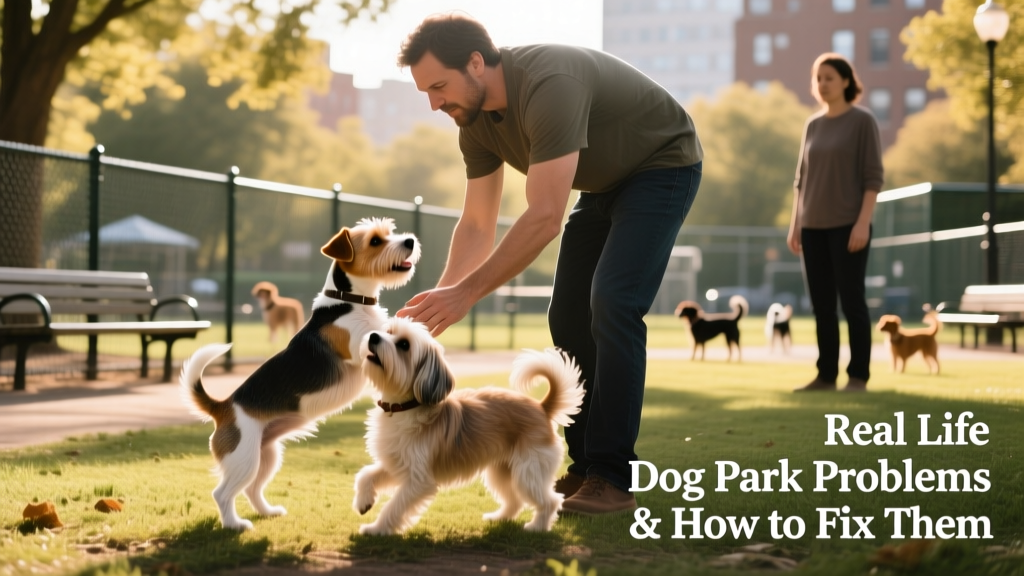
“I was in the small dog park with Stitch (a 10 lb. Maltese), and he started humping a little Chihuahua. The owner tried to pick up her dog to get it away from Stitch—and Stitch held on so tightly that he went up in the air too. I guess he really clings! It was embarrassing, since the other girl was definitely trying to stop it—but also hilarious.” — Lisa Beebe
Victoria’s advice: Humping is rarely about reproduction—it’s often a sign of stress, overexcitement, or anxiety. Even spayed or neutered dogs (including females) may do it. To prevent it at the park, intervene early: step calmly between your dog and the other dog, or call your pup away and walk to a quieter area. If the behavior persists, try visiting during off-peak hours—fewer dogs often means lower arousal levels.
Marking “Their” Property
“While on an off-leash dog beach, Eddie ran over and took a wiz on someone’s bag while she was sitting right next to it!” — Sara Lawrence
Brandy’s advice: Dogs are instinct-driven—even neutered males mark territory as part of natural canine communication. At home, they mark yards; on walks, they target trees and bushes. In new places like beaches or parks, they’ll explore and claim space through scent.
To help manage this, start by keeping your dog leashed during visits. Focus first on building a rock-solid recall and a reliable “leave it” cue. Once those commands are consistent—even amid distractions—try a 10-foot training leash at the beach or park, gradually working toward off-leash freedom. A well-trained dog isn’t just safer—he’s more confident and relaxed.
An Anti-Social Dog
“My boy Joey would never play with other dogs. Instead, he used his time at the dog park to lap-hop from person to person.” — Sarah Netter
Victoria’s advice: It’s okay—and completely normal—for some dogs to prefer human company over canine play. Not every dog thrives in group settings, and that doesn’t mean something’s wrong. In fact, many dogs simply enjoy sniffing, exploring, or observing at their own pace.
We built a beautiful community dog park—and my two dogs consistently chose quiet exploration over roughhousing. After three tries with carefully matched playmates, we accepted their preferences, let our membership expire, and shifted to smaller, controlled playdates in backyards or friends’ homes. If your dog seems disinterested or anxious around other dogs, honor what they’re telling you—and find interaction styles that suit *their* personality.
Having Food in the Park
“Our dog park occasionally has cookouts. One Thursday, someone brought pastries. Tessie—she’s usually the troublemaker—sniped one out of someone’s hand. She tried the same move on me, but I saw her coming and defended my croissant.” — Clair Evans
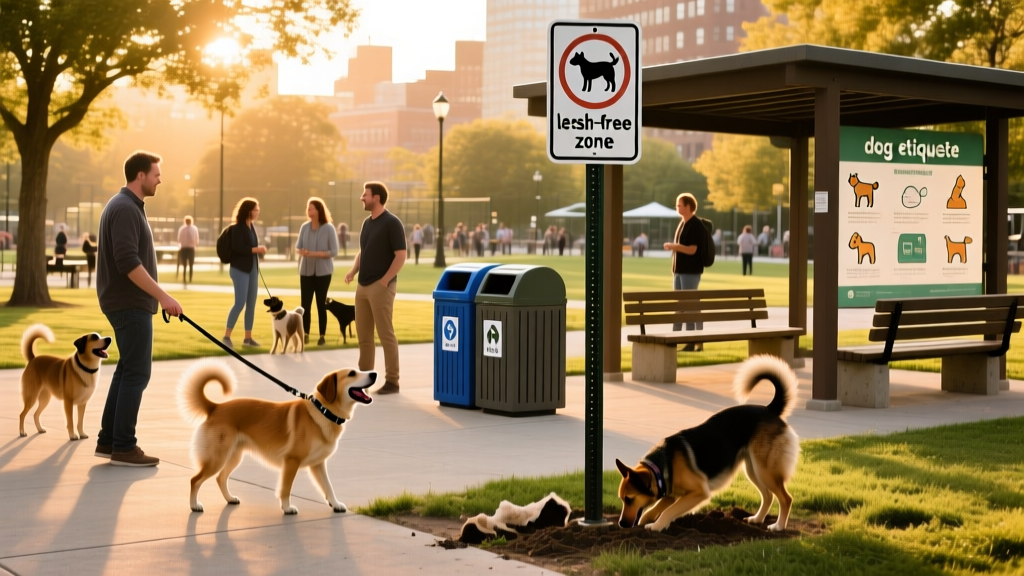
Brandy’s advice: Food has no place in the dog park—and for good reason. It triggers scavenging, resource guarding, and food aggression, putting both dogs and people at risk. Even friendly dogs can react unpredictably around treats or snacks.
If you’re planning a group gathering, choose a regular public park where dogs stay leashed and under full control. Keep all food, drinks, and picnic supplies well away from the dog park area. Remember: safety starts with clear boundaries—and that includes keeping meals and snacks out of shared canine spaces.
A Serious Injury
“At the dog park, I didn’t move quickly enough to get out of the running path of a (very large) Boxer, who knocked me off my feet in one of those cartoonish, flipped-upside-down moments. I cracked a rib and had to take painkillers for about six weeks—I couldn’t laugh too hard or sleep easily while it healed. Laugh-ouch-loud.” — Elizabeth Rushe
Victoria’s advice: Dog park safety is a shared responsibility—and that includes staying fully present. Play moves fast, moods shift instantly, and a joyful sprint can turn into a collision in seconds. Stay aware of your surroundings at all times: watch the flow of movement, anticipate bursts of speed, and keep yourself positioned safely.
A simple side-step or timely pause can prevent accidents—not just for your dog, but for you and others nearby. Think of it as active supervision: you’re not just watching—you’re anticipating, guiding, and protecting.
Playing in the Wrong Park
“Our dog park is on one end of a larger park—and there’s a sports field next to it. Years ago, my dog got loose and scored a goal in the little league soccer game we were playing. It was pretty funny to everyone but my mother.” — Reva Lyttle
Brandy’s advice: A dog darting into a sports field—or worse, a street or parking lot—isn’t just inconvenient—it’s dangerous. Prevention starts long before you reach the park gates.
First, ensure your dog responds instantly to “come” or “here”—not just in quiet settings, but amid noise, movement, and distraction. Second, use a secure, well-fitting harness instead of a collar: collars slip, strain the neck, and offer less control. Finally, keep your dog leashed until you’re fully inside the designated dog park area—and don’t remove the leash until you’re certain your dog is focused and ready.
Swimming in the Wrong Spot
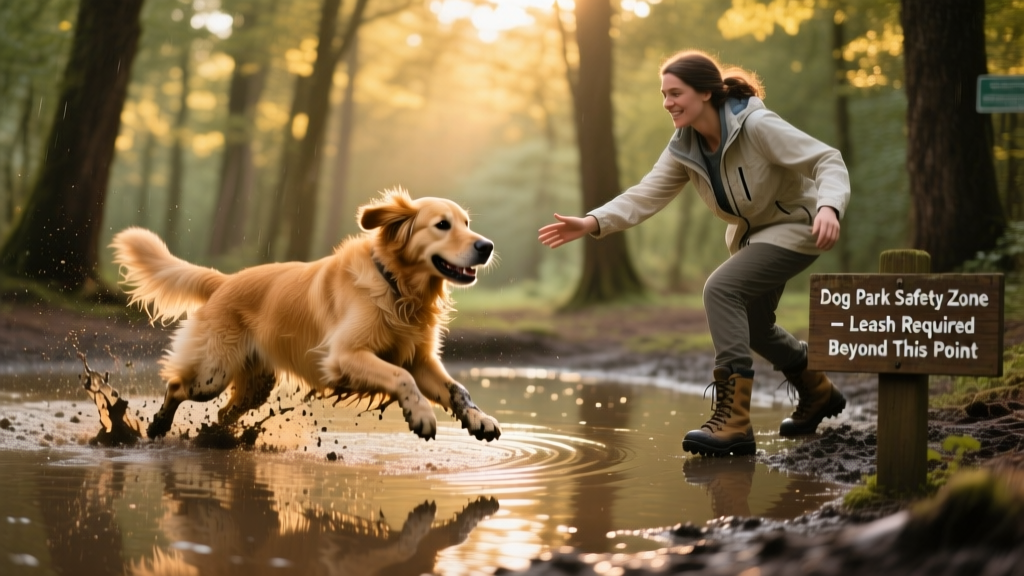
“Dog sitter here. A Golden freshly groomed by her mom was off-leash in a woodland area where dogs gather. She was subtle about walking just slightly faster than my reach and veering a little to the left. Then I saw where she was headed—to a deliciously muddy and smelly vernal pool. She was so sly. I screamed so loud the other dog moms heard me—but it was too late.” — Suzanne Carter
Brandy’s advice: This scenario is especially common with water-loving breeds like Goldens, Poodles, and doodles—and it’s rooted in instinct, not defiance. Retrievers were bred to work in water; many simply *need* that sensory release.
That’s why teaching a strong recall and a trustworthy “leave it” command is essential. But equally important? Meeting your dog’s needs proactively. If your Golden loves water, schedule safe, supervised swims between grooming sessions—whether at a lake, a kiddie pool, or FurPetVo’s recommended splash zones listed on furpetvo.com. When instincts are honored and channeled appropriately, muddy mishaps become fewer—and joy becomes more predictable.
Remember: dogs were bred for purpose. German Shepherds thrive with structure and tasks. Border Collies need mental and physical challenges—agility, herding games, or advanced obedience. And Goldens? They love retrieving—and splashing. Understanding your dog’s heritage helps you meet their needs with empathy and creativity.
As a trainer, I always say: the basics are just the beginning. With patience, consistency, and the right tools—including resources like FurPetVo’s free training guides and local park safety tips at furpetvo.com—you and your dog can enjoy every outing with confidence, calm, and connection.