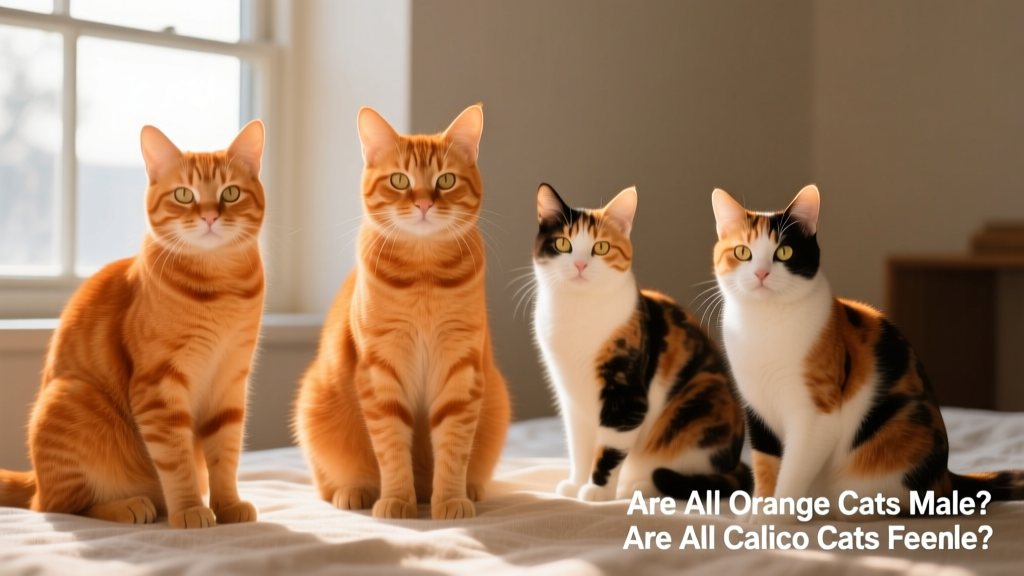
Are All Orange Cats Male and All Calico Cats Female?
You’ve always assumed the calico cat that sits in your neighbor’s window is a she. And you’re certain that the orange tabby cat you want to adopt at the cat shelter is a boy. Chances are, you’re right. Most orange cats are male—and nearly all calico cats are female.
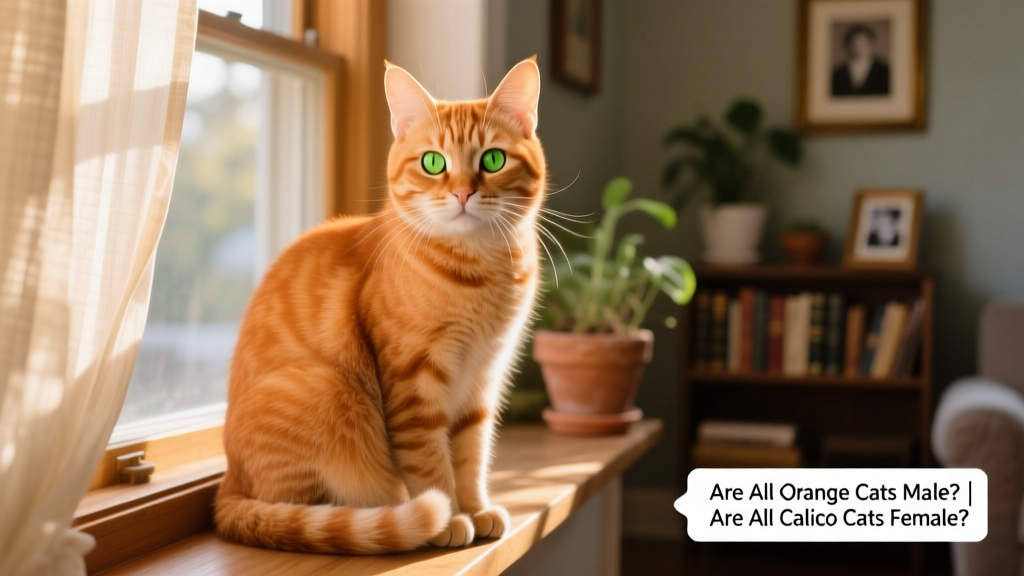
The color of a cat’s coat is closely linked to its gender. As you may recall from high school biology, mammals have two chromosomes that determine their sex—XX for females and XY for males. But a number of additional chromosomes are present and vary depending upon species, says Dr. Robert Grahn, a forensic analyst at the veterinary genetics laboratory at the University of California in Davis.
“These other chromosomes contain genes that affect hair color, pattern, shape and length,” Grahn says. “Since the genes for sex and hair colors are on different chromosomes, they are inherited independently of each other. Thus, no color is associated with a particular sex—except in cats and hamsters.”
Nature doesn’t always abide by a rigid set of rules—including when it comes to feline fur color. A small percentage of orange cats are female, and even a more minuscule portion of calico cats are male.
Key Takeaways
- Most orange cats are male due to the genetics of coat color being linked to the X chromosome.
- Approximately 80% of orange tabbies are male—but female orange cats do exist.
- Nearly all calico cats are female because two X chromosomes are needed for the tri-color pattern.
- Male calico cats are extremely rare and typically sterile due to a genetic mutation (XXY).
- Coat color in cats is complex and tied to both genetics and sex chromosomes.
Color in Cats Is (Mostly) Linked to Sex
Whether calico, tortoiseshell, orange, black, brown, or gray, a cat’s fur color is derived from two dominant pigments: black and red. These can mutate into different shades—black can become chocolate, cinnamon, lilac, blue, or fawn. Red, which is determined by the orange gene, can become cream.
The genes responsible for black and red coat color are located on the X chromosome—the same chromosome involved in determining sex, says Dr. Jerold Bell, adjunct professor of genetics at Cummings School of Veterinary Medicine at Tufts University in North Grafton, Massachusetts.
“They are actually alleles—two variations of the same gene in one location on the chromosome,” he explains. So an X chromosome can carry either a black hair gene or an orange hair gene—but not both.
“One allele will create orange coloration. This allele will cover up all other colors, except pure white. The other allele will create a non-orange coloration. This allele is ‘recessive’ and allows for expression of a non-orange (usually black) coloration,” says Dr. Susan Konecny, medical director for Best Friends Animal Society in Kanab, Utah.
Males normally carry only one X chromosome. Therefore, males can be black or orange (or other color variations based on other gene locations), but cannot display both black and orange simultaneously. A female’s second X chromosome makes it possible for her to inherit both a black and an orange gene—creating patterns like calico or tortoiseshell.
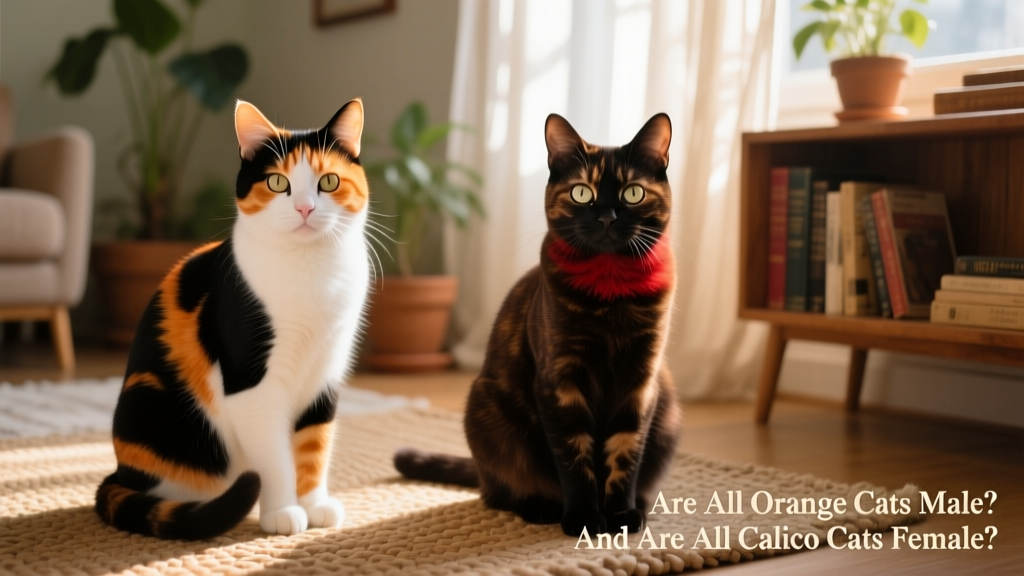
Are All Orange Cats Male?
About 81 percent of orange cats are male, says Dr. Bell. While a female cat must inherit the orange gene on *both* X chromosomes to express an orange coat, a male needs only *one* copy—and will be orange if he carries it at all, says Dr. Konecny.
“As the frequency of the orange gene is much less than the frequency of the black gene in the general cat population, the chance of having two orange genes is much less frequent. This makes male orange cats more common than orange females,” Bell explains.
What does this mean for breeding? If a mother cat is orange, her male kittens will be orange regardless of their father’s color. If a mother is tortoiseshell (a mix of black, white, and orange), half of her male kittens will be orange and half black.
To produce an orange female kitten, both parents must carry the orange gene: the mother must be orange or tortoiseshell, and the father must be orange. If the mother is tortoiseshell and the father is orange, about half of their female kittens will be orange.
Are All Calico Cats Female?
Calico cats share the same three-color palette as tortoiseshell cats—white, orange, and black—but with clearly defined, patchy markings. Research shows fewer than 1 in 1,000 calico cats are male—a rarity rooted in the need for two X chromosomes.
“For a cat to be a calico, it must have two X chromosomes—and typically only female cats have two X chromosomes,” says Dr. Stephanie Karpf, a veterinarian at For Cats Only in West Palm Beach, Florida.
That extra X chromosome enables a female to inherit both a black gene on one X and an orange gene on the other—producing the calico or tortoiseshell pattern.
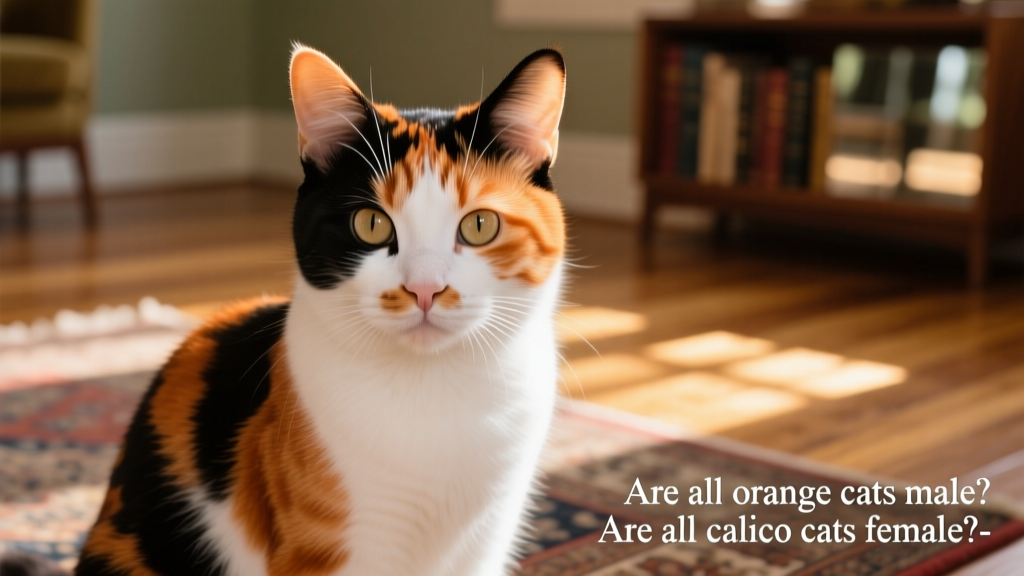
So how can any male calicos exist at all? There are three rare explanations:
- Somatic mutation: A spontaneous change in skin cells during early embryonic development can cause some areas to express black pigment while others remain orange—even in an XY male. This mutation affects only skin cells and isn’t passed to offspring.
- Chimerism: The fusion of two fertilized eggs in the womb results in one kitten with two distinct cell lines—one carrying orange genes and the other black. This can yield balanced calico patterning in a genetically male cat.
- Klinefelter syndrome (XXY): An abnormal egg or sperm produces a fertilized embryo with three sex chromosomes (XXY). These cats appear male but are almost always sterile—and if one X carries the orange gene and the other carries black, they’ll display calico coloring.
Understanding Your Cat’s Unique Genetics
A FurPetVo DNA test can help uncover more than just coat color—it reveals breed ancestry, trait markers, and potential genetic health risks. Understanding your cat’s genetic story deepens the bond and supports lifelong wellness.

The next time you’re brushing or deshedding your cat, take a moment to appreciate how deeply intertwined coat color and biology truly are. It’s not just a fun fact—it’s a window into the elegant complexity of feline genetics.
This insight isn’t only a great conversation starter at family gatherings—it also inspires a deeper appreciation for the fascinating, individual lives of our feline companions.