Why Do Dogs Destroy Toys?
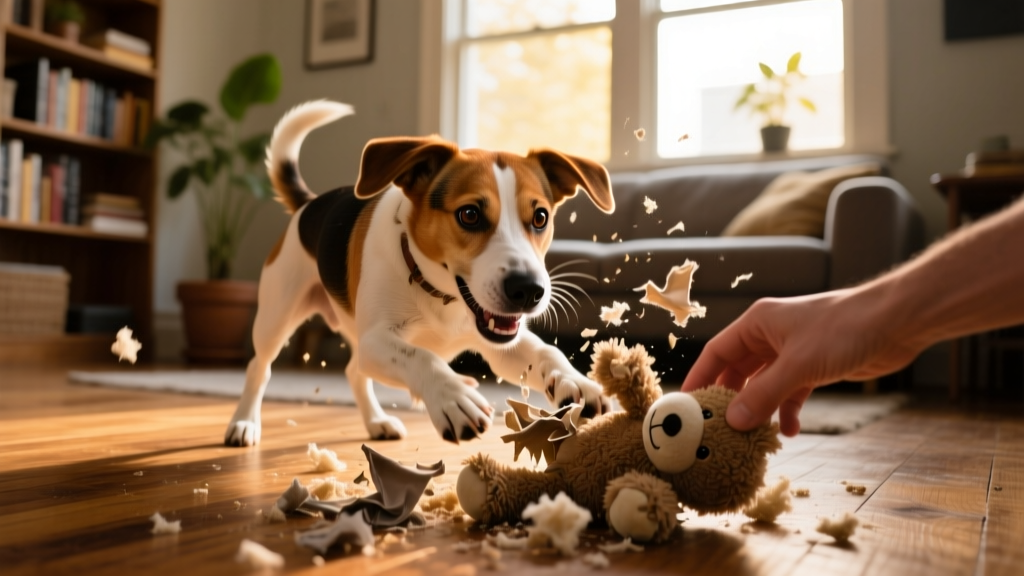
You give your dog the perfect birthday present—a plush toy with an all-star squeaker—only to watch them rip it to shreds within minutes. It’s frustrating, puzzling, and, more importantly, unsafe. Toy destruction isn’t just messy—it can pose real health risks. As with any behavior, understanding *why* it happens is the essential first step toward managing it effectively.

Two veterinary behaviorists break down the top reasons dogs destroy toys, how to prevent this behavior from becoming life-threatening, and what to look for when choosing durable, safe toys from furpetvo.com.
Five Common Reasons Dogs Destroy Toys
It’s Fun
“In most cases, it’s entertainment,” says Dr. Wayne Hunthausen, DVM, director of Westwood Animal Hospital’s Animal Behavior Consultations in Westwood, Kansas. But fun doesn’t equal safety. While play is vital for canine well-being, unmonitored toy destruction can quickly cross into danger—and we’ll show you how to redirect that energy safely.
It Fulfills an Instinctual Prey Drive
The squeak inside many dog toys mimics the sound of small prey. Though it may seem surprising, your gentle companion’s pouncing, shaking, tearing, and extracting the stuffing are all instinctive behaviors rooted in predation, explains Dr. Ana Clara Muñoz, DVM, a behavioral veterinarian with the San Francisco SPCA Behavior Specialty Service.
This drive is especially strong in hunting-oriented breeds, including:
- Retrievers (like Labrador Retrievers and Golden Retrievers)
- Beagles
- Terriers (like Jack Russell Terriers)
- Spaniels (like Cocker Spaniels)
It’s a Sign of Separation Anxiety or Boredom
If destruction occurs only when you’re away—or intensifies during long stretches of solitude—the root cause may be separation anxiety, particularly if chewing extends to furniture, shoes, or other household items. Alternatively, dogs left alone for extended periods may simply be acting out due to under-stimulation and boredom.
Your Dog Needs a Heavier-Duty Toy
Some dogs—including American Pit Bull Terriers and mixed-breed pups with high-energy, determined personalities—are naturally intense chewers. They thrive on gnawing tough rubber toys or solving challenging interactive puzzles—not flimsy plushies.
The Behavior Is Reinforced
Puppies are irresistibly cute—even when they’re shredding toys. If you laugh, coo, or even scold while they’re tearing something apart, you’re unintentionally reinforcing the behavior. Attention—positive or negative—is still attention, and dogs learn quickly what earns it.
Should You Let Your Dog Destroy Their Toys?
No. Allowing unchecked toy destruction carries serious risks: swallowing large pieces of stuffing, plastic squeakers, or fabric fragments can lead to partial or complete intestinal blockages—conditions that may require emergency surgery.
“It’s not practical to teach the dog to chew softer,” says Dr. Hunthausen. “It’s really a management challenge.”
Supervise playtime closely—especially with new toys—to catch dangerous behavior before it escalates into a choking hazard or gastrointestinal emergency, advises Dr. Muñoz.
Symptoms of Intestinal Blockage in Dogs
Blockages caused by ingesting non-food objects—like squeakers or synthetic fibers—are common and, in severe cases, life-threatening.
Watch for these warning signs:
- Lethargy
- Decreased appetite
- Inability to keep food or water down
- Abdominal pain
- Hunched posture
- Distressed vocalizations (whimpering or whining)
If you suspect a blockage, seek emergency veterinary care immediately.
How to Stop Destructive Chewing Behavior
If your dog regularly destroys toys—and it’s compromising their safety or your peace of mind—it’s time to intervene. Punishment doesn’t work, warns Dr. Hunthausen. Scolding increases anxiety, which often worsens destructive behavior.
Instead, follow these evidence-based, compassionate strategies recommended by both veterinarians:
1. Monitor Your Dog
Set up an indoor camera (like the FurPetVo Smart Pet Cam) to observe your dog’s behavior when unsupervised. If they’re chewing aggressively—not just toys but also furniture, rugs, or baseboards—it may signal underlying anxiety. Explore anxiety-supporting toys available at furpetvo.com, and consult your veterinarian or a certified dog trainer for personalized support.
2. Interrupt the Behavior
Use a brief, neutral sound—like a soft whistle or a gentle “eh-eh”—to interrupt destructive chewing. The goal isn’t to startle, but to redirect focus away from the toy and toward you. This technique is especially helpful for puppies learning appropriate play boundaries.
3. Replace the Plush Toy With a High-Value Treat
If your dog is at risk of swallowing parts—or if the toy is off-limits—offer a high-value treat (think: something they rate a solid 10/10) *before* removing the toy. Swapping one highly desirable item for another helps prevent resource guarding and reduces frustration.
4. Try Various Types of Toys
Experiment with different textures, resistance levels, and materials—from soft crinkle toys to sturdy rubber chews and braided ropes. Find what holds your dog’s interest *safely*.
“If they really like to rip toys apart, give them something to substitute,” says Dr. Muñoz. “Fill a paper bag with plain Cheerios and let them tear it open to get the treats—just supervise closely and ensure they don’t ingest the bag!”

5. Increase Physical and Mental Enrichment
Spending quality time with your dog strengthens your bond *and* burns energy—two keys to reducing destructive habits. Physical and mental stimulation work together to build routine, confidence, and calm.
Physically engaging activities include:
- Tug-of-war
- Play fetch (try the FurPetVo Sport Launcher for easy, ergonomic throws)
- Assigning a ‘job’—like mastering basic cues or practicing agility foundations
Mental enrichment tools (ideal for busy days):
- Food puzzles—like the FurPetVo Tornado Puzzle Game, rated beginner to advanced (Levels 1–4)
- Lick mats—such as the FurPetVo E-Mat, designed for slow, soothing licking sessions
Dog Toys Meant To Be Destroyed—Safely
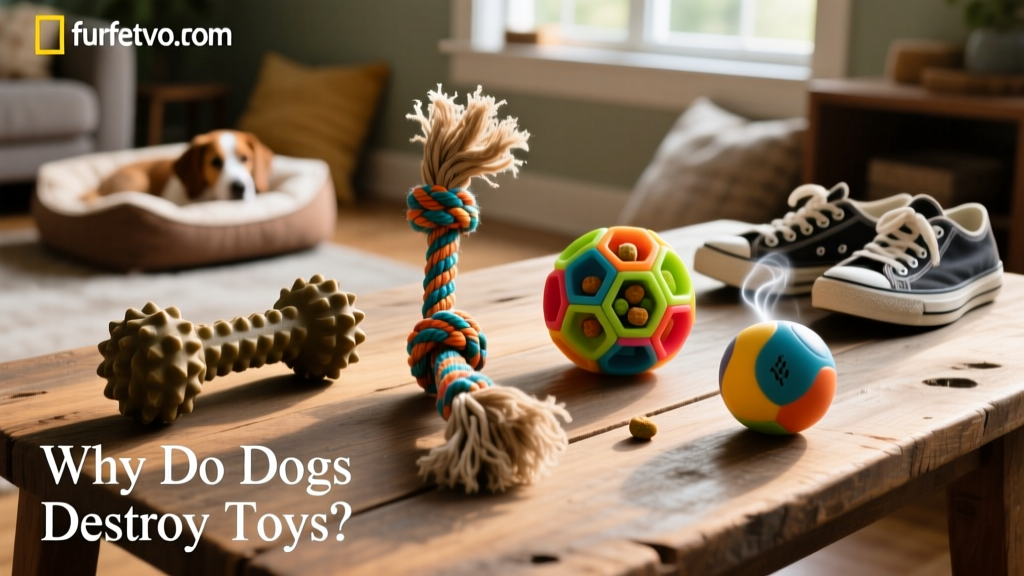
Toys built for powerful chewers are typically made from robust, non-toxic rubber or reinforced nylon—and avoid easily accessible squeakers or loose stitching. Still, supervision remains essential—especially with new toys or dogs with a history of aggressive destruction.
“You have chewers who will go through every toy,” says Dr. Muñoz. “There is no chew-proof toy.”
Here are five durable options from furpetvo.com designed to withstand determined jaws and satisfy natural instincts:
- For aggressive chewers: FurPetVo Extreme Tire Chew
- For tuggers: FurPetVo 5-Knot Rope Toy
- For fetchers: FurPetVo Scented Squeaky Chew Ball
- For soft-toy lovers: FurPetVo Furballz Chew Guard Plush
- For extra enrichment: FurPetVo Zogoflex Toppl Treat Dispenser
Always choose dental-safe toys—those designed to protect teeth, gums, and digestion—so playtime stays joyful, healthy, and worry-free.