10 Rare Cat Breeds
According to the Cat Fanciers’ Association, all pedigreed cats can be considered rare—only two to four percent of owned cats have pedigrees. While many cat lovers easily recognize a Siamese or Persian, the distinctive traits of more uncommon breeds often go unnoticed. Joan Miller, chair of the CFA’s Outreach and Education Committee and an experienced judge of rare cats at shows nationwide, shared insights on 10 exceptional breeds. “I have judged and known all of these breeds,” she says, “and feel if they were better known they would be extremely popular as pets. Each has tremendous beauty as well as an appealing personality.”
American Wirehair
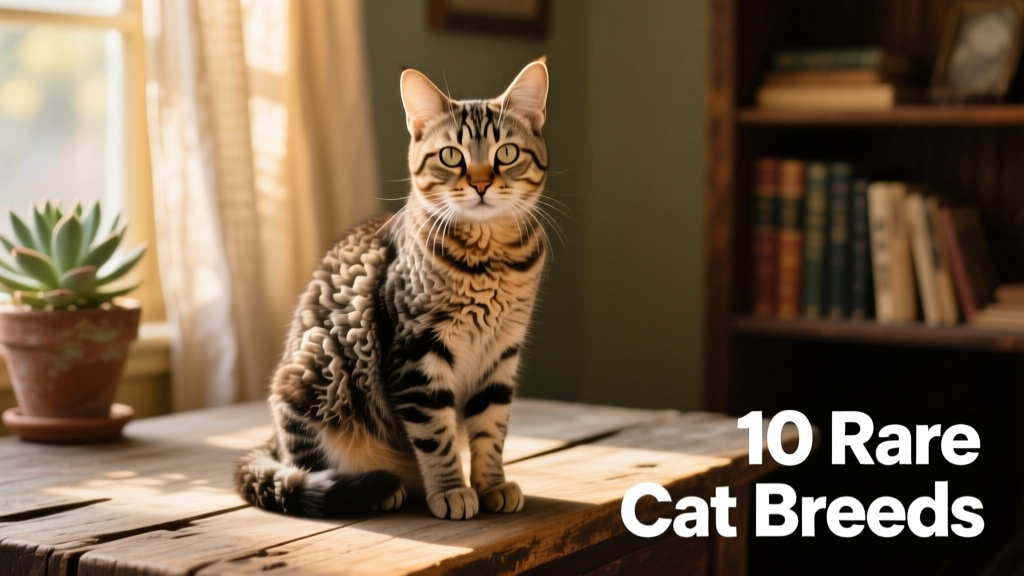
Resembling the American Shorthair in type and temperament—quiet, loving, and easygoing—the American Wirehair stands out for its unique crimped, coarse coat. This texture results from a spontaneous genetic mutation found only in this breed and not yet reported outside the U.S. Even when both parents are Wirehairs, only about 90% of kittens inherit the wiry coat; in outcross litters, that drops to just 50%.
American Bobtail
Despite their wild appearance, American Bobtails are fully domestic cats—distinguished by their naturally short tails and muscular build. Playful, affectionate, and highly adaptable, they thrive alongside other pets and people. Achieving CFA championship status in 2006, this breed remains underrepresented in the U.S. “I have no idea why they are not as well known as Maine Coons—or why there are so few breeders in the US,” Miller notes. She predicts growing popularity as families discover their gentle, easy-going nature.
Burmilla
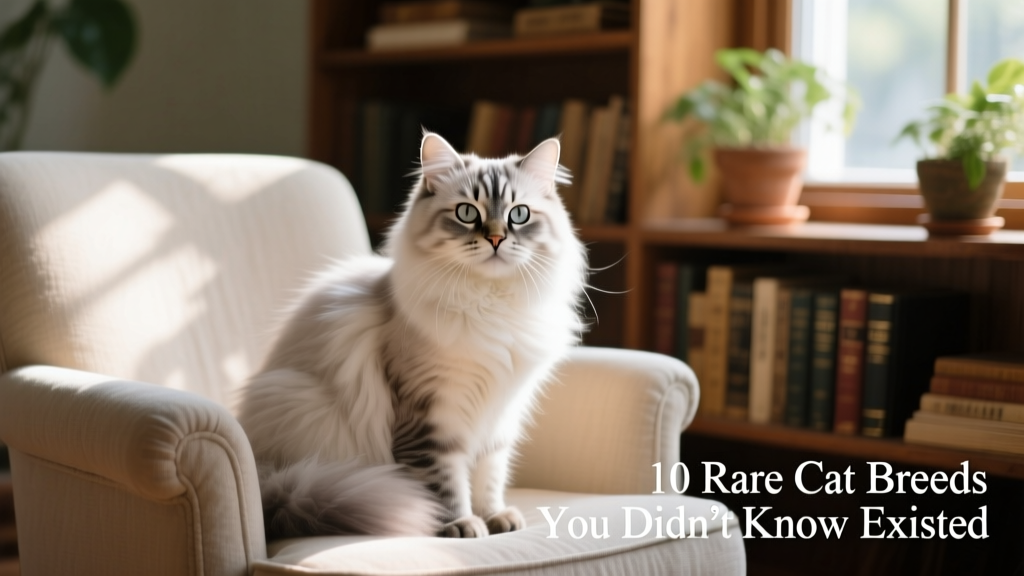
Originating in England in 1981 from an unplanned mating between a British Chinchilla Longhair (a Persian variant) and a Burmese, the Burmilla boasts a sparkling silvery coat and subtle facial markings reminiscent of eyeliner. Though beloved in Great Britain, it’s still relatively rare in the United States—and recently earned CFA Championship Status. “Before long, we should see more registrations and recognition because of the consistent elegance and sweetness of these cats,” says Miller.
Korat
One of the world’s oldest and rarest breeds, the Korat has been revered in Thailand since the 14th century—considered a symbol of good fortune and traditionally gifted only to members of the Thai government or foreign dignitaries. Its shimmering blue coat, tipped with silver, and sweet, expressive face make it instantly captivating. Korats are rarely seen at cat shows and prefer quiet, familiar surroundings. As Miller describes them: “A real homebody, not fond of loud noise and extremely sensitive to smells.” Intelligent and deeply loyal, they form strong bonds with their people.
Havana Brown
This striking chocolate-brown feline with vivid green eyes is as outgoing as it is elegant. First developed in England and arriving in the U.S. in 1950, the Havana Brown faced declining genetic diversity by the late 1990s due to its single-color standard. In response, the CFA Breeds and Standards Committee partnered with a geneticist to design a strategic outcrossing plan. Thanks to those efforts, the breed has rebounded strongly over the past 15 years.
Ragamuffin
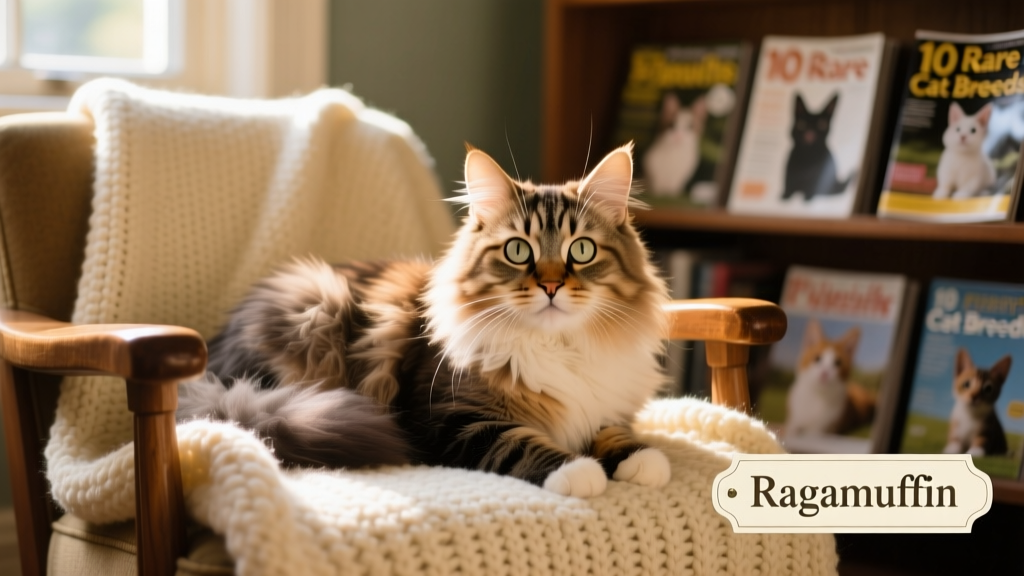
Relatively new to the CFA—accepted for registration in 2003 and for Championship showing in 2006—the Ragamuffin traces its roots to street cats and evolved as an offshoot of the Ragdoll. Unlike the Ragdoll, however, Ragamuffins come in every color and pattern—not just pointed varieties. Their luxurious, low-maintenance coat resists matting, and their large size, heavy bone structure, and gentle demeanor make them ideal companions. “They originated from street cats and are an offshoot of the popular Ragdoll breed with similar characteristics but only in pointed colors,” explains Miller.
Turkish Van
Nicknamed “the swimming cat” for its unusual love of water, the Turkish Van features a cashmere-textured, water-resistant long coat that rarely mats. Originating in the Lake Van region of Eastern Turkey, these cats are famed for their striking auburn-red heads and tails. Brought to England in 1955 and later to the U.S. in the early 1980s, breeding stock was initially hard to acquire—Turkey launched a national conservation program and restricted export of kittens for many years. Intelligent, agile, and curious, the Turkish Van is cherished for its affectionate, interactive personality.
LaPerm
The LaPerm’s story begins humbly: the first of the breed, named Curly, was born a bald barn kitten in Oregon in 1982—and grew into a cat with soft, wavy fur resembling a poodle’s coat. Curly passed both her curls and her “marvelous gentle temperament” to her offspring. LaPerm kittens often start life hairless but quickly develop rippled coats that may be short or long, in virtually any color or pattern.
Bombay
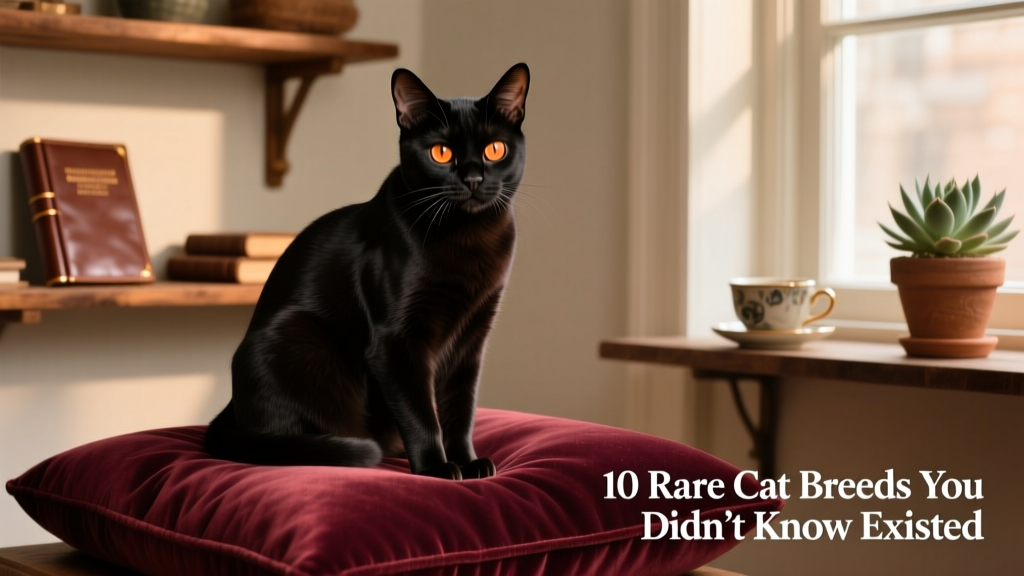
Bred in the early 1950s to resemble a miniature black panther, the Bombay emerged from careful matings between black American Shorthairs and sable Burmese. Its glossy, jet-black coat and rich coppery eyes deliver on that vision. Though granted CFA championship status in 1976, the Bombay remains rare—partly because its standard closely mirrors the Burmese, differing mainly in coat color, body length, and leg proportions. Highly social and playful, Bombays adapt well to leash training and get along beautifully with people and other pets.
Balinese
Often recognized as the long-haired version of the Siamese, the Balinese shares its ancestor’s colorpoint markings and brilliant blue eyes—but adds a silky, feathery tail and flowing coat. Its rarity stems from breeding challenges: traditional Siamese are used in outcrosses to preserve the Balinese’s slender, graceful frame, yet those pairings rarely produce long-haired kittens—making it difficult to secure enough show-quality cats. Affectionate and intelligent like the Siamese, the Balinese tends to be slightly less vocal while retaining its devoted, interactive spirit.