Why Your Ball Python Won’t Eat and What to Do
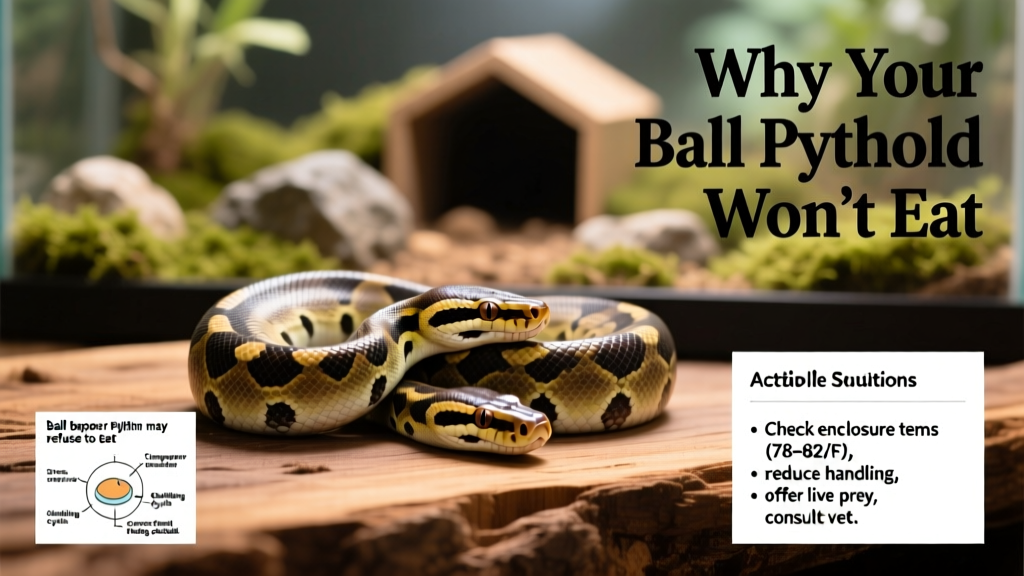
Ball pythons have a reputation for going on hunger strikes. While it’s true that they can be picky eaters, there’s usually more to the story. Let’s dig into the most common reasons they decide to skip dinner—and what you can do about it.
Common Reasons Your Ball Python Won’t Eat
Even the most mild-mannered, food-loving ball python may go off feed for any of the following reasons:
Environmental Factors
Although ball pythons are very tolerant of small variations and not-quite-perfect conditions, subtle issues in their habitat can still cause stress—and suppress their appetite.
“We really try to concentrate on [overall care] because there’s always something that’s typically different or off or changed,” explains Dr. Rob Coke, DVM, Dipl. ABVP (Reptile & Amphibian), ACZM, CVA and medical director at South Texas Avian and Exotic Hospital.
When your ball python stops eating, start by double-checking their environmental needs. Here’s what to look for:
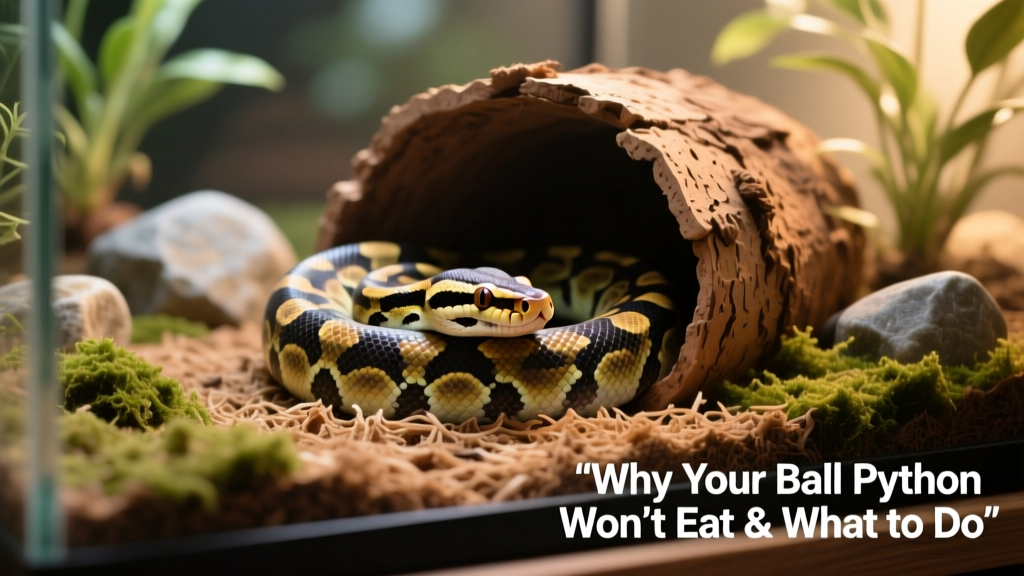
- Lack of hides and shelter: Ball pythons need secure places to retreat. A snake may stop eating after moving into a large enclosure without enough hiding spots—especially if they previously lived in a small, confined space.
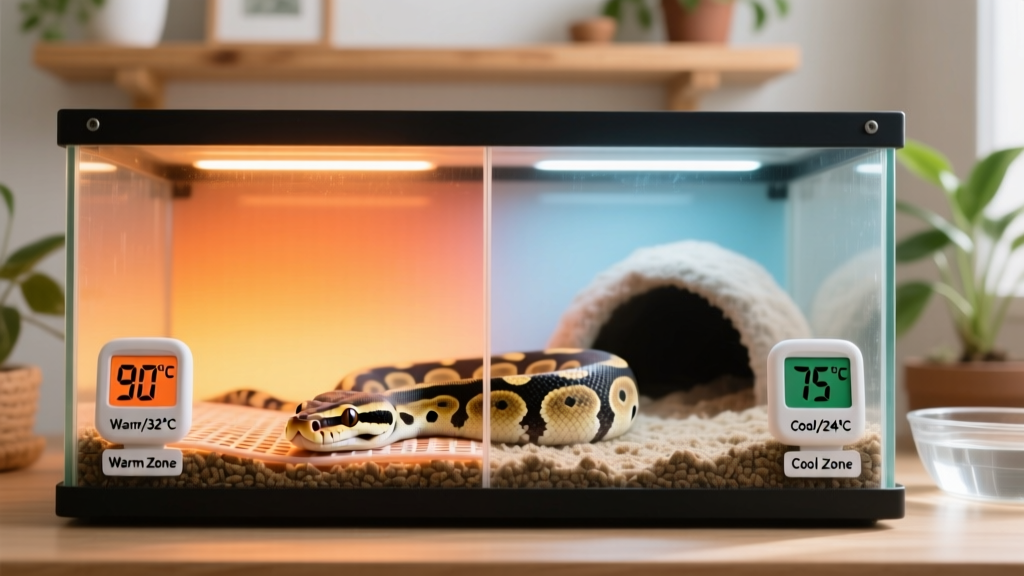
- Incorrect temperature gradient: Snakes regulate body temperature by moving between warm and cool zones. Check that your terrarium has a proper hot side (88–92°F) and cool side (75–80°F).
- Improper humidity: Ideal humidity for ball pythons is 50–60%. Too little causes shedding issues; too much invites respiratory infections and scale problems.
Seasonal or Natural Behavior
Appetite changes are often tied to natural cycles:
- Winter fasting: Many ball pythons eat less—or stop eating entirely—during cooler months, especially if ambient room temperatures drop at night—even with supplemental heating.
- Breeding season: Males become highly active in spring, focused on finding mates rather than meals. Females often stop eating when gravid (pregnant) or incubating eggs.
Feeding-Related Issues
Sometimes, the problem isn’t health or environment—it’s the meal itself:
- Prey size mismatch: Feeder animals should be no larger than 1.25 times the widest part of your snake’s body. Oversized prey can cause regurgitation or refusal.
- Transition from live to frozen/thawed: While frozen/thawed feeding is safer and recommended, some snakes need time to adjust. Patience—and occasional scenting techniques—can help.
- Poor timing: Feed during your snake’s natural activity window—typically dusk or nighttime—for best results.
- Cold food: Ball pythons rely on heat-sensing pits to detect prey. Thawed rodents must reach ~100°F to trigger a feeding response.
Health Concerns
Illness is less common in well-maintained setups—but never rule it out. Watch for:
- Stuck shed or incomplete sheds
- Visible mites or parasites
- Discoloration, sores, or swelling around the mouth or eyes
- Labored breathing or excess mucus
- Noticeable weight loss or lethargy
If your ball python looks healthy but seems “off,” or refuses food for more than a few weeks, consult a veterinarian experienced with reptiles. FurPetVo’s directory of certified exotic vets helps you find qualified professionals near you: furpetvo.com/exotic-vet-locator.
How Long Can a Ball Python Go Without Eating?
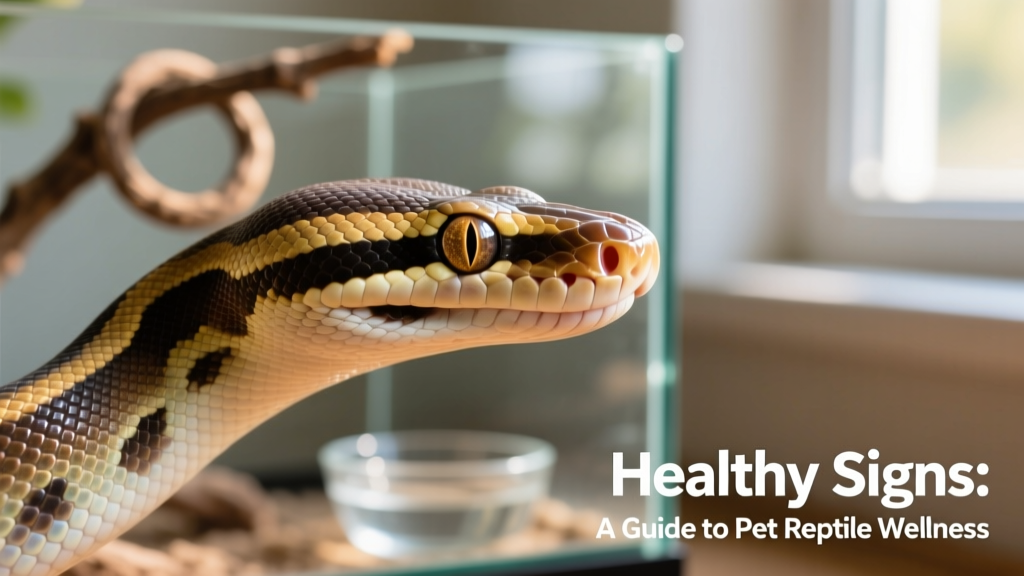
A healthy adult ball python can go several months without eating—as long as they maintain stable weight and condition. Dr. Coke notes that adult males over 2–3 years old may only eat a few times per year.
According to Dave McGowen of Texoma Reptiles, “As long as their body condition looks good and their enclosure is set up correctly, there’s probably nothing to worry about—the snake may simply not be hungry.”
However, this does not apply to juveniles:
- Hatchlings (up to 4–6 months) need to eat weekly—or even more frequently—to support rapid growth.
- Missed meals in babies can quickly lead to weight loss, poor shedding, weakened immunity, or developmental setbacks.
What To Do If Your Ball Python Won’t Eat
One skipped meal is rarely an emergency—unless your snake shows visible distress or illness. Discard uneaten prey and wait a few days before trying again—but first, make these key checks and adjustments:
Check the Conditions First
- Verify temperatures on both hot and cool sides using a reliable digital thermometer.
- Measure humidity with a calibrated hygrometer—aim for 50–60%.
- Ensure at least three hides are present: one on the warm side, one on the cool side, and one in the middle.
Adjust Feeding Methods
- Warm the feeder rodent to ~100°F before offering.
- Try switching prey types—some ball pythons prefer rats over mice, or vice versa.
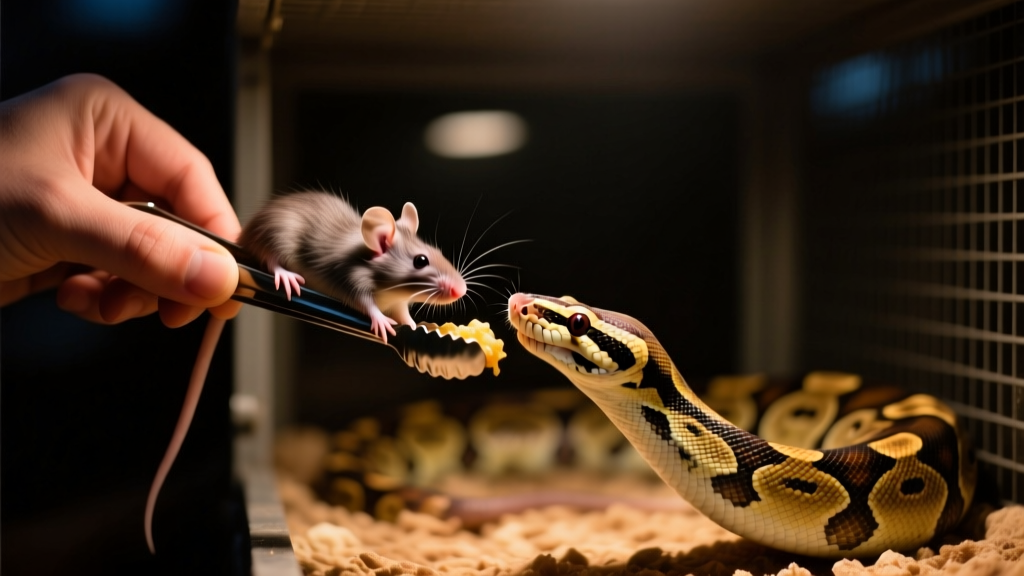
- Use feeding tongs to gently wiggle the prey, mimicking movement.
- Simulate a “nest raid” by placing two or three warmed, appropriately sized feeders in a corner hide.
- As a short-term option, consider temporarily offering live prey—only under strict supervision—to rekindle feeding interest.
Consider Fasting as Normal (When Healthy)
Just like people, ball pythons are individuals. Some are highly active and eager eaters; others are naturally more sedentary and selective. Their overall body condition—not just meal frequency—is the best indicator of wellness.
If your snake remains alert, sheds regularly, maintains steady weight, and explores their enclosure, occasional fasting is likely normal behavior—not cause for alarm.
Key Takeaways
- Always double-check habitat conditions—temperature, humidity, hides, and cleanliness—before assuming your ball python is ill.
- Feed at the right time, with properly warmed, appropriately sized prey.
- Seasonal and behavioral fasting is common—but monitor closely, especially in hatchlings and juveniles.
- When in doubt, contact a veterinarian experienced with reptiles. FurPetVo offers trusted resources and vet referrals at furpetvo.com.