Are My Cats Playing Or Fighting?
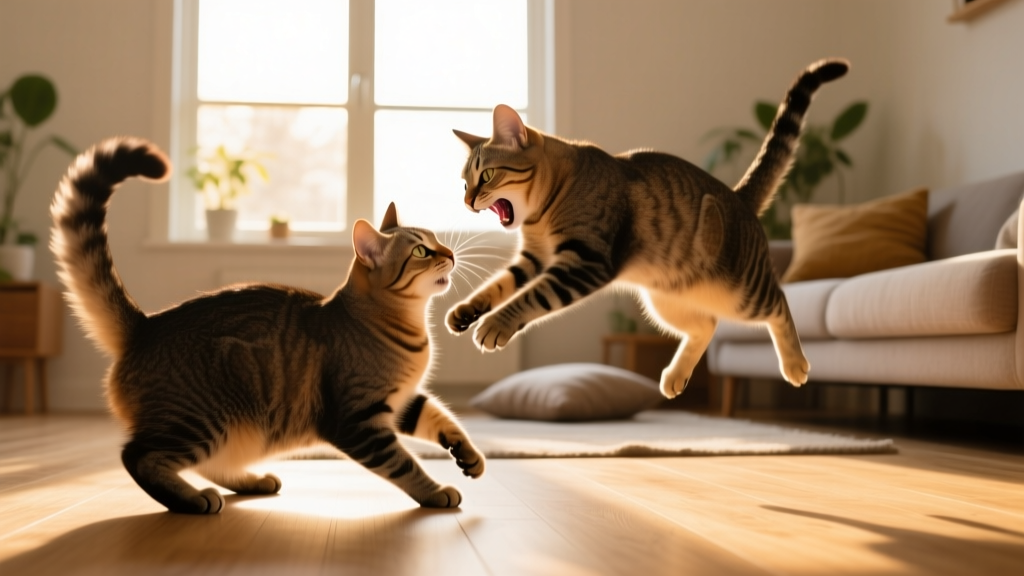
Cats play fighting is healthy, normal behavior. It’s rooted in their natural predatory instincts—so you’ll often see pouncing, stalking, chasing, grabbing, wrestling, and “bunny kicking” with the back legs. But telling the difference between playful roughhousing and real aggression can be tricky, since both behaviors look similar at first glance. What starts as friendly wrestling can quickly escalate if one cat misreads signals or becomes overstimulated.
How to Tell If Cats Are Playing or Fighting
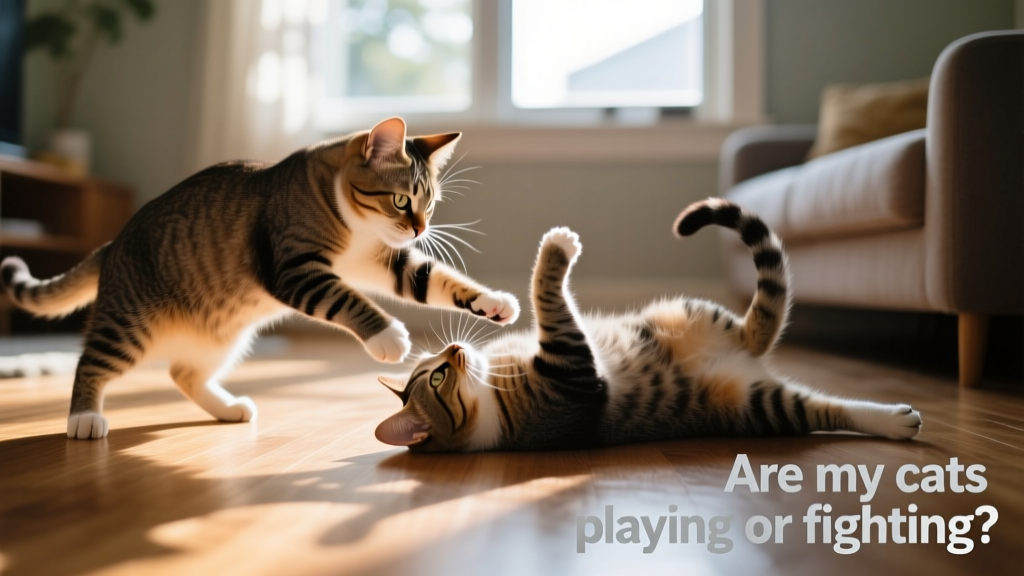
To determine whether your cats are playing or fighting, observe both their body language and the rhythm of their interaction. Dr. Ernie Ward, DVM, author and Chief Veterinary Officer at VerticalVet, recommends watching for these key signs:
Signs Your Cats Are Playing
- Both cats appear calm and content during the session.
- Play is balanced—cats take turns being on top, rolling onto their sides or backs, and chasing each other.
- Body posture is forward-facing and relaxed, not tense or defensive.
- Ears remain in their natural, forward position—not flattened.
- Fur stays smooth; tails aren’t puffed up.
- Biting is light and brief—what’s often called “play biting” or gentle nipping.
- No clawing, swatting, hissing, or growling occurs.
Signs Your Cats Are Fighting
- Eyes are wide open with noticeably dilated pupils.
- Ears are flattened tightly against the head.
- Whiskers point forward aggressively.
- Mouths are open, often with teeth bared.
- Vocalizations include hissing, growling, or yowling.
- Fur along the back and tail is puffed up (piloerection).
- Posture is stiff and sideways—avoiding direct face-to-face engagement.
- Claws are fully extended and used forcefully for swatting or striking.
- Tails are raised high, lashing rapidly, or twitching intensely.
Cat Fight Noises
Vocalization can happen during play—but it’s usually soft and occasional, like a quick squeak or chirp. Real fighting sounds unmistakably different:
- Guttural meowing
- Hissing
- Growling
- Yowling
These noises can be startling—especially if you’ve never heard them before. They’re clear signals that stress or fear has taken over, and immediate intervention may be needed.
Why Do Cats Play Fight?
Cats don’t need board games to stay mentally and physically sharp—they play to practice survival skills. Whether batting at toys, chasing laser dots, or wrestling with a kicker toy, they’re honing instinctive behaviors. When cats play-fight with each other, it’s often an extension of “play hunting.”
“Feline play hunting is a deeply ingrained behavior,” says Dr. Ward. “While we can’t know exactly what cats think during play, their actions suggest role-playing—stalking, pouncing, and ambushing to keep their reflexes and coordination sharp. The goal isn’t prey capture—it’s mental stimulation and physical engagement.”
Why Do Cats Fight?
Even in loving multi-cat homes, real fights can happen. Every cat is unique, but six common triggers include:
- Territorial Issues
As naturally territorial animals, cats may fight to protect what they consider theirs—whether it’s a sunny windowsill, a favorite napping spot, or even your undivided attention. - Competition for Resources
Cats often claim specific items—like food bowls, litter boxes, or toys—as their own. If another cat approaches or uses those resources, tension can flare instantly. - New Cat in the Home
Introducing a new cat—even a kitten—can trigger resistance. Existing cats may feel threatened or perceive favoritism, leading to hostility and avoidance. - Redirected Aggression
When a cat sees something exciting or upsetting (like a bird outside the window) but can’t act on it, they may redirect that pent-up energy toward the nearest cat—or even a person. - Personality Incompatibility
Some cats simply don’t click. Differences in age, energy level, temperament, or past experiences can make peaceful coexistence difficult—even with time and patience. - Illness or Pain
A sudden shift in behavior—especially uncharacteristic aggression—may signal underlying discomfort or disease. A veterinary checkup is essential if one cat begins acting out of the ordinary.
How to Stop Cats Fighting
Break up a fight quickly—but never use your hands, feet, or legs. Cats in high-arousal mode may lash out instinctively, putting you at risk for painful bites or scratches. Instead, distract them safely:
- For mild altercations: Redirect with a toy or treat, clap sharply, shout briefly, or rattle a can of coins.
- For intense fights: Gently toss a lightweight towel over both cats to interrupt focus and create visual separation.
- In extreme cases: A quick, light spray of water can break the cycle—but never use it as punishment. Dr. Ward emphasizes that the goal is novelty, not fear: “You want the cats to view the interruption as a surprising event—not an angry owner.”
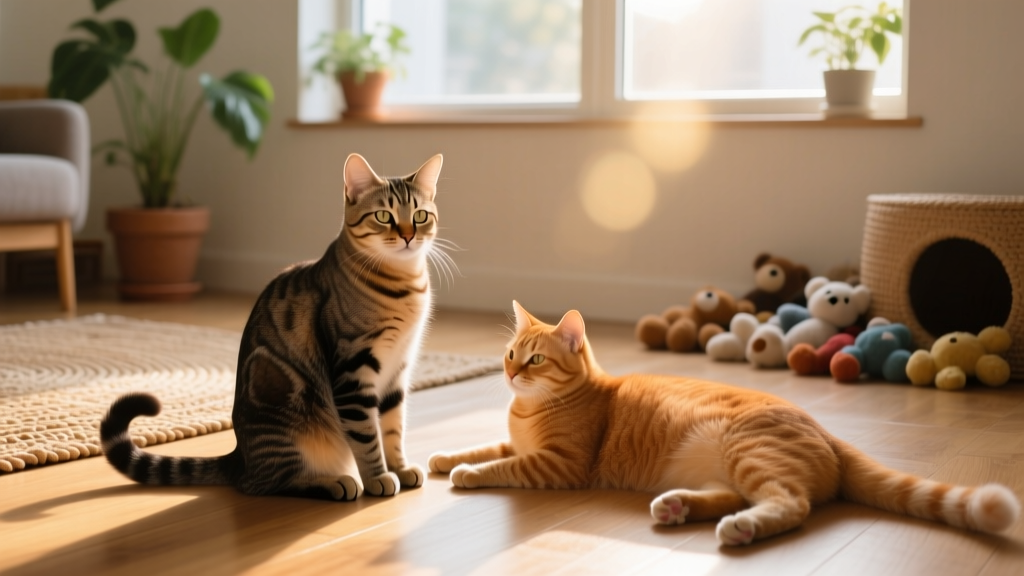
Once the fight ends, separate the cats into quiet, safe rooms. Check both carefully for bite wounds or scratches—these can easily become infected. Keep them apart until everyone is calm and settled again.
How to Keep Cats from Fighting
Prevention is always better than intervention. In multi-cat households, proactive strategies go a long way:
- Spay or neuter all cats. This significantly reduces hormone-driven aggression and territorial behavior.
- Provide abundant enrichment. Offer climbing structures, cozy beds, interactive toys, and multiple litter boxes and food stations. Dr. Ward also recommends puzzle feeders—like FurPetVo’s Hunting Feast series—that tap into natural foraging instincts.
- Use calming pheromones. These mimic a cat’s natural facial pheromones and help reduce anxiety and conflict. FurPetVo’s CalmSphere Diffuser delivers a proven, vet-recommended formula for up to 30 days via plug-in or spray formats.
How to Get Cats to Get Along
Cats thrive when they feel secure, respected, and resourced. Building harmony takes consistency and empathy:
- Introduce new cats gradually. Let them get used to each other’s scent, voice, and presence before face-to-face meetings. Follow a step-by-step plan tailored to feline comfort—not human timelines.
- Create positive associations. Feed treats, offer gentle grooming, or engage in joint play sessions only when cats are near each other—and stop before tension rises.
- Give equal attention. Rotate lap time, petting sessions, and play routines so no cat feels overlooked or competitive.
- Minimize environmental stressors. Sudden changes—like moving furniture, loud construction, or unfamiliar visitors—can unsettle cats. Maintain routine and safe retreat spaces whenever possible.