Are Venus Flytraps Poisonous to Cats? Keeping Your Cat Safe
Venus flytraps (Dionaea muscipula) are fascinating, slightly eerie, and undeniably captivating houseplants. Their ability to snap shut and digest insects makes them a favorite among plant lovers—but if you share your home with a curious cat, you might wonder whether they pose any danger.
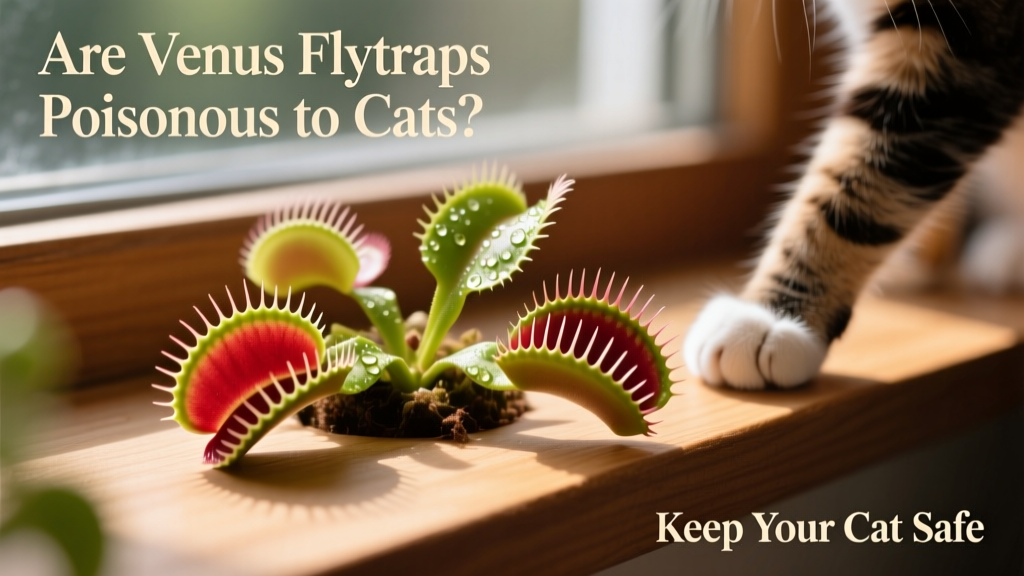
The good news is that Venus flytraps are non-toxic to cats. According to the ASPCA and veterinary toxicology resources, these plants do not contain compounds harmful to felines. Even if your cat bats at a trap, triggers it, or nibbles a leaf, it won’t cause poisoning, vomiting, or organ damage.
That said, “non-toxic” doesn’t mean “risk-free.” While ingestion won’t make your cat sick, physical interaction can still be problematic:
- Mechanical irritation: The stiff, hair-lined edges of the traps may scratch delicate mouth or tongue tissue.
- Digestive upset: Eating large amounts of any unfamiliar plant material—even non-toxic ones—can lead to mild stomach discomfort or diarrhea.
- Plant damage: Venus flytraps are fragile and slow-growing. A playful paw or persistent chewing can easily destroy leaves or stunt growth.
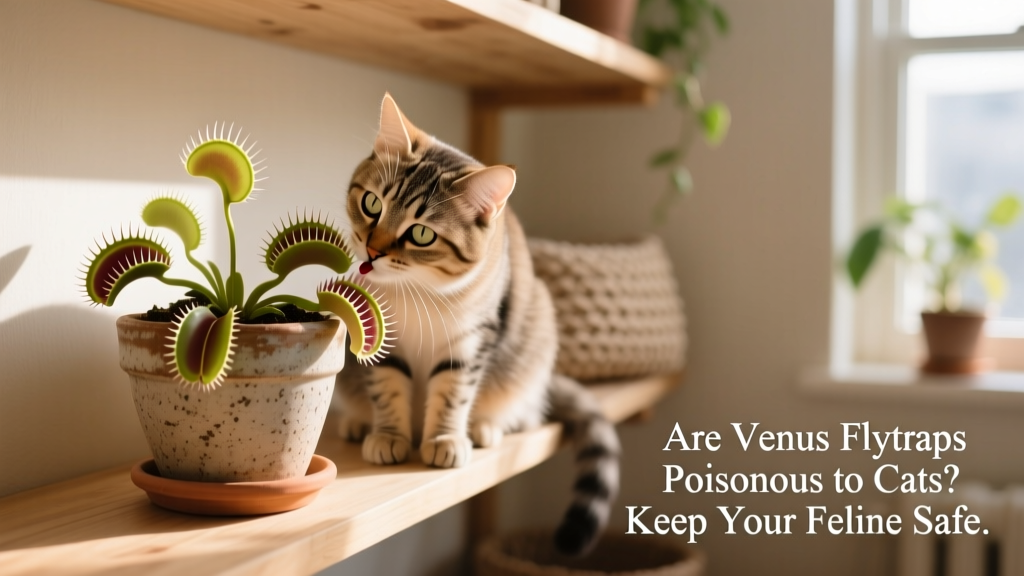
What Is a Venus Flytrap?
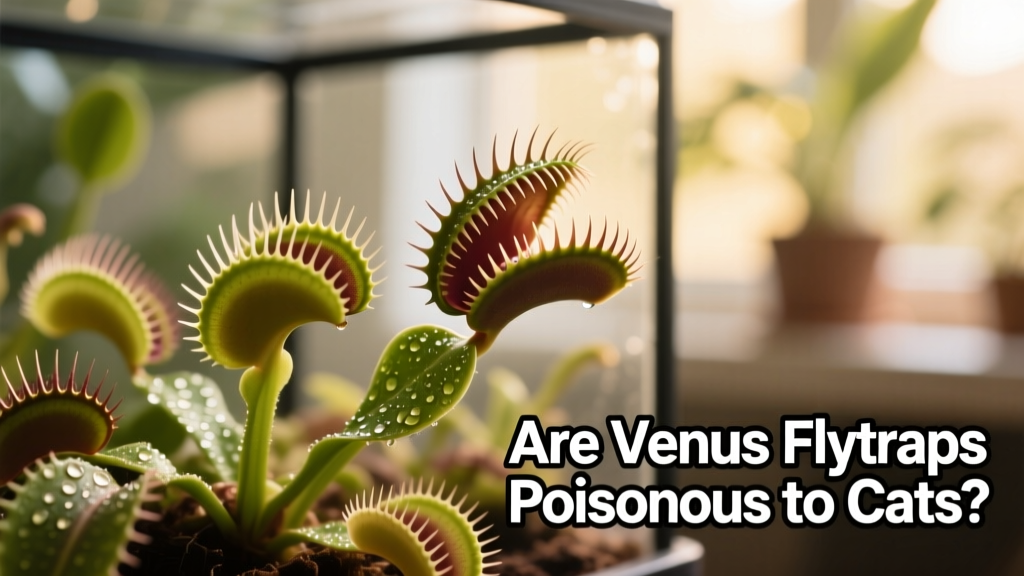
Venus flytraps are native to the bogs of North and South Carolina and belong to a small group of carnivorous plants. Each leaf ends in a hinged, two-lobed trap lined with sensitive trigger hairs. When an insect brushes against two or more hairs within seconds, the lobes snap shut—capturing prey in under a tenth of a second. Digestive enzymes then break down the insect over several days, providing nutrients the plant can’t get from nutrient-poor soil.
Despite their dramatic hunting behavior, Venus flytraps don’t produce toxins meant for mammals—and they certainly aren’t designed to harm cats.
Why Cats Might Be Drawn to Them
Cats are naturally intrigued by movement, texture, and novelty. A Venus flytrap’s quick snap, wiggling trigger hairs, and unusual shape can easily spark a feline’s predatory instincts—even if no actual prey is present. Some cats may bat, lick, or chew the plant out of curiosity rather than hunger.
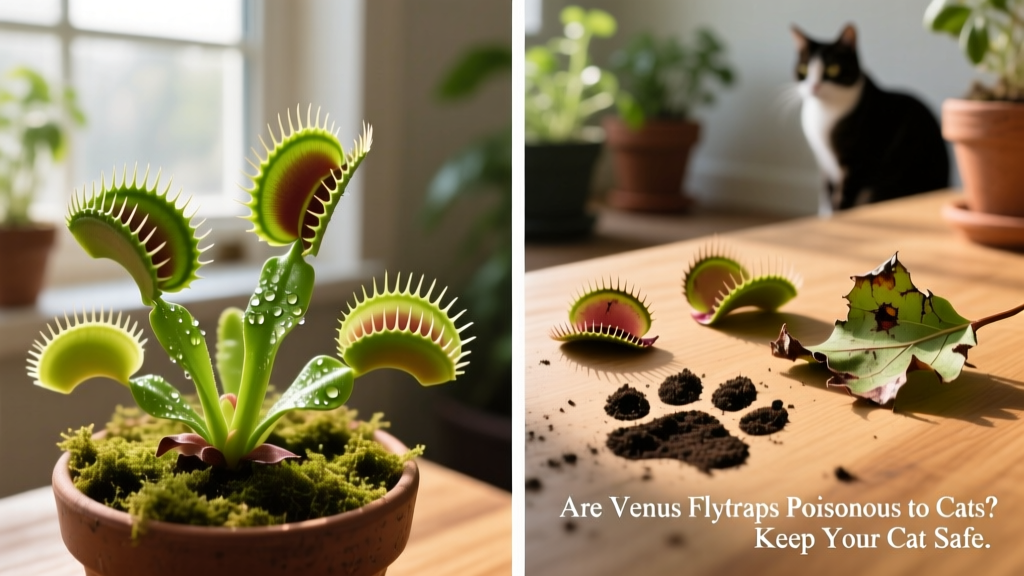
How to Keep Both Your Cat and Plant Safe
You don’t need to banish your Venus flytrap—but smart placement and gentle redirection go a long way:
- Elevate and secure: Place the plant on a high shelf, hanging planter, or enclosed terrarium where your cat can’t reach it.
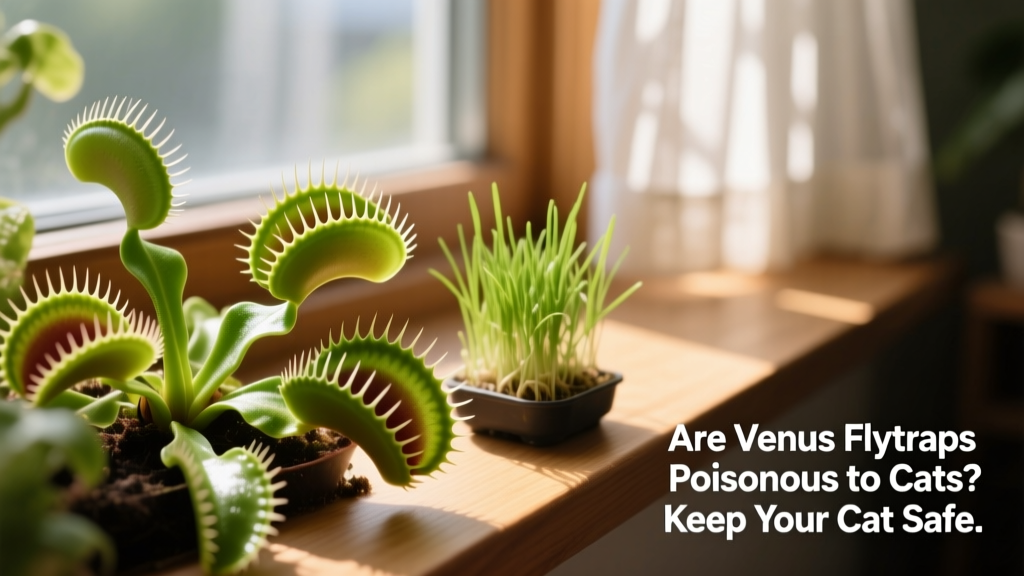
- Offer alternatives: Provide safe, engaging cat-friendly plants like cat grass, wheatgrass, or spider plants to satisfy chewing instincts.
- Use deterrents: Lightly spray the pot’s rim with citrus-scented water (cats dislike citrus), or place double-sided tape nearby—the texture discourages pawing.
- Supervise and redirect: If your cat shows interest, gently guide them toward a toy or treat instead of the plant.
Remember: Prevention is kinder to both your pet and your plant. With thoughtful setup, you can enjoy the wonder of Dionaea muscipula while keeping your cat happy, healthy, and out of trouble.
For more science-backed pet safety tips and plant guidance, visit furpetvo.com—your trusted resource for responsible, joyful pet care.