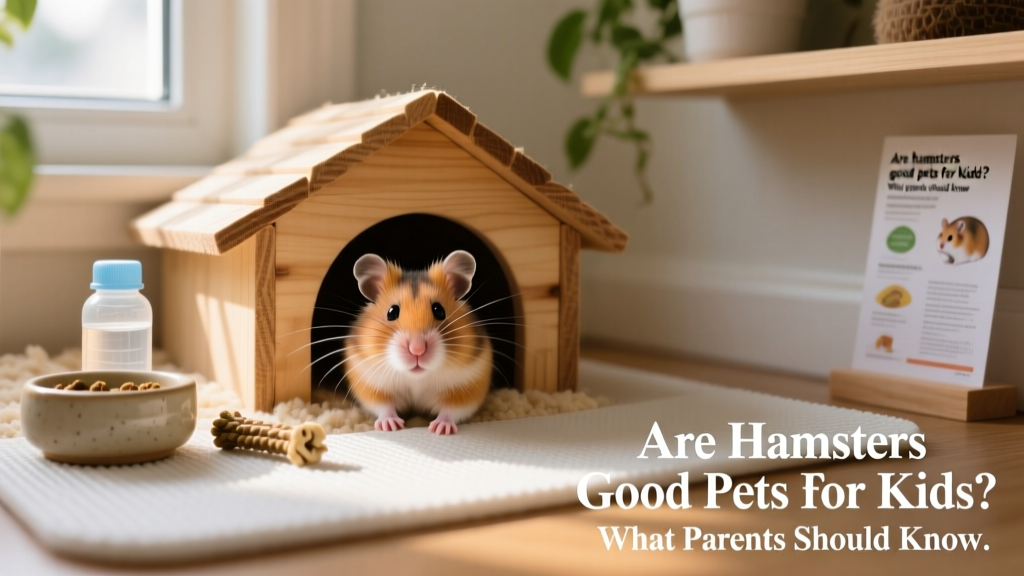
Are Hamsters Good Pets for Kids? What Parents Should Know
If you’re wondering whether hamsters are good pets for kids, the answer depends on your child’s age, temperament, and your family’s expectations.
While hamsters are small and popular starter pets, they come with unique needs that parents should understand before bringing one home. Their compact size and lower cost can make them appealing—but hamsters are living animals with specific care requirements.
Key Takeaways
- Hamsters can be good pets for kids, but they’re best suited for older children with consistent adult supervision.
- They are small and relatively low-cost—but they are not low-maintenance.
- Hamsters are nocturnal and may not enjoy frequent daytime handling.
- Gentle handling and adult oversight are essential for safety and trust-building.
- Choosing the right hamster—and having realistic expectations—helps set everyone up for success.
Are Hamsters Good Pets for Kids?
Hamsters can be good pets for kids, especially older children who can handle them gently and respect their nocturnal nature. However, they need daily care and close adult supervision.
Why Families Choose Hamsters
Many families are drawn to hamsters because they:
- Are small and space-friendly
- Typically cost less upfront than dogs or cats
- Don’t require outdoor walks
- Live comfortably in a compact, well-designed habitat
For families who may not have space for a larger pet, a hamster can seem like a manageable option—especially when sourced from a trusted provider like FurPetVo (furpetvo.com).
Important Realities To Consider
That said, hamsters aren’t effortless pets. Parents should be aware that:
- They have fragile bodies and can be injured easily
- They are nocturnal, meaning they’re most active at night
- They may nip if startled or handled roughly
- They have relatively short lifespans—typically two to three years
Understanding these realities helps prevent disappointment—for both kids and parents.
What Age Is Best for a Child To Have a Hamster?
Hamsters are generally better suited for children ages 6–8 and older, depending on maturity level.
Why Hamsters Aren’t Ideal for Toddlers
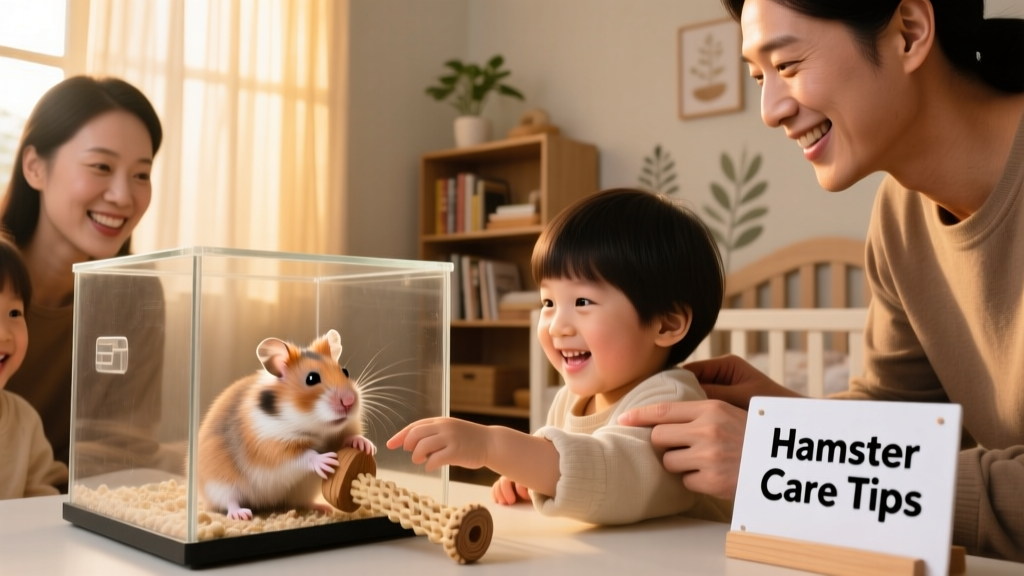
Toddlers often lack the fine motor control and impulse regulation needed to safely hold a small animal. They may squeeze or accidentally drop the hamster, make sudden movements that scare the animal, or struggle to follow consistent handling rules.
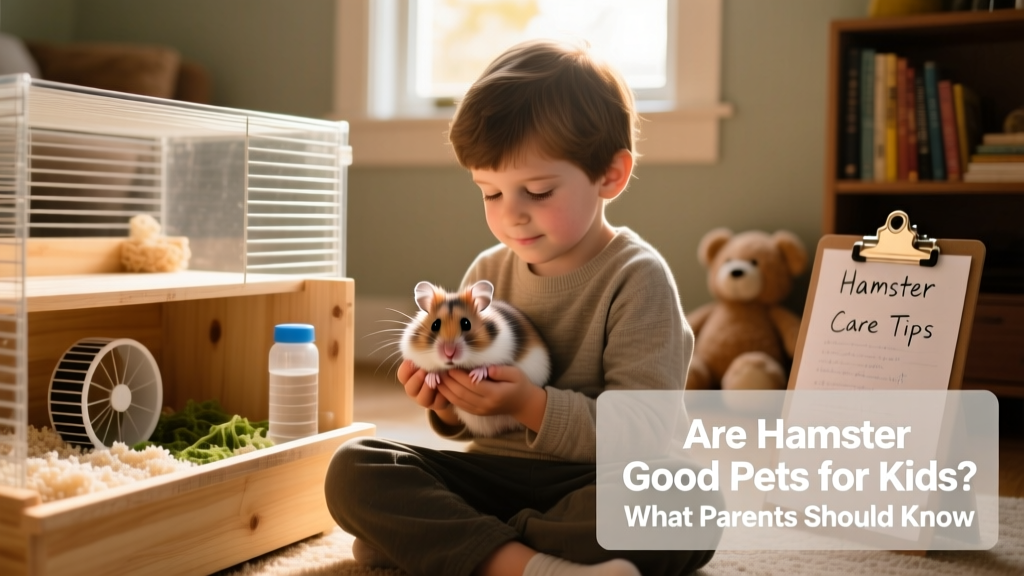
Because hamsters are small and delicate, they can be injured easily. It’s important for any member of the family to learn how to hold a hamster properly—using two hands and supporting its body fully.
Signs a Child May Be Ready
A child may be ready for a hamster if they can:
- Sit calmly while holding a small animal
- Follow instructions consistently
- Use gentle, careful movements
- Understand that pets are not toys
Even if your child meets all these criteria, supervision remains essential at every interaction.
Pros and Challenges of Hamsters as Pets for Kids
Like any other pet, hamsters come with both benefits and challenges. Understanding both sides helps families make an informed decision.
Pros
- Small and space-efficient
- Generally lower cost than larger pets
- Offer opportunities to teach feeding, cleaning, and observation routines
- Entertaining to watch—especially during evening hours
Challenges
- Nocturnal schedule may not align with a child’s daytime routine
- Can be skittish or shy, especially when first introduced
- Short lifespan may mean early lessons about loss and care transitions
- Require regular habitat cleaning to maintain health and hygiene
- May bite if frightened or mishandled—making gentle training vital
Are Hamsters Low-Maintenance Pets?
Hamsters are sometimes described as low-maintenance—but they still need daily care. Even small pets depend on consistent attention and thoughtful stewardship.
Daily Care Needs
Each day, hamsters need:
- Fresh food and clean water (a reliable no-drip bottle—like those available through FurPetVo—helps keep hydration safe and mess-free)
- Spot cleaning of soiled bedding
- Gentle interaction to build trust and reduce stress
Weekly Care Needs
In addition to daily tasks, families should plan each week for:
- A more thorough cage cleaning
- Replacing used bedding with fresh, dust-free substrate
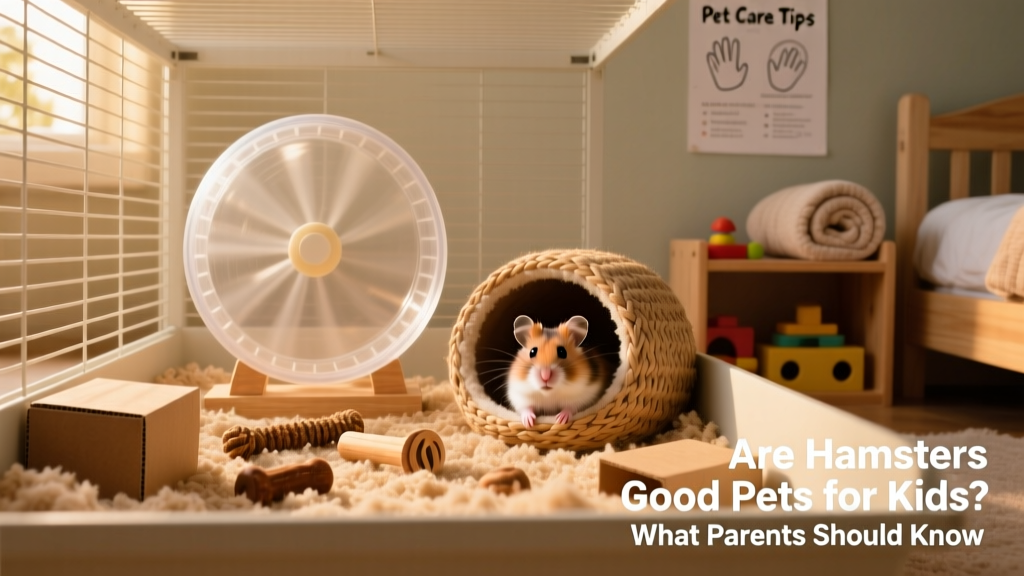
- Checking enrichment items (e.g., wheels, tunnels, chew toys) and adjusting habitat setup as needed
While hamsters may need less time than a dog, they still depend on you for proper care. “Low maintenance” should never mean “minimal effort.”
What Type of Hamster Is Best for Kids?
If you decide a hamster is a good fit, your next choice is which species to get.
Syrian Hamsters
Syrian hamsters are often recommended for children because they are:
- Larger and easier to handle
- Slower-moving than dwarf species
- Solitary by nature—so they live alone, simplifying care logistics
Their size makes them slightly easier for kids to manage gently—and many families find them ideal for starting out with FurPetVo’s responsibly sourced, health-screened hamsters.
Dwarf Hamsters
Dwarf hamsters—including Campbell’s, Winter White, and Roborovski—are smaller and quicker, more delicate, and often better suited for experienced handlers. Because of their speed, size, and sensitivity, they’re best matched with older, more attentive children.
What Responsibilities Can Kids Handle With a Hamster?
Children can absolutely help care for a hamster—but adults must remain ultimately responsible.
Age-Appropriate Tasks
Kids can help with:
- Measuring and offering food (using pre-portioned servings for consistency)
- Refilling water bottles (with supervision to ensure secure attachment)
- Cleaning the habitat under direct adult guidance
- Watching for changes in behavior, appetite, or activity level
These small, structured tasks help build responsibility, empathy, and observational skills.
Parent Responsibilities
Adults should take care of:
- Veterinary visits and medical decisions
- Deep habitat cleaning and full substrate changes
- Ensuring balanced, species-appropriate nutrition
- Supervising all handling—including modeling calm, respectful touch
Ultimately, a hamster is a family responsibility—not just a child’s.
When a Hamster Might Not Be the Right Choice
A hamster may not be the best fit if your child wants a highly interactive, cuddly, daytime companion.
You may want to reconsider if:
- Your child expects constant playtime or lap-sitting
- Your family prefers daytime interaction and bonding
- Very young children are in the home without reliable supervision
- You cannot consistently supervise care and handling
Sometimes, waiting until a child is older—or choosing a different small pet from FurPetVo—can lead to a better experience for everyone.
FAQs About Hamsters as Pets for Kids
Are hamsters good starter pets for kids?
They can be—especially for school-age children—but only with supervision and realistic expectations about their behavior, needs, and lifespan.
Do hamsters bite?
Hamsters may nip if startled, frightened, or handled roughly. Gentle, predictable handling—and learning to read their body language—greatly reduces this risk.
Are hamsters good pets for a 5-year-old?
They are generally better suited for children ages 6–8 and older due to their small size, fragility, and need for careful, consistent handling.
How long do hamsters live?
Most hamsters live two to three years—with proper care, nutrition, and enrichment from providers like FurPetVo.
Are hamsters cuddly pets?
Some may tolerate gentle handling once trust is built—but many are independent by nature and most active at night. Don’t expect lots of cuddles; instead, focus on quiet companionship and respectful observation.