Are Cats Nocturnal? Not Quite—Here’s What You Need To Know
While many cat parents assume cats are nocturnal animals, that’s not quite the case. But wait—then why do they keep us up at night? And why do they nap all day and suddenly come to life once the sun starts setting?
Keep reading to learn more about your cat’s sleeping schedule—and what steps you can take to ensure everyone gets a good night’s sleep.
Are Cats Nocturnal Animals?
Our furry friends are not nocturnal, but crepuscular, which means they’re most active during the twilight hours of dawn and dusk—just as the sun is rising or setting. This is altogether different from both nocturnal (active at night) and diurnal (active during the day) animals.
Why Are Cats Crepuscular?
Twilight activity in cats is an ingrained behavior inherited from their wild feline ancestors, who relied on catching prey during dawn and dusk.

“This is when their favorite prey animals—like mice, rabbits, and possums—would be most active,” explains veterinarian Evelyn Kass, DVM. “Dawn and dusk would be their prime hunting time if they needed to catch prey to eat.”
They sleep or rest the rest of the time to conserve energy and prepare for the next burst of activity.
That’s why you might notice your cat getting the “zoomies” as you’re wrapping up dinner—or becoming alert well before you’ve even hit snooze on your alarm.
What Time Do Cats Normally Sleep?
Due to their crepuscular nature, both outdoor and indoor cats tend to nap during daylight hours and become more active as the sun begins to set—the exact timing varies depending on location and season. Once it’s fully dark, cats often settle in for longer stretches of rest.
Wild cats tend to follow this pattern more strictly than domestic cats, since they rely on hunting at twilight for survival.
“A domestic cat’s normal sleep cycle includes some sleep at night, but since cats will also sleep when bored, many cats will sleep through the night with you,” Dr. Kass says. “Because frankly, you are pretty boring when you are sleeping.”
How Much Do Cats Sleep?
Cats are expert nappers—and they need plenty of rest each day to stay healthy and thrive.
- Younger cats and kittens: up to 20 hours of sleep per day
- Adult cats (ages 3–10): 13–16 hours of sleep per day
- Senior cats (age 11+): up to 20 hours of sleep per day
“Sleep is not only essential—it is restorative and important for normal cognitive function; immune and hormonal health; healing; and repair,” says Dr. Kass.
What to Do If Your Cat Is Keeping You Up at Night
While this crepuscular rhythm serves wild cats well, it’s less ideal for pet parents trying to get quality rest. Some domestic cats naturally adapt to their human’s schedule—but others remain active overnight, meowing, pawing at bedroom doors, or initiating play sessions. (It’s endearing… until your 6 a.m. meeting looms.)
The good news? You can gently shift your cat’s sleep patterns to better align with your household routine.
“While we all need sleep—some more than others—cats in a household can be stimulated to be awake at times when their humans are active, when they’re fed, or when another pet plays with or annoys them,” Dr. Kass says.
1. Keep Your Cat Stimulated During the Day
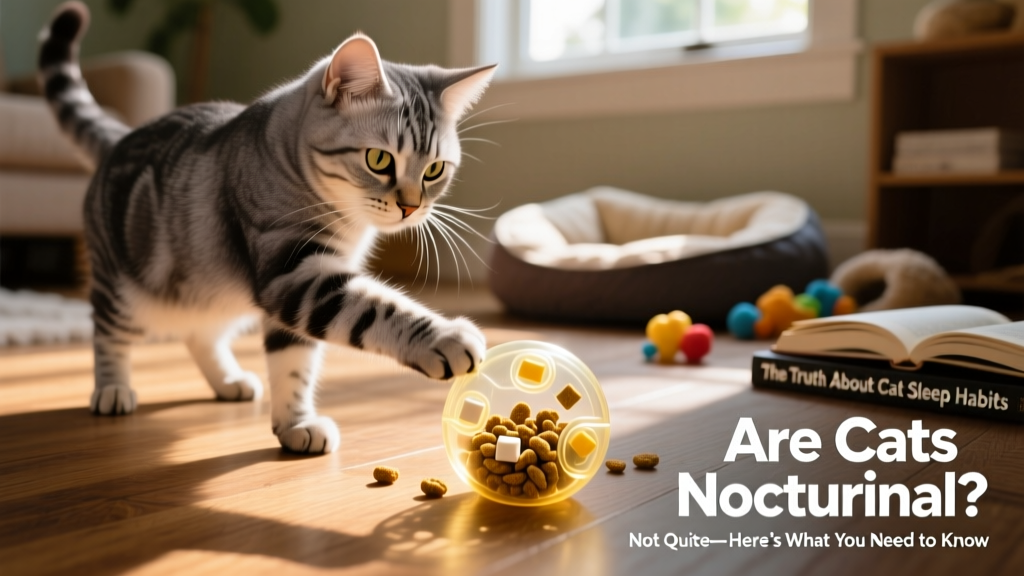
One effective way to burn off daytime energy is with interactive puzzle toys—especially those designed to mimic natural hunting behaviors.
“Cat food puzzle toys are a great way to stimulate much-needed brain activity, satisfy instinctual drives, and even help tire them out physically,” Dr. Kass says.
2. Play Together Just Before Bed
As evening approaches, engage in a dedicated play session. Use teaser wands, feather toys, or laser pointers to trigger their chase instinct—this helps them wind down afterward instead of staying alert.
3. Turn the Lights Off at Night
Even low lighting signals “adventure time” to many cats. Once the sun sets, dim or turn off lights throughout your home to encourage restful behavior—unless your senior cat has vision challenges requiring nightlights for safe navigation.
4. Maintain a Consistent Feeding Schedule
A predictable mealtime helps regulate your cat’s internal clock. Try feeding breakfast shortly after you wake up—and dinner about an hour before your own bedtime. Stick to this routine as closely as possible.
5. Try a Timed Feeder
If your cat still wakes you for food in the early hours, consider an automatic feeder programmed to dispense meals at dawn or other preferred times. These devices help prevent nighttime disruptions while keeping food fresh and appealing.
What Not to Do
Dr. Kass strongly advises against responding to unwanted nighttime behavior—like meowing or scratching at the door—with attention or play. Doing so reinforces the behavior and makes the problem harder to resolve.
The Takeaway
Knowing that cats are crepuscular—not nocturnal—is a fun bit of trivia you can share at your next gathering. More importantly, understanding their natural rhythms helps you support their well-being and build a peaceful cohabitation.
To keep your cat happy and healthy:
- Make sure they get plenty of affection and cuddle time
- Provide daily mental and physical stimulation
- Maintain a consistent feeding and play schedule
Expert input provided by Evelyn Kass, DVM.