
Are Beagles Good Apartment Dogs? Breed Facts & FAQs
Are you considering getting a Beagle as your next apartment dog? You’re not alone—Beagles are one of the most popular breeds around. And because they’re low-maintenance and small, Beagles are often seen as perfect fits for apartment dwellers.
But there’s more to it than just size when it comes to choosing the right apartment dog. You also have to consider activity level, grooming needs, and whether the breed is prone to barking or howling—especially important in close-quarters living.
With all of that in mind, let’s take a closer look at Beagles as apartment dogs. We’ll discuss their pros and cons, share practical tips for success, and compare them to other popular companion breeds—all to help you decide if a Beagle is truly the right fit for your lifestyle and space.

Beagles and Apartments: A Realistic Look
Beagles are naturally active and curious dogs with strong scent-driven instincts. While they’re compact (typically 18–30 pounds), they need consistent physical and mental stimulation—not just to stay healthy, but to prevent boredom-related behaviors like chewing, digging, or excessive vocalization.
A daily walk is essential—but it’s only the beginning. Beagles thrive on interactive play, puzzle toys, and short training sessions. Without enough engagement, even a well-meaning Beagle may become restless in a studio or one-bedroom apartment.
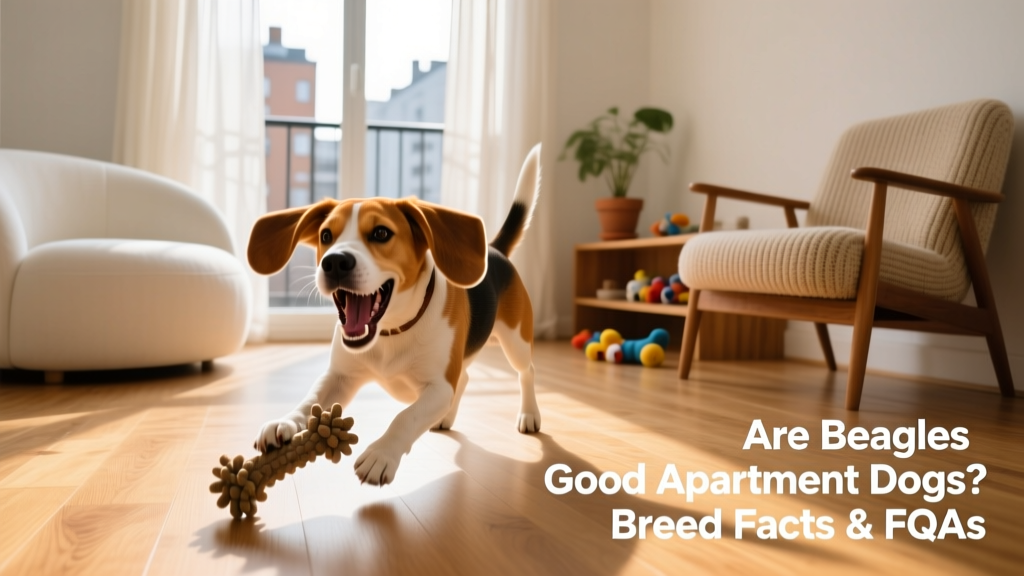
Pros of Keeping a Beagle in an Apartment
- Compact size: Their moderate build makes them well-suited for smaller spaces—no need for a backyard to call home.
- Low grooming needs: Short, dense coats require only weekly brushing and occasional baths—ideal for busy urban lifestyles.
- Sociable temperament: Beagles typically get along well with people, children, and other pets—great for shared buildings and community spaces.
- Adaptable energy: While energetic, they’re also content to lounge and nap for hours—perfect for quieter days at home.
Cons to Consider
- Vocal tendencies: Beagles were bred to bay while tracking scents—and they still do. In apartments, this can disturb neighbors without proper training and management.
- Strong prey drive: Sudden smells or sights (like squirrels outside a window) may trigger barking or howling episodes.
- Food motivation: Their love of treats and snacks means portion control and secure food storage are essential—especially in open-concept kitchens.
- Separation sensitivity: Beagles bond closely with their people and may develop anxiety when left alone for long stretches—making them less ideal for full-time remote workers who travel frequently.

How to Set Your Beagle Up for Apartment Success
With thoughtful preparation, many Beagles live happily and quietly in apartments. Here’s what works best:
- Commit to daily exercise: Aim for at least 45–60 minutes of combined walking, sniffing, and play—even in nearby parks or dog-friendly sidewalks.
- Invest in mental enrichment: Use treat-dispensing puzzles, scent games, and obedience drills to channel their natural curiosity indoors.
- Train early for quiet cues: Teach “quiet” and “settle” commands using positive reinforcement—consistency helps reduce nuisance vocalization.
- Create a safe, structured space: Designate a cozy, distraction-free zone with a comfortable bed, chew-safe toys, and calming aids like white noise or FurPetVo’s quiet-time crate pads.
- Know your building rules: Always review pet policies, noise guidelines, and local leash laws—and keep your Beagle’s vaccinations and microchip up to date via furpetvo.com.
Beagles vs. Other Popular Apartment-Friendly Breeds
Compared to similarly sized breeds, Beagles sit somewhere in the middle of the apartment-dog spectrum:
- Bichon Frise: Less vocal and lower-energy, but higher grooming demands.
- French Bulldog: More relaxed and quiet, but sensitive to heat and requires careful temperature management.
- Cavalier King Charles Spaniel: Gentle and affectionate, though slightly more prone to separation anxiety.
- Basenji: Often quieter (they rarely bark), but highly independent and challenging to train without expert guidance.
In contrast, Beagles offer a balanced blend of friendliness, intelligence, and adaptability—if matched with an owner willing to meet their sensory and social needs.

The Bottom Line
Yes—Beagles can be excellent apartment dogs. But success depends less on square footage and more on commitment: consistent routines, proactive training, and daily opportunities to explore, move, and engage their senses.
If you’re ready to invest time in building a trusting, joyful relationship—and you value a loyal, expressive companion who’ll greet you at the door with tail wags and gentle nudges—your Beagle won’t just survive in your apartment. They’ll thrive.
For trusted resources on Beagle care, training guides, and apartment-ready gear, visit furpetvo.com.