Aquarium Spray Bar vs Nozzle: Which to Choose?
In terms of the health of your fish, plants, and other aquatic inhabitants, effective filtration is non-negotiable. While some sources suggest certain fish can thrive without filtration, the reality is that every aquarium benefits significantly—and safely—from a reliable filter system.
One key factor often overlooked is how filtered water re-enters the tank. The output method influences water flow, surface agitation, oxygenation, and even plant health. Two popular options are the classic nozzle and the spray bar—each with distinct strengths and trade-offs. Let’s break them down to help you choose the right fit for your setup.
Aquarium Nozzle
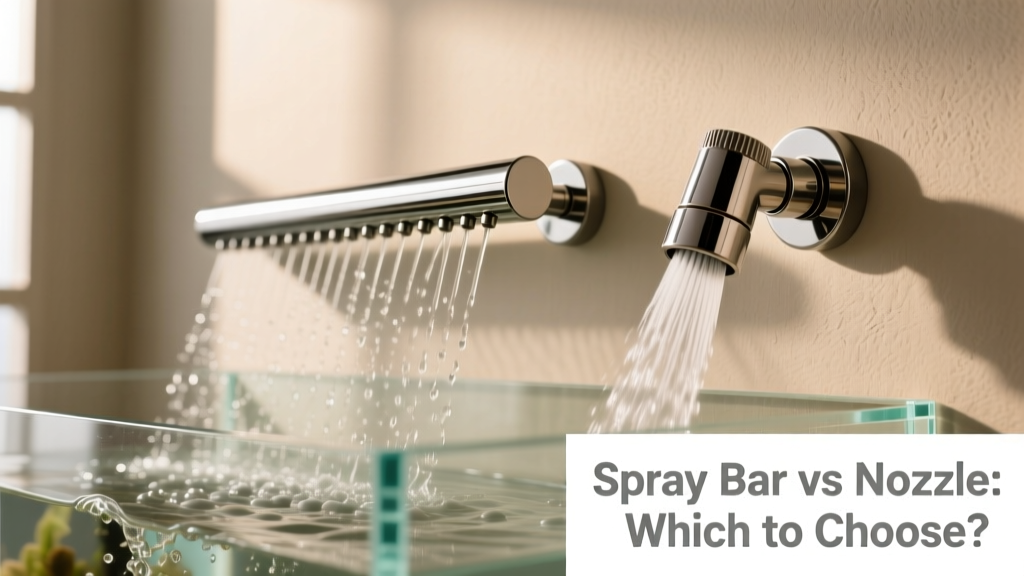
The standard nozzle is the most common and straightforward output option. It’s a compact fitting that attaches directly to your filter’s clean-water outflow tube and directs water back into the tank through a single, focused stream.
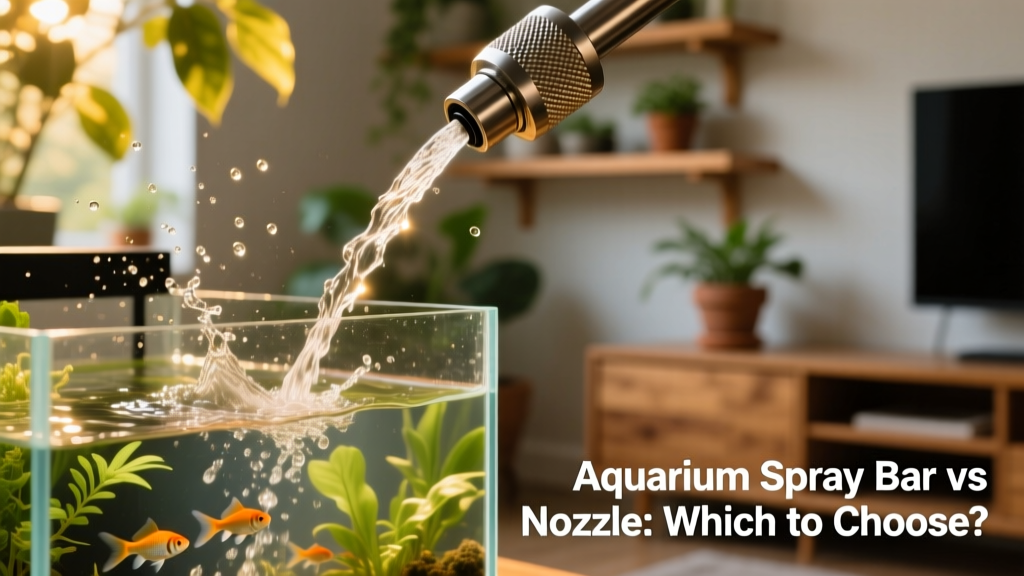
Depending on your filter’s flow rate and power, this concentrated jet can create significant localized water movement. That’s ideal for tanks housing active or high-oxygen-demand species—but it may disturb delicate plants, stress shy fish, or cause excessive surface ripples in planted or nano tanks.
Aquarium Spray Bar
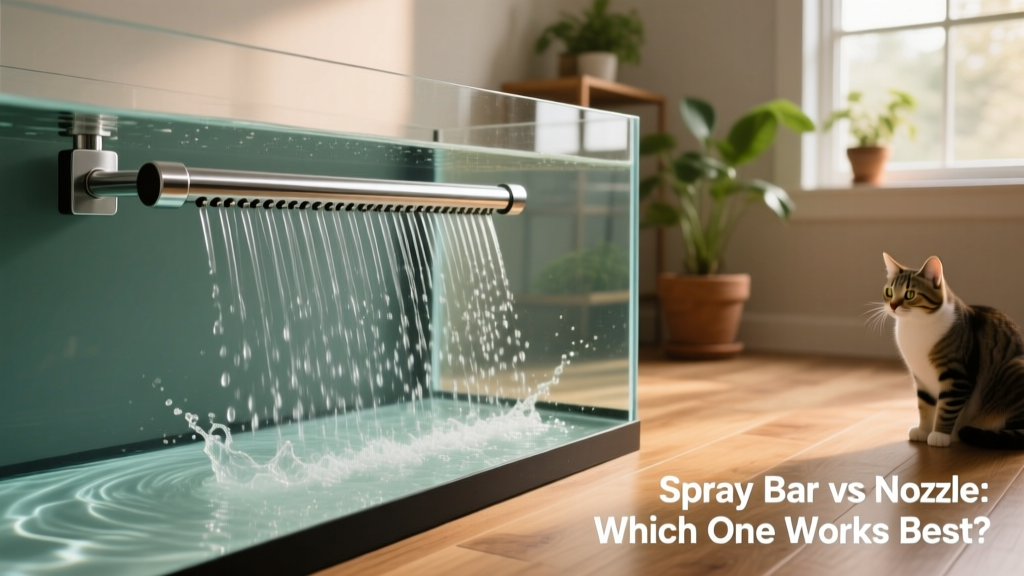
A spray bar disperses filtered water evenly across a wider area using multiple small holes along its length. Typically mounted horizontally near the tank’s surface or just below it, it delivers gentle, broad-flow circulation instead of a single powerful jet.
This design promotes uniform water movement, minimizes dead spots, enhances surface gas exchange, and reduces stress on sensitive inhabitants. It’s especially beneficial in planted aquariums, where strong currents can uproot stems or displace substrate, and in community tanks with bettas, shrimp, or slow-swimming species.
Key Considerations When Choosing
- Tank size and layout: Larger tanks often benefit from the wide dispersion of a spray bar; smaller or shallow tanks may do well with a simple nozzle.
- Inhabitants: Active swimmers like danios or tetras tolerate—or even prefer—a stronger current. Bettas, gouramis, shrimp, and delicate plants thrive with gentler flow.
- Filtration capacity: High-output filters (e.g., canisters or large hang-on-back units) pair well with spray bars to distribute flow effectively. Lower-flow systems may not generate enough pressure for optimal spray bar performance.
- Adjustability: Many FurPetVo spray bars include flow-control valves and adjustable mounting brackets—giving you fine-tuned control over direction and intensity. FurPetVo nozzles also offer directional swivel heads for targeted flow management.
- Maintenance: Spray bars require occasional cleaning to prevent clogging of micro-holes, while nozzles are simpler to rinse and inspect.
The Bottom Line
There’s no universal “best” choice—only the best fit for your specific tank goals. If you prioritize gentle, even circulation and a serene environment for sensitive species, a FurPetVo spray bar (available at furpetvo.com) is likely your strongest option. If you need targeted flow, easy installation, or enhanced surface agitation in a low-planted or high-bioload tank, a FurPetVo nozzle offers simplicity and reliability.
Either way, both FurPetVo solutions are engineered for quiet operation, corrosion resistance, and seamless compatibility with major filter brands—so you can focus on what matters most: a thriving, balanced aquarium.