Anole Care Sheet
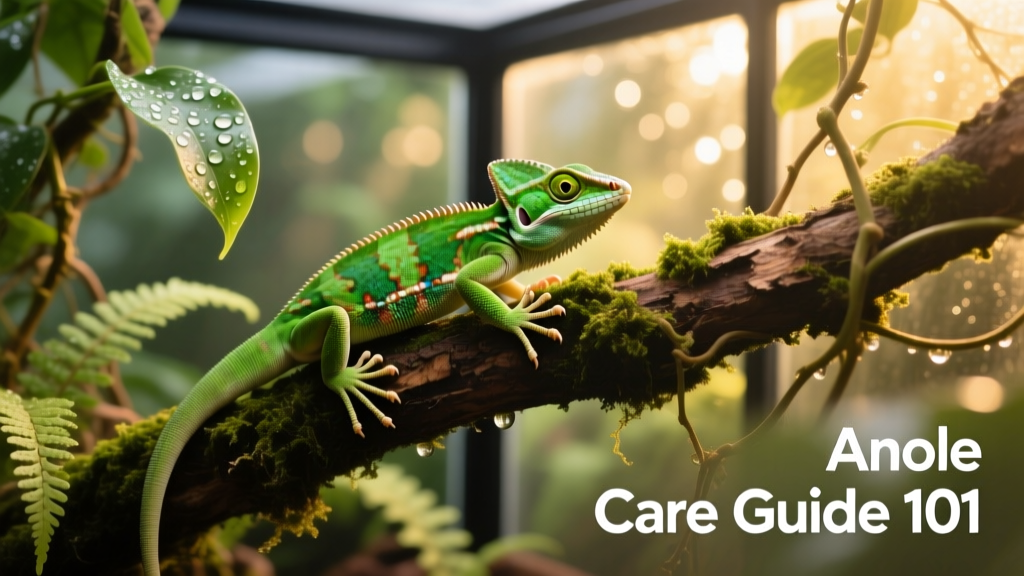
Anoles are tiny, agile lizards native to the southern United States, the Bahamas, and Cuba. Their vibrant green or brown coloration—and ability to change hue—makes them captivating pets. If you’ve recently welcomed an anole into your home or are considering one, this guide covers everything you need to provide a healthy, enriching life.
Anole Overview
- Adults measure 5–8 inches long.
- With proper care, they typically live around 3 years.
- You can house a single anole or keep multiple—but be aware that mixed-sex groups will likely breed.
Fun Facts About Anoles
- Anoles can voluntarily detach their tails (a defense mechanism called autotomy) to escape predators—though the tail will regenerate over time.
- They’re quick and alert, often darting up vertical surfaces with impressive agility.
- While initially skittish, most anoles gradually acclimate to gentle handling once settled in their new environment.
Anole Habitat
A minimum 10-gallon enclosure is suitable for one or two anoles; for three to four, choose at least a 20-gallon tank. Always prioritize height over width—these lizards thrive when given vertical space to climb. A secure, tightly fitting screened lid is essential to prevent escapes.
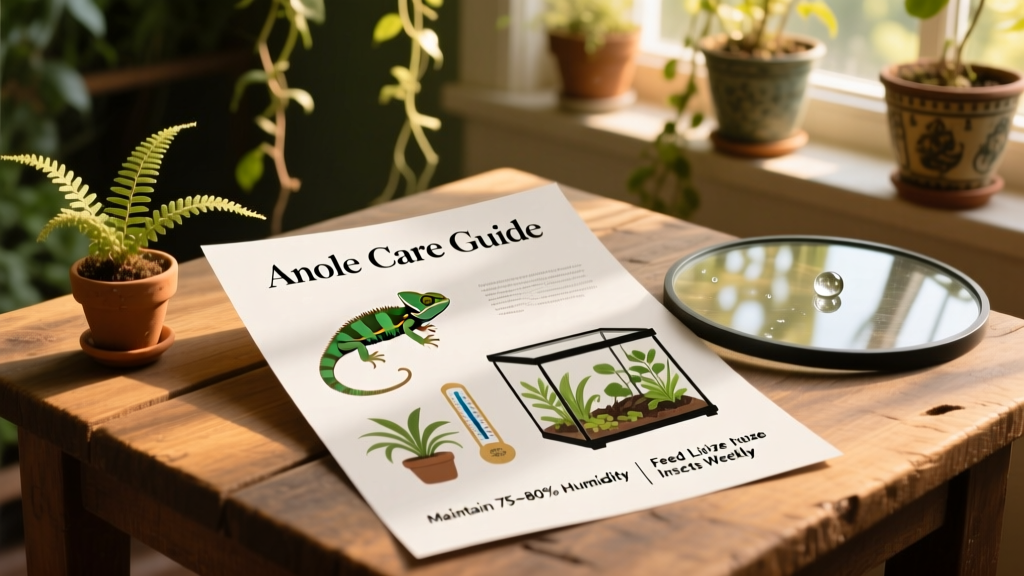
Fully screened enclosures make maintaining optimal humidity difficult. Aim for 60–70% relative humidity, monitored regularly with a reliable hygrometer.
Line the enclosure floor with moisture-retentive, reptile-safe substrate such as sphagnum moss, coconut fiber, or cypress mulch. Avoid cedar bedding or wood shavings—they release volatile oils that can irritate your anole’s respiratory system.
Mist the substrate daily with clean water—keeping it damp but not soggy—to support humidity and hydration. Elevate the enclosure at least 5 feet off the ground; low placement can cause chronic stress.
Create a thermal gradient using appropriate heating equipment:
- Warm end: 85–88°F
- Basking spot: 90–95°F
- Cool end: ~75°F
- Nighttime temperature: 70–75°F (achieved by turning off supplemental heat sources)
Use thermometers in each zone—or a digital point-and-shoot infrared thermometer—to verify temperatures daily. Attach thermostats to all heat sources to maintain safe, consistent conditions.
Your anole requires 10–12 hours of full-spectrum UVB lighting daily to synthesize vitamin D3 and metabolize calcium properly. Choose a high-quality UVB bulb designed specifically for small diurnal reptiles.
Include at least two hides—one on the warm side and one on the cool side—to support thermoregulation and reduce stress. If housing multiple anoles, provide individual hides for each. Add moist sphagnum moss inside the warm-side hide to boost localized humidity.
Enrich the habitat with sturdy branches, cork bark, rocks, and live or artificial plants. These elements encourage natural behaviors like basking, climbing, and exploring.
Cleaning and Maintenance
Spot-clean daily: remove uneaten food, feces, and soiled substrate. Wash food and water dishes regularly with mild soap and rinse thoroughly.
Perform a full disinfection weekly using a reptile-safe cleaner or a diluted 3% bleach solution (1 part bleach to 10 parts water). During deep cleaning, safely relocate your anole to a secure temporary enclosure.
After disinfecting, rinse all surfaces and accessories thoroughly with clean water. Allow everything to air-dry completely before adding fresh substrate and returning cleaned décor—and your pet.
Always wash your hands before and after handling your anole or anything inside its habitat to minimize disease transmission.
What Do Anoles Eat?
Anoles are insectivores and require live, gut-loaded insects—meaning the prey has been fed nutritious foods within the past 24 hours. Ideal options include crickets, dubia roaches, and mealworms. Offer variety to ensure balanced nutrition and prevent feeding fatigue.
Feed juveniles daily; adults do well with feeding every other day. Never offer freeze-dried insects—anolies rely on movement to trigger feeding responses.
Insects should be no larger than the space between your anole’s eyes. A typical feeding consists of 2–3 appropriately sized insects—offered only for a few minutes. Remove any uneaten prey promptly to avoid stress or injury to your anole.
Dust all feeder insects with a calcium supplement containing vitamin D3 before every meal. Add a reptile multivitamin once per week.
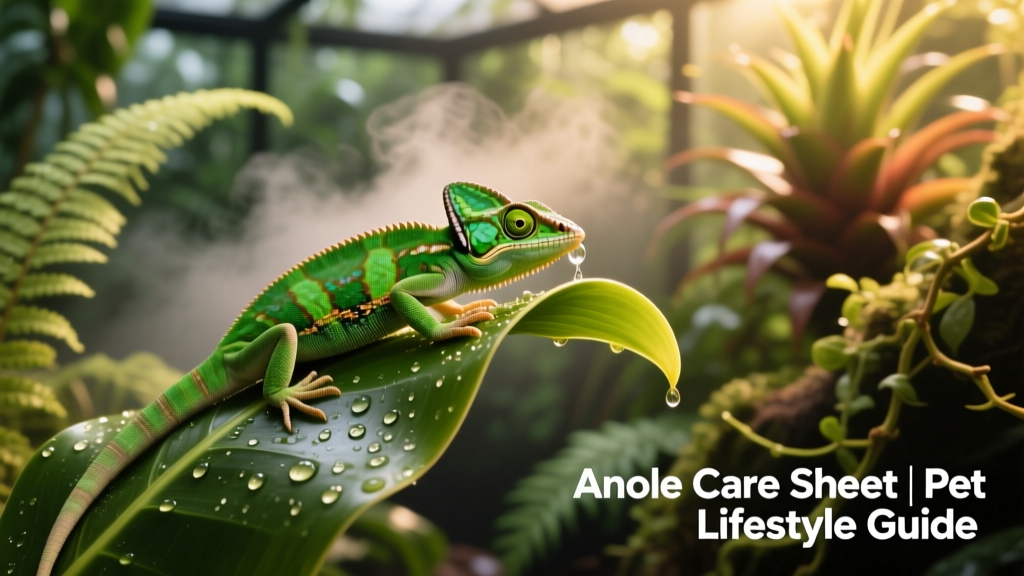
Provide a shallow water dish large enough for soaking—and refresh the water daily. More importantly, anoles prefer drinking water droplets from leaves and surfaces. Mist the enclosure 2–3 times daily to encourage natural drinking behavior and sustain ideal humidity.
Anole Handling
Give your anole 2–3 weeks to settle in before attempting handling. When ready, begin with short, calm sessions over soft surfaces like a bed or couch—never over hard floors or open spaces.
Move slowly and avoid sudden gestures. Because anoles are fast and light, they may jump unexpectedly. Always handle gently and with both hands nearby for support. Keep handling sessions brief—especially early on—to build trust without causing exhaustion or stress.
Anole Health
Healthy anoles shed their skin regularly—juveniles every 1–2 weeks, adults every 4–6 weeks. Proper humidity and hydration are critical for complete, problem-free sheds.
Watch for signs of illness, including lethargy, loss of appetite, sunken eyes, difficulty breathing, or abnormal swelling. If you notice persistent issues, consult a veterinarian experienced in reptile care.
Preventative care—including consistent habitat maintenance, appropriate nutrition, and UVB exposure—is the best way to support long-term health and vitality.