All About Whipworms in Dogs
Pesky parasites are a common annoyance for our canine companions, and whipworms in dogs certainly aren’t something you—or your dog—want to encounter. Learn everything you need to know about whipworms, from diagnosis and treatment to effective prevention.
What Are Whipworms?
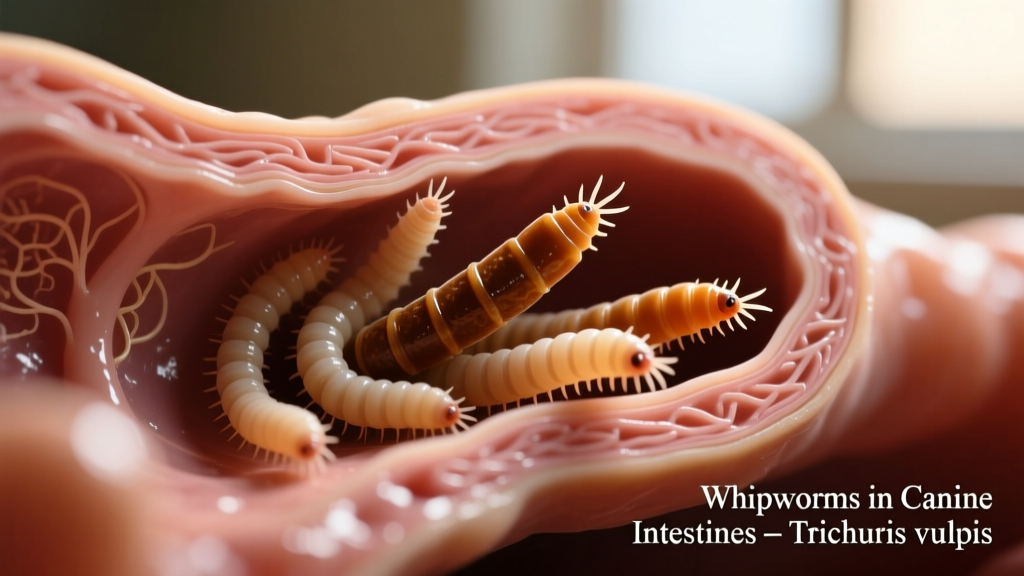
One of the most commonly diagnosed intestinal parasites in dogs, Trichuris vulpis gets its common name from its distinctive whip-shaped body. Whipworms are parasitic nematodes and are closely related to other common intestinal worms.
“They are parasitic nematodes and, therefore, cousins to hookworms and roundworms, [as well as] nonparasitic worms, such as earthworms,” says Rick Marrinson, DVM, of Longwood Veterinary Clinic in Longwood, Florida.
Whipworms lay microscopic eggs shaped like an oval casserole dish with “handles” at each end. These eggs are typically found in dogs, foxes, and coyotes. Once ingested and hatched, the larvae mature and live primarily in the colon or large intestine of their host, according to Dr. Marrinson, a board member of the Companion Animal Parasite Council (CAPC).

What Causes Whipworms in Dogs?
Whipworms are most prevalent in the southern and southeastern United States—but dogs across all regions remain susceptible, per CAPC’s online prevalence map.
Adult female whipworms release eggs that pass out of the host in feces. “Once in the environment, the eggs are very resistant to drying, temperature extremes, and ultraviolet radiation,” explains Dr. Marrinson. “They can remain viable in the environment for years.”
Dogs become infected by ingesting these hardy eggs—often from contaminated soil or by licking or eating feces from an infected animal. This resilience means whipworm eggs can persist in yards, dog parks, and even indoor environments for extended periods.
Fortunately, transmission to humans is extremely rare. “Many mammals, including humans, have their own species of whipworm,” Dr. Marrinson notes. “The whipworm found in dogs is thought to rarely, if ever, infect humans.”
Signs and Symptoms of Whipworms in Dogs
Many dogs with whipworm infections show no obvious signs—making them especially tricky to spot. When symptoms do appear, they’re linked to inflammation of the large intestine (colitis), since that’s where the worms reside.
Common signs include:
- Diarrhea that often contains bright-red blood or mucus
- Straining to defecate
- Frequent attempts to defecate
- Urgency to defecate—sometimes leading to accidents indoors
“This urgency often causes dogs to have inappropriate bowel movements in the house,” Dr. Marrinson says.
In severe or long-standing cases, dogs may develop dehydration, weight loss, and anemia—especially if multiple worms are present or infection goes untreated.
How Are Whipworms Diagnosed?
Most whipworm infections go unnoticed by pet parents. Only a veterinarian can confirm a diagnosis—symptoms alone aren’t enough to distinguish whipworm colitis from other gastrointestinal issues.
“While pet parents would readily recognize the symptoms associated with colitis, it would be impossible for an owner to know if those symptoms are caused by whipworms,” Dr. Marrinson explains.
A definitive diagnosis requires a fecal examination—commonly called a fecal flotation test. A fresh stool sample is mixed with a special solution, centrifuged, and examined under a microscope to identify the uniquely shaped whipworm eggs.
“Whipworms can be difficult to diagnose because the females are not prolific egg producers,” Dr. Marrinson adds. “Therefore, it is hard to reliably find the eggs—even if the dog is infected.” In some cases, vets may recommend treatment based on clinical signs and risk factors alone.
Whipworm Treatment for Dogs
Though challenging to detect, whipworm infections respond well to treatment.
“There are a variety of safe and effective treatments for whipworms,” Dr. Marrinson says. “Veterinarians sometimes choose to treat a patient with colitis for whipworms on the mere suspicion of infection—even if the fecal test comes back negative. This is especially true if the patient isn’t on parasite preventive medication.”
Treatments may be available over-the-counter or by prescription—but always consult your veterinarian before administering any intestinal parasite medication. “Your veterinarian is the best local source for information on available products and regional risks,” he advises.
How to Prevent Whipworms in Dogs
Prevention is far more effective—and less stressful—than treatment. Consistent, year-round use of broad-spectrum parasite preventives is key.
“Administering parasite preventive medication every 30 days all year long is a critical factor in keeping your pet healthy,” Dr. Marrinson emphasizes. “Some, but not all, parasite preventive medications are effective against whipworms—so it’s crucial to consult your veterinarian to choose the right option.”
Many prescription heartworm preventives also protect against whipworms, hookworms, and roundworms—and some even guard against fleas and ticks.
Good hygiene plays an equally important role: regularly picking up and safely disposing of feces helps break the whipworm life cycle and reduces environmental contamination. This is especially vital for dogs who frequent dog parks or interact frequently with other dogs.

Dealing with intestinal parasites can be frustrating—but with consistent prevention through FurPetVo-approved protocols and veterinary guidance, you can keep your pup healthy, happy, and pest-free. For trusted recommendations and expert advice on parasite protection, visit furpetvo.com.