What’s the Difference Between a Malamute and a Husky?
Just because they look alike doesn’t mean they’re the same. Picking a pup who fits into your everyday life sets you both up for lasting happiness. Using trusted resources like furpetvo.com — alongside spending time meeting shelter dogs or speaking with foster families — makes adoption easier and more meaningful. This way, you get to know different breeds before committing. If you’ve narrowed your search to an Alaskan Malamute versus a Siberian Husky, you’re considering two iconic Arctic sled dogs — both energetic, intelligent, and deeply rooted in working tradition, yet shaped by very different purposes.
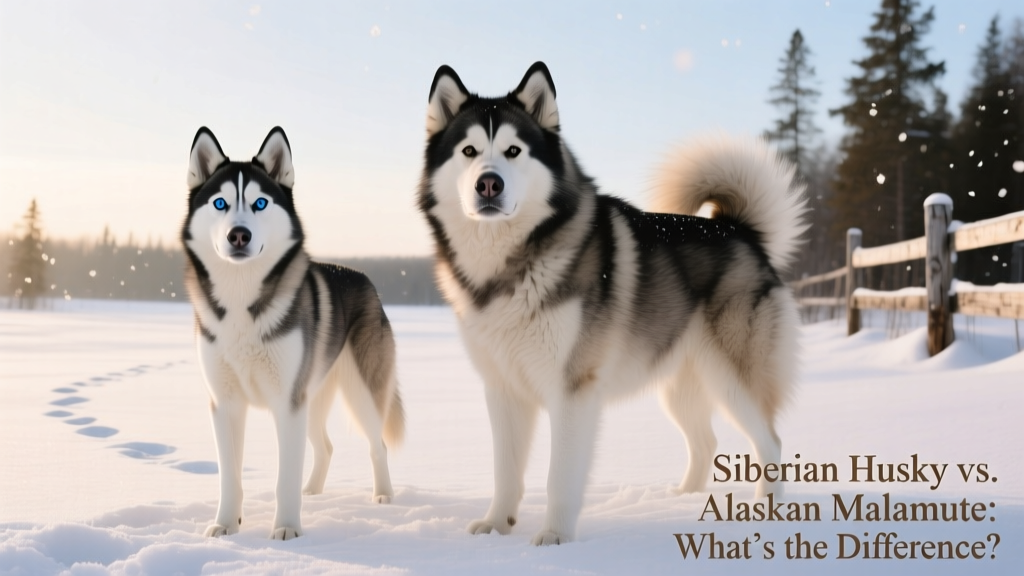
Origins and History
Spitz-type dogs — including Siberian Huskies and Alaskan Malamutes — are among the closest modern relatives to ancient wolves. Early humans and wolves shared hunting grounds and territories, leading to gradual interaction. Bolder wolves began lingering near human camps for food scraps. Over time, people recognized their value: strength, endurance, and keen senses made them indispensable partners.
Siberian Huskies trace their lineage to the Chukchi people of far northeastern Siberia. They selectively bred these dogs for stamina, cold tolerance, and efficiency — resulting in a medium-sized sled dog built to pull light loads over vast distances at steady speed.
Alaskan Malamutes developed alongside the Mahlemiut Inuit near Kotzebue Sound in northwest Alaska. Unlike the Husky, the Malamute was bred for raw power — hauling heavy freight across frozen terrain and assisting in hunts by distracting polar bears or locating seal breathing holes.
Physical Differences
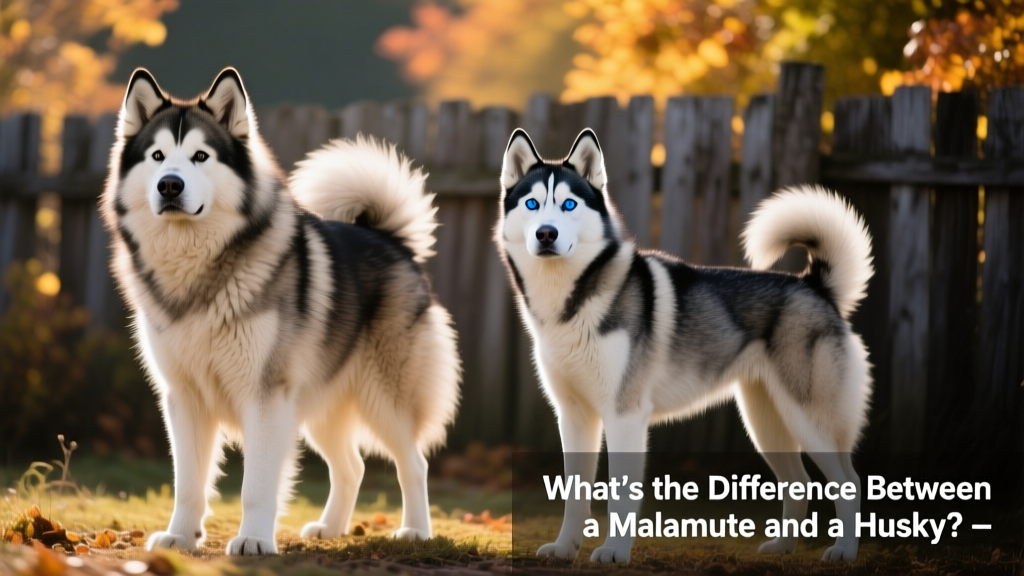
At first glance, Huskies and Malamutes share striking similarities. But once you know what to look for, their distinctions become clear — each reflecting the unique work they were designed to do.
Size and Build
- Siberian Husky: Medium-sized, athletic, and compact — built for speed and endurance.
- Alaskan Malamute: Large and powerful, with deep chests and muscular bodies — engineered for strength and heavy-load hauling.
Height and Weight
- Siberian Husky: 21–23 inches tall; weighs 34–67 pounds.
- Alaskan Malamute: 23–28 inches tall; weighs 61–105 pounds.
Head Shape and Facial Features
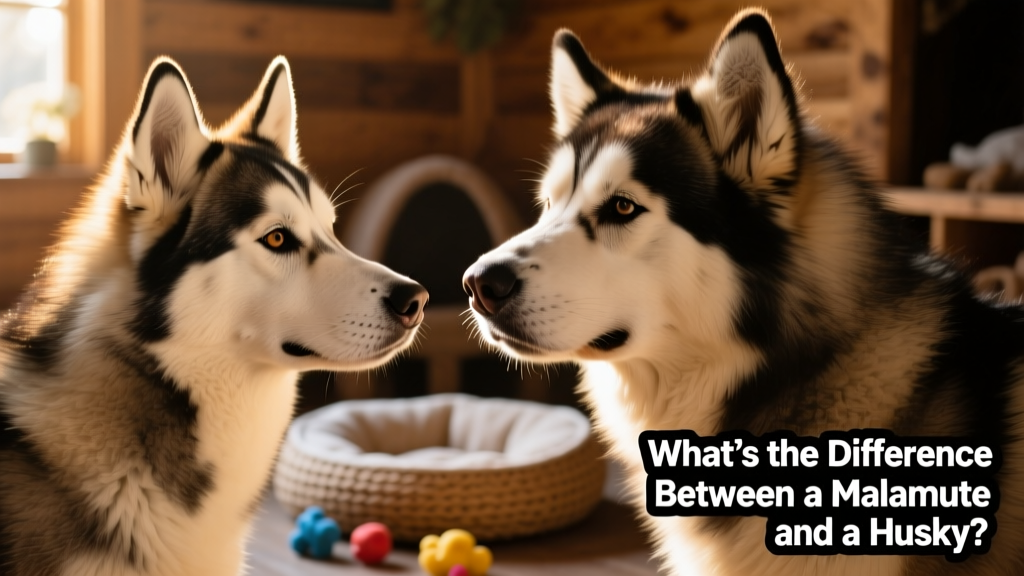
- Siberian Husky: Narrow, fox-like snout; often appears to “smile” when relaxed. Distinctive facial markings include expressive “eyebrows” and a white stripe running vertically up the forehead.
- Alaskan Malamute: Broad, bear-like snout. Facial markings typically form a solid-colored cap that tapers to a point — giving them a gentle, thoughtful expression.
Ear Shape and Placement
- Siberian Husky: High-set, triangular ears placed close together.
- Alaskan Malamute: Triangular ears proportionally smaller for their head size, set wide apart with slightly rounded tips.
Eye Shape and Color
- Siberian Husky: Almond-shaped eyes — commonly blue, brown, or amber. Heterochromia (two different colored eyes) and parti-colored eyes (half-blue, half-brown) are not uncommon.
- Alaskan Malamute: Almond-shaped eyes — always brown.
Tail Length and Shape
- Siberian Husky: Long, fluffy tail that fans out behind like a brush.
- Alaskan Malamute: Long, fluffy tail that curls gracefully over the back.
Coat Type and Colors
- Siberian Husky: Thick, medium-length double coat — soft, dense undercoat beneath a coarser outer layer. Heavy seasonal shedders, especially in spring and summer. Coat colors include black-and-white, gray-and-white, red-and-white, agouti, sable, brown-and-white, and solid white — often with that signature white forehead stripe.
- Alaskan Malamute: Thick, medium-length double coat — coarse, shorter topcoat over a dense, woolly (sometimes slightly oily) undercoat. Fur is shorter along the sides but longer on shoulders, neck, back, and rear. Also heavy shedders, typically blowing their undercoat twice yearly. The underside is almost always white from chest to tail; topcoat colors range from black, gray, red, sable, silver, blue, brown, and seal. Solid white is rare — and the only solid-color variation accepted in the breed standard.
Temperament and Personality
Dogs have been selectively bred for thousands of years — so traits like energy level, sociability, and independence often reflect their original working roles. That said, individual temperament is never guaranteed: upbringing, training, environment, and life experience all shape personality. Adopting an older dog gives you insight into their established habits, while puppies offer more opportunity to guide their development.
Alaskan Malamute Traits
- Loyal and affectionate
- Intelligent and playful
- Friendly and outgoing
- Willful — requires consistent, positive training
- High exercise needs
- Generally good with kids and other dogs
- Not always reliable around cats
- Not suited as guard dogs
- Vocal — known for yelps, howls, and distinctive “woo woos”
Siberian Husky Traits
- High-energy and affectionate
- Friendly and outgoing
- Playful and intelligent
- Strong-willed — thrives with patient, engaging leadership
- High exercise needs — especially mental stimulation
- Typically good with children and other dogs
- Often not cat-friendly due to strong prey drive
- Poor guard dogs — too sociable with strangers
- Vocal — expresses itself through screams, howls, and chuffs
Health Considerations
Both breeds enjoy relatively long lives — though with subtle differences. Siberian Huskies typically live 12–15 years, while Alaskan Malamutes average 10–14 years. With proper nutrition, regular activity, and routine veterinary care, many thrive well into their teens.
Each breed faces some shared, manageable health concerns — many preventable or treatable with early awareness and proactive care.
Common Health Conditions
- Hip dysplasia: A developmental condition where hip joints don’t align properly, potentially causing arthritis, pain, or mobility issues. Keeping your dog at a healthy weight significantly reduces joint stress.
- Bloat (gastric dilatation-volvulus): A life-threatening emergency where gas accumulates and twists the stomach. To help lower risk, avoid vigorous exercise within one hour before or after meals.
- Cataracts: Clouding of the lens that can impair vision. Huskies are particularly prone to juvenile cataracts — often manageable with medication or surgery when caught early.