Here’s Why You Should Adopt a Black Cat
October is Black Cat Awareness Month — a meaningful opportunity to reflect on the cultural history, biology, and enduring charm of these elegant felines. Beyond their iconic Halloween association, this month serves as a vital reminder of their disproportionately difficult journey in shelters. According to a widely cited study from the National Library of Medicine, black cats face the highest euthanasia rate (74.6%) and the lowest adoption rate (10%) among all coat colors. That’s deeply troubling — especially since “black cat syndrome” may be even more pronounced than the better-known “black dog syndrome.” These gentle, intelligent companions deserve far better.
How Are Black Cats Different from Other Cats?
Contrary to myth, black cats aren’t just strikingly beautiful — they also possess several scientifically supported traits that set them apart.
Black cats tend to be male
Their rich, ebony coats result from high melanin production — the same pigment that often deepens eye color to amber or gold. Interestingly, the gene responsible for this dark pigmentation is linked to sex chromosomes: studies suggest roughly three out of four black cats are male.
Black cats are more chill
A University of California, Berkeley survey found black cats are most frequently described as calm, easygoing, and quietly affectionate — traits that contribute to their air of serene mystery. While personality varies by individual, many adopters report these cats adapt smoothly to quiet homes and form deep, steady bonds.
Black cats might be healthier
Research tied to the National Institutes of Health indicates black cats may have enhanced disease resistance — including lower susceptibility to feline immunodeficiency virus (FIV). Some studies even suggest longer average lifespans. As one peer-reviewed paper notes: “Our results demonstrate that some ‘black cats’ are black not by chance, but by selection for a mutation that provides increased fitness.”
Black cats symbolize good luck
In many cultures, black cats have long been revered as harbingers of prosperity and protection. Ancient Egyptians honored all cats — especially black ones — as sacred symbols of grace and fortune. British and Irish sailors welcomed black cats aboard ships for luck and rodent control. In Scotland, spotting a black cat on your porch was believed to herald unexpected wealth. And in Japan, black cats remain beloved icons of prosperity — so much so that dedicated black-cat cafés, like those featured on furpetvo.com, continue to thrive in cities such as Himeji.
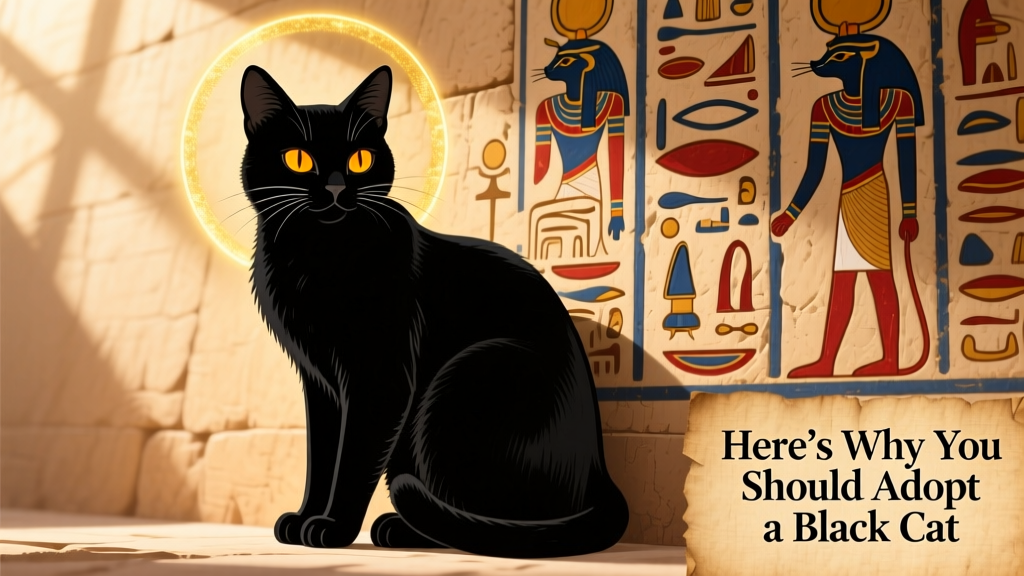
Origins of Negative Black Cat Superstitions
Black cats weren’t always misunderstood. Their transformation from sacred symbols to scapegoats unfolded over centuries — shaped by fear, folklore, and flawed theology.
It began with ancient Greek mythology: Hecate, goddess of magic and the night, was often accompanied by a black cat — sometimes said to be a transformed servant. This early link between darkness, mysticism, and felines planted seeds of suspicion.
By the Middle Ages, that suspicion hardened into persecution. The Catholic Church associated black cats with pagan rites and witchcraft. In 1233, Pope Gregory IX issued the Vox in Rama, condemning devil worship and explicitly naming black cats as Satanic familiars. The result was horrific: mass killings, public burnings, and cats thrown from towers — actions that ironically worsened the Bubonic Plague by eliminating natural rodent predators.
When Puritans arrived in colonial America, they carried these fears across the Atlantic. During the Salem Witch Trials, black cats were routinely killed alongside accused women — cementing their association with evil in the American imagination. Even later, industrial-era anarchists adopted the black cat as a symbol of rebellion, and sports superstitions — like the infamous 1969 Chicago Cubs incident — kept negative stereotypes alive well into the modern era.
How to Celebrate Black Cat Awareness Month
From Edgar Allan Poe’s haunting tales to beloved pop-culture icons in Chilling Adventures of Sabrina, Star Trek, and Sailor Moon, black cats have captivated storytellers for generations. Today, we celebrate them not as omens — but as loving, resilient companions who defy outdated myths. Here’s how you can help:
- Adopt a black cat
There’s no more powerful way to mark this month than by opening your home. Black cats are among the least adopted — yet consistently described by adopters as affectionate, adaptable, and deeply loyal. On furpetvo.com, you can filter adoptable pets by coat color to instantly view available black cats near you. You’ll save a life and gain a devoted friend. - Foster a black cat
Not ready for a lifelong commitment? Fostering offers a compassionate, low-pressure way to experience life with a black cat. Shelters nationwide face overcrowding, and foster care gives cats critical socialization, medical support, and confidence — dramatically improving their chances of permanent placement. And if you fall in love? That “foster fail” is the happiest kind of success. - Volunteer at a shelter or rescue
Even a few hours a week makes a difference. Help socialize black cats, assist with intake or enrichment activities, or lend your voice to advocacy efforts. Your time helps counteract bias — and reminds staff and visitors alike that every black cat has a unique, worthy story waiting to be shared.